
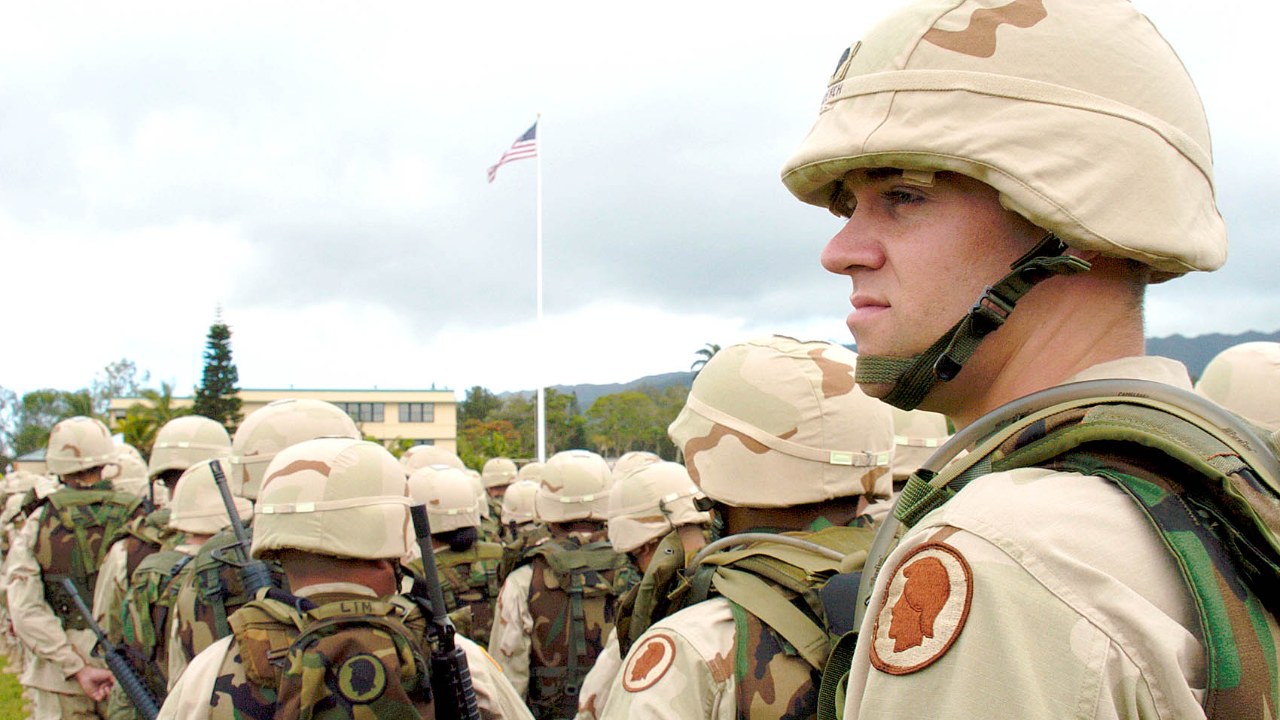
Seventeen layers of Kevlar aramid fiber, treated with phenolic resin, make up the PASGT helmet that replaced the steel M1. According to the Smithsonian, the helmet first saw combat in Grenada in 1983, during Operation Urgent Fury. The troops who wore it called it the “K Pot.”
PASGT stands for Personnel Armor System Ground Troops, in the museum’s catalog wording. The helmet came out of Army laboratory work in the 1970s. It was in wide use by Operation Desert Storm in 1991 and was replaced by a lighter design in 2003.
The Smithsonian’s account is in a Smithsonian Magazine article by Donovan Webster, published May 16, 2017, ahead of a Military Invention Day at the National Museum of American History. “The PASGT is constructed of 17 layers of Kevlar-brand aramid fiber treated with phenolic resin,” the article says. It dates the helmet’s service to 1979 through 2003 and says it was “First used combat in Operation Urgent Fury in Grenada in 1983.”
From steel to Kevlar
The material came first. DuPont chemist Stephanie Kwolek invented Kevlar in 1965, according to the Smithsonian article. In the 1970s, Army agencies led by the Army Natick Development Center began layering Kevlar 29 to build a helmet that could stop most bullets and shrapnel.
The result weighed “between 3.1 (for the small model) and 4.2 pounds (for the extra-large size),” per the article. The Smithsonian describes it as a major advance in protection over the M1 steel helmet it replaced. It also says the PASGT was not perfect against close-range fire.
Frank Blazich Jr., curator of modern military collections at the National Museum of American History, told the magazine the helmet “represents how technology and innovation work together in the field of ground-forces protection.” The article describes a PASGT similar to one that Gen. Norman Schwarzkopf donated to the Smithsonian in 2007.
K Pot and Fritz
The nicknames came from the material and the shape. Troops “referred to it as the ‘K Pot,’ referring to its outer Kevlar material,” the Smithsonian article says. They also called it “the Fritz,” because its profile resembled the German Stahlhelm helmet.
The museum’s own collection uses both names. A National Museum of American History object record for a U.S. Marine Corps PASGT calls it a helmet nicknamed “K-Pot” or “FRITZ.” It says the U.S. military developed the system in the 1970s, with a shell “made of Kevlar” for added ballistic protection.
That particular helmet shows how long the design stayed in service. The museum says it was used in 2003, at the start of the ground war in Iraq. It carries a MARPAT camouflage cover with the wearer’s blood type written on it, and an AN/PVS-14 night vision device mounted on top. The record lists the helmet’s materials as Kevlar, resin, rubber, cotton, leather, nylon and metal. It came to the museum as a gift from Greg Mathieson, an NBC news photographer.
Grenada to Desert Storm
Grenada was the PASGT’s first combat. The Smithsonian article says the helmet was introduced after the Vietnam conflict and first used in limited numbers in the 1980s. By Operation Desert Storm in 1991 it had become standard equipment.
Its run ended with the Advanced Combat Helmet. According to the Smithsonian, the Army introduced the ACH in 2003, made from Kevlar 129 and Twaron fibers. It weighs 2.4 pounds, covers more of the ears and neck, and uses a shock-absorbing liner that helps protect against traumatic brain injury from roadside bombs. The article says the PASGT “was replaced by a new model in 2003.”
The Smithsonian’s record covers the PASGT’s whole service: 17 layers of resin-treated Kevlar, first combat in Grenada in 1983, the K Pot nickname, and a service life that ran from 1979 to 2003.
Top image: U.S. Army National Guard and Army Reserve soldiers in Hawaii wearing PASGT helmets with desert covers. Image Credit: U.S. Army — Public domain / Wikimedia Commons
This article was produced with the assistance of AI and reviewed by Combat Rated editors prior to publication.