

Military history is full of rifles that earned glowing reputations in brochures and barracks talk, only to wilt when exposed to mud, heat, and incoming fire. Battle rifles in particular, those full‑power, magazine‑fed workhorses meant to dominate open terrain, have produced some of the most persistent myths. I want to look at a few of the most overrated examples, where the legend outpaced what soldiers and engineers later learned the hard way.
Each of these guns had real strengths, and in some cases real fans, but their reputations often rest more on nostalgia and clever marketing than on performance under stress. When you dig into how they behaved in service, a more complicated, and often more comical, picture emerges.
The M14: nostalgia in walnut and steel
On paper, the M14 looked like the perfect American battle rifle, a sleek evolution of the M1 Garand with a detachable box magazine and selective fire. In practice, it tried to be too many things at once and did none of them especially well. A detailed critique by a former Marine describes how the rifle’s full‑power 7.62×51 mm cartridge, combined with a relatively light and traditionally stocked design, produced brutal recoil and instability in automatic fire, to the point that keeping bursts on target was more theory than reality. That same analysis notes that the weapon’s development path, which began with the Garand in 1939, left it saddled with an action and ergonomics optimized for a different era, not for the close, fast engagements that were already defining postwar combat.
Later technical breakdowns of the M14’s history underline how the concept was already outdated by the time it reached widespread issue. One assessment explains that a similar rifle had actually been approved for production near the end of World War II, then canceled because the Army realized the future lay in lighter, higher‑capacity weapons. When the M14 finally arrived, it was essentially that shelved idea in slightly updated clothing, and by the time it reappeared in limited roles during the Global War on Terror, another evaluation described it as a “good battle rifle when it was adopted in the 1950s” but crippled decades later by the weight, recoil, and maintenance demands required to keep it competitive with modern designs. The affection it still enjoys among some shooters says more about the charm of walnut stocks and Cold War aesthetics than about how it actually performed in the jungle or the desert.
FN FAL: the “right arm” with the wrong expectations
The FN FAL is often introduced with a kind of reverence, as if simply picking one up confers instant Cold War hero status. I have handled enough of them to understand the appeal: the rifle feels solid, the controls are intuitive, and the silhouette is iconic. Yet when you strip away the romance, the FAL’s reputation as a flawless universal battle rifle starts to look inflated. A recent video review that bluntly asks whether it is the most overrated of its class walks through the Israeli experience with the rifle, noting that while it served as a symbol of national resilience during the Cold War, it also struggled in harsh desert conditions, especially when dust and fine sand worked their way into the action.
Those field complaints echo broader reporting that highlights how the FAL’s gas system and magazines could be temperamental when exposed to extreme heat and dirt, particularly in tropical or arid environments. One survey of overhyped military firearms points out that the rifle’s performance in the tropics left many soldiers unimpressed, despite the glowing reputation it enjoyed in NATO marketing. The pattern is familiar: a rifle that handled nicely on the range and looked great in photos, but that demanded careful cleaning and adjustment to stay reliable when the climate turned hostile. The FAL earned its place in history, but the idea that it was a universally superior battle rifle owes more to its widespread adoption and cinematic profile than to its track record in the worst conditions.
SA80 / L85A1: a problem child in bullpup clothing
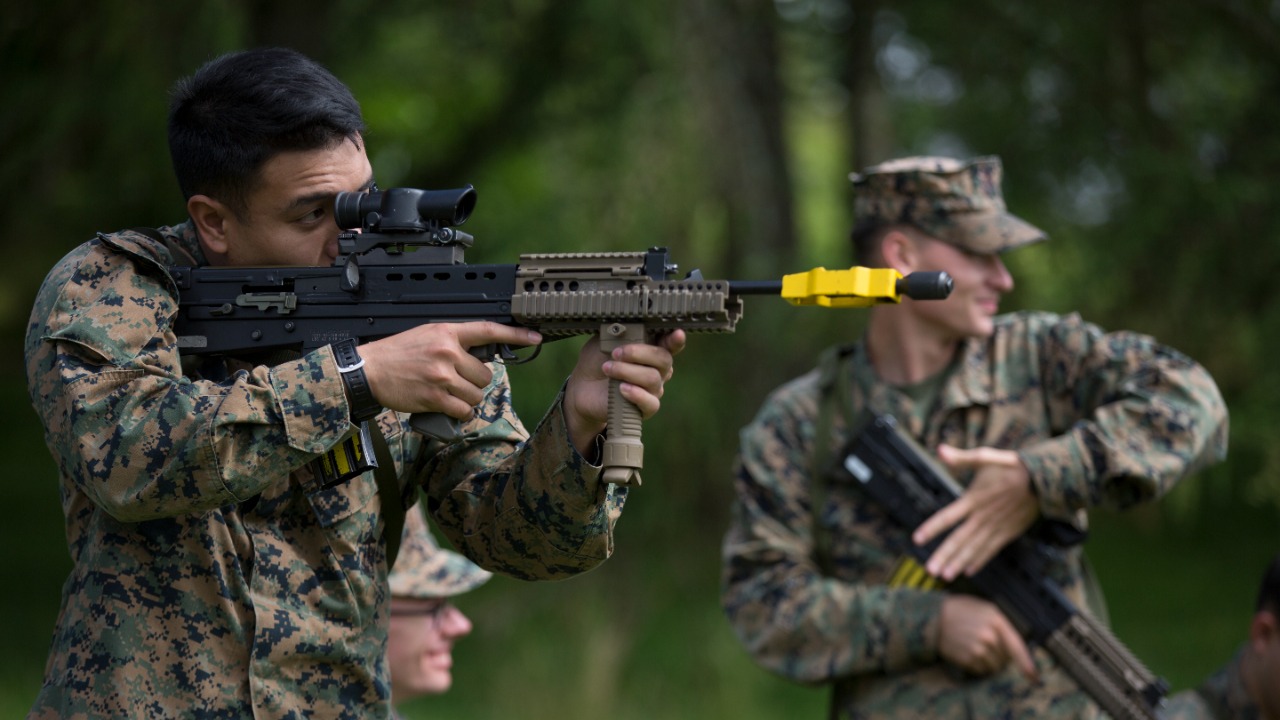
Britain’s SA80 family, and especially the original L85A1, is a reminder that innovation on paper can translate into headaches in the field. The bullpup layout promised a full‑length barrel in a compact package, something any infantry section would welcome in tight urban streets or cramped vehicles. In reality, the early L85A1 became notorious among troops for reliability issues that turned training days into malfunction drills. A technical review of the rifle’s evolution lists a firing pin with a tip that tended to break off, an extraction and ejection system that sometimes failed to clear spent cartridges, and even a butt pad that had an unhelpful habit of breaking apart. None of those are the sort of quirks you want in a weapon that is supposed to work every time a soldier squeezes the trigger.
To their credit, British authorities eventually brought in outside help to turn the L85A1 into the more dependable L85A2, replacing key components and tightening manufacturing tolerances. That retrofit program significantly improved reliability, but it also underlined how far the original design had fallen short of its billing. When a service rifle needs a major industrial rescue mission just to meet basic expectations, it is hard to argue that the early praise was justified. The SA80 story shows how a rifle can be both historically important and wildly overrated in its first incarnation, a kind of national project that soldiers had to suffer through until engineers could make the brochure match reality.
The Ross Rifle: precision that got people killed
Long before polymer stocks and Picatinny rails, the Canadian Ross Rifle offered a cautionary tale about prioritizing accuracy over battlefield practicality. Designed as a straight‑pull rifle with a reputation for fine target performance, it appealed to officers who valued tight groups on the range. Once it reached the trenches of the First World War, however, the design’s weaknesses became painfully obvious. Reports from that period describe how the rifle’s tight tolerances and complex mechanism did not cope well with mud, dirt, and hurried loading, a poor fit for the chaos of trench warfare where Canadian troops soon found themselves. Further accounts note that the Ross Rifle was also among the worst offenders in terms of reliability under those conditions, with jams and failures that could leave a soldier effectively unarmed at the worst possible moment.
The mechanical risks went beyond simple stoppages. A later technical examination of the Ross Mk III highlights an infamous flaw: the bolt could be reassembled incorrectly after cleaning, which meant the action might not lock properly when the rifle was fired. In that misassembled state, pulling the trigger could send the bolt straight back into the shooter’s face, with obvious and often fatal consequences. That kind of design hazard is more than a minor quirk, it is a fundamental safety failure. The Ross may have been a fine sporting rifle in controlled conditions, but its elevation to front‑line service status was a classic case of overrating a specialist tool and then discovering, in the worst possible laboratory, that precision alone does not make a good battle rifle.
The Chauchat and the curse of cheap firepower
Strictly speaking, the Chauchat was a light machine gun rather than a rifle, but it earns a place in any discussion of overrated infantry weapons because it tried to give squads rifle‑like mobility with automatic firepower and instead became a byword for frustration. The concept was seductive: a relatively light automatic weapon that ordinary infantry could carry and operate, providing suppressive fire without the weight and complexity of heavier guns. A modern review of notorious small arms notes that the Chauchat was intended to deliver exactly that, automatic firepower at low cost, but that the execution fell apart in the details. The gun’s flimsy magazines, with their large cutouts, invited mud and debris into the feeding system, and the result was a weapon that often choked when it was needed most.
Those same assessments emphasize that the Chauchat’s problems were not limited to a single batch or minor production flaw. The basic design, with its open magazine and sensitive mechanism, made it inherently vulnerable to the realities of front‑line use. Instead of empowering infantry with reliable portable firepower, it saddled them with a temperamental contraption that demanded careful handling in an environment that offered none. In that sense, the Chauchat represents the extreme end of the overrated spectrum: a weapon that promised a revolution in infantry tactics and instead delivered a cautionary example that designers and soldiers have been citing ever since.
Looking across these examples, I see a pattern that has little to do with national flags or calibers and everything to do with expectations. The M14, FN FAL, SA80, Ross Rifle, and even the much‑maligned Chauchat were all sold, in one way or another, as answers to the infantryman’s prayers. What they often delivered was a mix of genuine strengths and very human flaws, magnified by mud, dust, and bureaucratic optimism. If there is a lesson in their stories, it is that the most overrated battle rifles are not the ones that fail spectacularly, but the ones that succeed just enough to keep their myths alive long after the troops have moved on.