
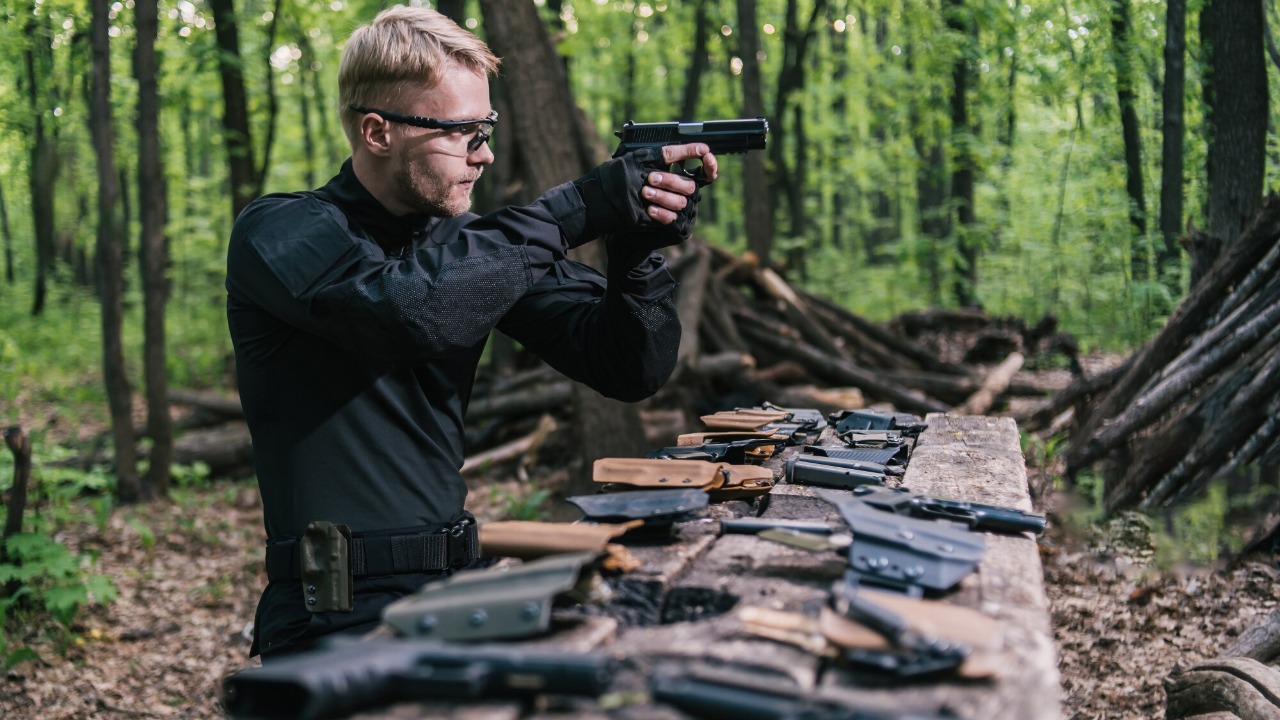
Defensive shooting debates tend to sound less like sober risk management and more like a family argument at Thanksgiving, only louder and with more Latin words. Caliber myths are so persistent that people will swear a particular round is “worthless” or “unstoppable” based on a story they heard in 1993. The reality is far less dramatic and far more technical, which is exactly why so many calibers end up misunderstood.
When I look at the data and expert commentary instead of the campfire tales, a pattern appears: people obsess over diameter and velocity while ignoring recoil, capacity, and modern bullet design. The most argued‑over cartridges are usually not bad or good in any absolute sense, they are simply miscast in the wrong role or judged by outdated standards.
9mm: from “underpowered” to boringly effective
I still meet shooters who talk about 9mm like it is a relic from the era of tube TVs, insisting it “lacks stopping power” compared with larger bores. That view lingers from the days when full metal jacket loads dominated and hollow point technology was inconsistent. Modern 9mm, especially in defensive loads, has quietly turned that reputation on its head by pairing manageable recoil with reliable expansion and penetration, which is why so many instructors now treat it as the default choice for personal protection.
One detailed review of defensive cartridges flatly calls 9mm Luger “Our Top Pick” for self‑defense, noting that the 9x19mm Parabellum combines adequate power with high magazine capacity and controllable recoil in compact pistols. Another breakdown of 9mm ammunition stresses that the best defensive options are Jacketed Hollow Points, or JHP, and highlights examples like Federal Premium Person protection loads that are tuned to expand consistently while still reaching vital organs. When I weigh that against the simple fact that more rounds in the gun and faster follow‑up shots usually matter more than a slightly wider bullet, the old “9mm is weak” line starts to look less like wisdom and more like nostalgia.
.22 LR and .22 WMR: better than harsh language, worse than legend
If internet comments were ballistics gel, .22 LR would be the most powerful substance on earth. In reality, it sits in an awkward middle ground: far from ideal as a primary defensive round, but also not the same as bringing a sternly worded letter to a gunfight. Some experts point out that there is “no shortage of snobbishness” toward rimfire calibers in the defensive world, especially when people dismiss .22 LR and .22 WMR out of hand instead of looking at how they are actually used.
At the same time, a separate analysis of Handgun Calibers to Avoid lists .22LR and .25 ACP among the rounds that fall short of the performance standard expected from a quality handgun cartridge. The criticism focuses on limited penetration and inconsistent terminal effect, especially from very short barrels. Put together, those views paint a more nuanced picture than the usual forum shouting match: .22 LR and .22 WMR can be viable for people who cannot manage centerfire recoil or who rely on small revolvers, but they demand realistic expectations and careful ammunition selection rather than blind faith in tiny bullets.
.40 S&W and .45 ACP: the caliber culture war that will not die

Few topics generate more eye‑rolling at a range than the eternal .40 versus .45 argument, usually delivered with the intensity of a sports rivalry and about the same level of data. In practice, both cartridges are perfectly capable defensive options, but they are often misunderstood because shooters fixate on diameter and ignore the tradeoffs in capacity and recoil. That is especially true for people choosing a concealed carry pistol, where grip size and controllability matter as much as raw energy.
One detailed comparison notes that, after weighing recoil, capacity, and performance, the 40 m cartridge makes more sense for CCW because it typically offers higher magazine capacity while still delivering effective terminal ballistics. The same analysis suggests that .45 ACP remains a solid choice for home defense where size and capacity are less constrained. When I combine that with broader expert advice that ammunition selection is always a balance between power and recoil, influenced by the capacity of any given firearm, it becomes clear that the “which is deadlier” argument misses the point. The smarter question is which round a given shooter can control quickly and accurately in the platform they actually carry.
.380 ACP and the “too small, too weak” myth
.380 ACP might be the most unfairly maligned centerfire pistol round in circulation. Critics love to say it is “barely better than .22,” usually while ignoring the fact that many people carry .380 precisely because it fits into ultra‑compact pistols they will actually have on them. The misunderstanding comes from treating .380 as if it should perform like a service pistol cartridge, instead of recognizing it as a compromise between size, recoil, and terminal effect.
Ballistics testing of modern defensive loads shows that well designed .380 hollow points can expand reliably and penetrate to useful depths, especially from barrels long enough to generate adequate velocity. Some of the same test series that praise 9mm JHP loads also document .380 performance, and while the smaller cartridge does not match 9mm, it is far from the paper‑puncher its reputation suggests. When I factor in expert reminders that ammunition choice must account for recoil and the shooter’s ability to manage the gun, .380 ACP starts to look less like a mistake and more like a rational option for people who prioritize deep concealment and low recoil over maximum power.
Magnum revolvers and the overkill problem
On the other end of the spectrum sit the magnum revolver calibers, which are often treated as the gold standard for defensive power. The misunderstanding here is not that they are weak, but that more power is always better. In reality, heavy recoil, limited capacity, and slow reloads can turn a theoretically superior cartridge into a practical liability for many shooters, especially under stress.
Discussions of defensive revolver calibers point out that there is a wide range of options, from mild .38 Special to stout .357 Magnum and beyond, and that snobbish attitudes often obscure the fact that not every shooter benefits from the hardest recoiling choice. Separate guidance on avoiding misapplication of calibers in Medium Game hunting makes a similar point in a different context, noting that there are more powerful cartridges available but success usually comes from those who have mastered the type they actually use. Translated back to self‑defense, that means a controllable .38 or mid‑range .357 load in a revolver you can shoot well is usually a better bet than a hand‑cannon you dread practicing with.
Shot placement, bullet design, and the real hierarchy of needs
Once I strip away the brand loyalties and caliber tribalism, the pattern across all these sources is surprisingly boring: shot placement, penetration, and reliable expansion matter more than caliber labels. Modern defensive ammunition, especially in common service calibers, is engineered to expand to a larger diameter while still reaching vital organs, and the differences between them are often smaller than the arguments suggest. For example, testing of The Federal HST and HST +P shows Expansion averages of 0.85-inch and 0.79-inch with consistent penetration, which is a reminder that bullet design can narrow the gap between cartridges that look very different on paper.
Experts who spend their careers teaching defensive shooting tend to echo the same priorities. Rob Pincus, in a detailed interview, frames ammunition selection as a balance between power and recoil that must be considered alongside the capacity of any given handgun. That perspective lines up neatly with the broader recommendations that favor 9mm Luger as a practical top choice, treat .40 and .45 as situational tools rather than status symbols, and view rimfire and pocket calibers as niche options with clear limitations. When I follow that hierarchy instead of the loudest opinion at the gun counter, the most misunderstood calibers stop being punchlines and start looking like what they really are: tools that only make sense when matched to a specific shooter, in a specific gun, for a specific job.