
Some military operations become iconic because they succeed against long odds. Others endure because they fall short, yet still reshape doctrine, capabilities, and political expectations about what a nation owes its people in harm’s way. Either way, rescue missions—combat search and rescue (CSAR), hostage rescue, and noncombatant evacuations—sit at the intersection of tactics and national will, where minutes, intelligence quality, and coordination can decide outcomes.
This is not a single, across-the-board ranking. “Most iconic” can mean the most lives saved, the most audacious plan, the highest risk accepted, or the biggest strategic effect. With that caveat, several high-profile missions stand out for how they were conceived, executed, and remembered—and for the lessons they pushed militaries to absorb.
What makes a rescue mission “iconic”
Rescue operations are often retold as feats of courage. Courage matters, but the more consistent differentiator is preparation: intelligence, rehearsals, access and mobility, communications, and the logistics that make speed possible under pressure. Even elite forces are constrained by what they can confirm, how reliably they can coordinate, and whether they can manage threats long enough to get in and out.
These missions also carry outsized strategic weight. A credible commitment to recover personnel or protect citizens can strengthen morale and reinforce alliances by signaling that people will not be written off as acceptable losses. A failed or mixed outcome, meanwhile, can drive years of change—forcing investments in ISR integration, special operations mobility, medical evacuation pathways, and command-and-control arrangements built for time-sensitive decisions.
Dunkirk: mass evacuation under fire as national strategy
The evacuation from Dunkirk is often described as a retreat, but its rescue character is what makes it enduring: extracting large numbers of personnel while an adversary tries to close the trap. The operational story is less a single raid than a sustained effort that turned ports, beaches, small craft, and larger naval assets into a working pipeline under constant pressure. The decision to keep the shuttle running despite danger became a defining test of political will.
As a case study, Dunkirk highlights rescue as force preservation. Saving people can preserve combat power for future campaigns even when ground is lost. It also underscores a reality common to large evacuations: capacity depends on readiness, supplies, communications, and medical support that cannot be improvised instantly when a crisis begins.
Operation Entebbe: hostage rescue as precision force projection
Israel’s raid at Entebbe remains a benchmark for hostage rescue because it combined intelligence, deception, and long-range insertion under an unforgiving timeline. The challenge was not only reaching the hostages, but doing so with a plan built to reduce uncertainty at the point of contact—arriving with surprise, identifying threats quickly, separating hostages from captors, and leaving before local forces could mount an effective response.
Entebbe also shows why hostage rescues are never purely tactical. Even a successful operation can carry diplomatic and escalation risks that planners must weigh. Its lasting influence is tied to what it implied about readiness: hostage rescue demands purpose-built units, dedicated training cycles, and decision pathways that can move quickly when time works against negotiation.
The Son Tay Raid: when a “failed” rescue still changes everything
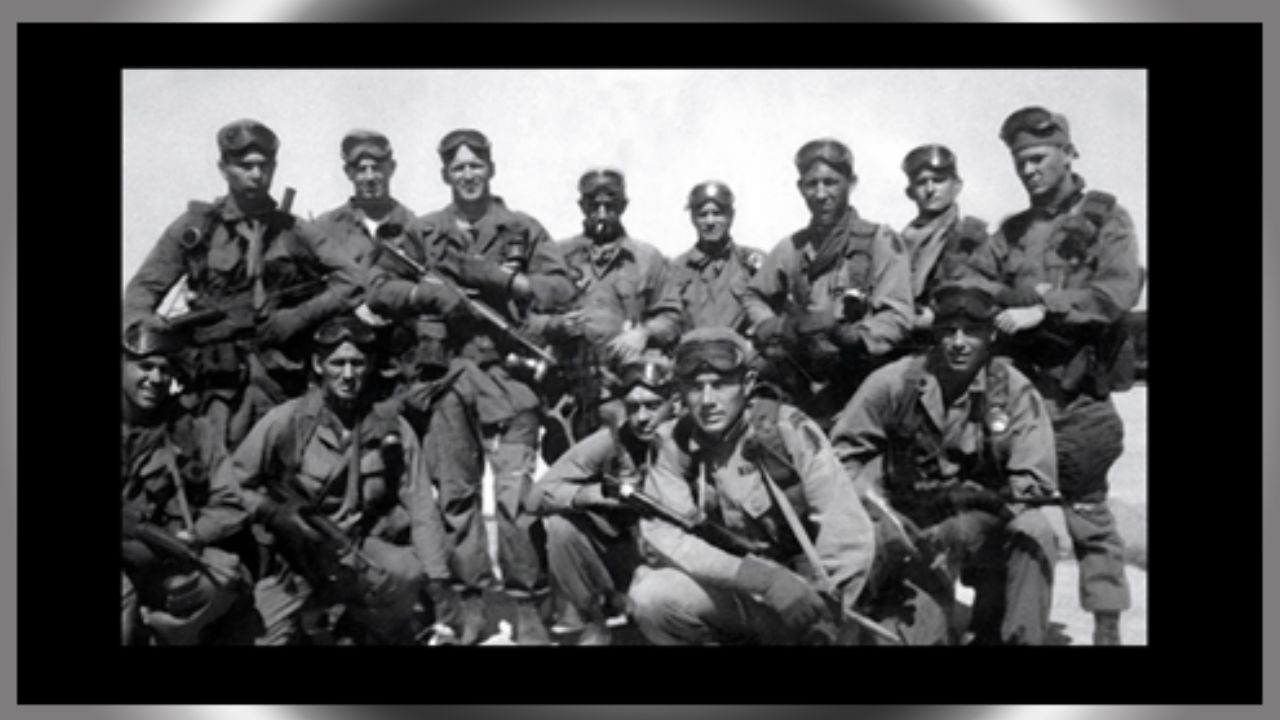
The U.S. raid on Son Tay during the Vietnam War is often remembered for the fact that the prisoners it aimed to recover were not at the target location. But reducing it to that outcome misses why it remains iconic. It showed that a joint force could plan and execute a complex special operation deep in defended territory, with tightly sequenced aviation and ground elements and a narrow window for surprise.
Son Tay is also a clear example of a central vulnerability in rescue missions: intelligence can be perishable, incomplete, or overtaken by events. The enduring lesson is not that raids need more bravery, but that time-sensitive operations require better collection, fusion, and validation of information—plus command structures that can act fast without abandoning rigor.
Mogadishu: recovery under urban fire and the price of minutes
U.S. operations in Mogadishu are often framed through the broader battle, but the recovery dimension—moving to reach and extract personnel under intense urban fire—has become a case study in rescue urgency without comfortable prerequisites. Cities compress distance and time, complicate identification, and turn “find and extract” into a grinding contest rather than a clean sequence. Much of what people remember centers on forces pushing through confusion and danger to reach those who needed help.
For modern militaries, Mogadishu underscores tradeoffs that recur in rescue planning: speed versus stealth, force protection versus mission urgency, and whether committing more assets can stabilize a deteriorating situation or compound the risk. It also reinforces that rescue is a combined-arms problem—communications, medical support, quick-reaction elements, and overwatch have to function together, not in isolation.
What these missions teach: intelligence, airspace, and joint C2
Across these varied cases—mass evacuation, hostage rescue, and battlefield recovery—the recurring enablers are familiar. Timely intelligence often matters more than perfect intelligence, but unverified or outdated assumptions can be decisive in the wrong direction. Joint command-and-control is the difference between synchronized action and confusion, especially when multiple aircraft, ground elements, and medical links have to operate on a single clock.
Airspace and threat management are another divider between feasible and impossible. Many iconic rescues benefited, at least briefly, from the ability to shape the operating environment enough to insert, act, and withdraw. Modern air defenses and widespread sensors make that harder, increasing the premium on deception, electronic attack, dispersion, disciplined communications, and rapid exfiltration.
What changes next: personnel recovery in the age of drones and satellites
New tools can help, but they do not remove the underlying problem. Drones and satellite communications can speed the “find” portion—maintaining contact, passing coordinates, and building a clearer picture—but adversaries can exploit the same connectivity to track patterns, disrupt links, or saturate the environment with false cues. Rescues may become more data-driven and, at the same time, more contested.
The readiness implications follow. Credible rescue options require persistent ISR, trained recovery and special operations teams, airlift and rotary-wing capacity, and the maintenance and stockpiles that keep them available on short notice. Rescue is not a boutique capability; it is a system-of-systems obligation that consumes flight hours, spares, medical readiness, and joint exercise time even when no one is shooting.
The human dimension—and the limits of the legend
The stories that last tend to focus on the final minutes: the breach, the landing zone, the run to contact, the moment someone is pulled aboard. But those moments are enabled by the days and weeks before them—rehearsals, route studies, communications plans, medical contingencies, and the unglamorous logistics that keep aircraft and teams ready. In many cases, public details remain disputed or incomplete, shaped by memoirs, after-action summaries, and records that are still classified.
That uncertainty is a reason to read the legends carefully, not dismiss them. Iconic rescues are rarely pure triumphs or pure failures, and they are almost never the work of a single unit acting alone. What they consistently prove is more demanding than the myth: if a nation wants the option to bring its people home, it must invest in intelligence, joint integration, and readiness long before the clock starts.