
Hostage rescue raids sit at an uncomfortable intersection of national resolve, intelligence tradecraft, and brutal timing. When governments choose a raid over negotiation or ransom, they are betting that elite forces can move faster than captors can react—and that the state’s picture of the hostages’ location is accurate enough to justify decisive action. Even when later celebrated, these operations are defined in real time by uncertainty, compressed timelines, and the risk that a single wrong turn ends in tragedy.
This article looks at the most audacious hostage rescue raids ever attempted—not as “hero stories,” but as case studies in surprise, deception, air mobility, and intelligence fusion. Some examples are widely recognized, including Israel’s 1976 Entebbe raid, while others are best understood as a category of missions associated with top-tier counterterrorism and special operations organizations: Israel’s IDF special mission forces, U.S. units such as Delta Force and SEAL elements operating under joint tasking, the UK’s SAS, France’s GIGN and commando elements, Russia’s Spetsnaz, and select partner forces. Across these cases, the strategic logic tends to rhyme: recover citizens, demonstrate resolve, and deter future kidnappings—while accepting that the margin for error can be measured in seconds.
What makes a hostage rescue “audacious”
Audacity in hostage rescue is not simply distance or bravado. It is the choice to assault a problem where defenders hold natural advantages: control of the hostages, control of information, and the ability to execute people quickly if they sense a breach. Captors often pick terrain that complicates entry—tight rooms, layered hallways, hardened structures, or isolated compounds—and they can shift hostages or split them to confuse pursuers.
The raider’s edge comes from intelligence, surprise, and speed. That makes intelligence the real center of gravity: signals, human reporting, and imagery, plus the fusion work that turns fragments into something operational. Even with strong collection, location data can go stale quickly; guard routines can change; and the hostages themselves can become an early-warning system. Leaders then face the same dilemma repeatedly: delay for clarity and risk losing the window, or move with imperfect information and accept the consequences.
Entebbe 1976: the benchmark case
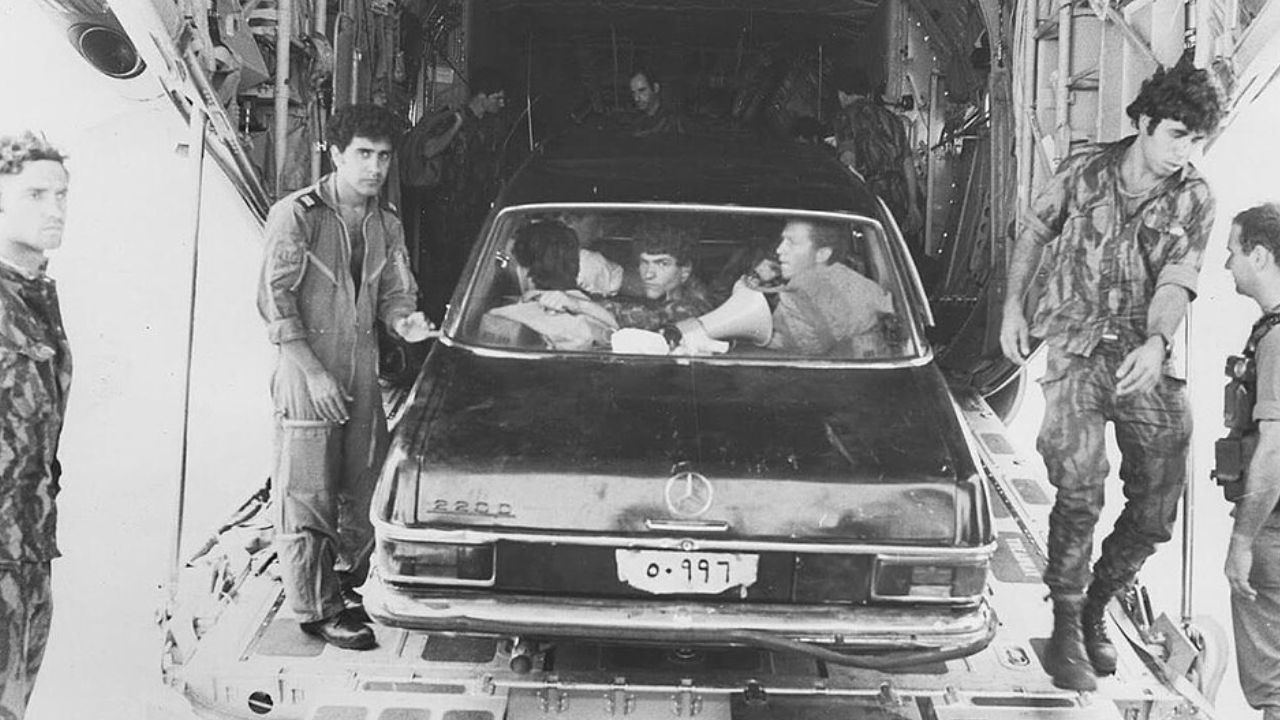
Israel’s 1976 Entebbe raid remains a benchmark because it combined distance, deception, and tempo in a way that still shapes how people think about rescue operations. In public memory it is closely associated with Israel’s special operations community, including Sayeret Matkal, and it helped cement a basic proposition: a state can project force quickly to recover hostages held far from home if the plan is built on actionable intelligence and disciplined execution.
Entebbe also illustrates why these raids are remembered so intensely. A successful rescue can function as a strategic message as much as a tactical outcome, reinforcing confidence at home and warning future hostage-takers that leverage is not guaranteed. The less comfortable lesson is that feasibility rests on details that are easy to miss from the outside: credible location data, rehearsals that anticipate friction, and an assault force prepared to make irreversible decisions the moment contact is made.
Cross-border raids: deterrence, sovereignty, escalation
Many of the most audacious rescues carry a built-in geopolitical cost because they cross borders or operate in spaces where the host government cannot—or will not—act. That immediately raises sovereignty and legal questions, especially if consent is unclear. Even when tactically successful, such operations can strain alliances, complicate basing or overflight arrangements, and invite retaliation by hostage-takers or connected networks.
Those tradeoffs are often part of the decision, not an afterthought. Leaders may accept diplomatic blowback because the domestic political cost of inaction can be severe. But choosing the raid option can also drive adaptation on the other side: dispersing hostages, increasing human shielding, and hardening sites to raise the chances that an assault turns lethal for the captives.
The assault system: mobility, entry, control, extraction
The most visible part of hostage rescue is the assault element—whether a military special mission unit or a national counterterrorism team—but the operation succeeds or fails as a system. Rapid mobility and a viable extraction plan matter as much as marksmanship. Helicopters and transport aircraft can enable speed and surprise, but they introduce their own constraints: noise, vulnerability during landing, weather limits, and mechanical uncertainty that can turn a planned launch into a last-minute stand-down.
At the objective, breaching and close-quarters fighting are unforgiving. Doors, stairwells, and narrow corridors become chokepoints where captors can kill hostages in seconds or trigger explosive hazards. That is why credible rescue forces plan redundancies—alternate entry points, contingencies for mislocation, immediate medical care, and rapid casualty evacuation—because the first minutes can produce both rescued hostages and critical injuries that cannot wait.
Negotiation vs. raid: why states choose force
Many hostage situations end through negotiation, ransom, or prisoner exchanges. Raids are typically considered when captors appear likely to kill hostages, when demands are politically impossible, or when intelligence suggests a narrow window that will close. Domestic politics also shapes the calculus: publics may accept negotiation in some cases, but high-profile kidnappings and terrorist threats can drive pressure for direct action.
In practice, governments often run parallel tracks—talks to buy time while forces rehearse—until events force a choice. That approach can help, but it is not neat. Negotiations can stall, leak information, or create false optimism that delays action too long. Raids can fail catastrophically if intelligence is wrong or out of date, a reality that popular storytelling often downplays when it treats elite units as a guarantee.
What the iconic units represent—and what they don’t
It is tempting to credit outcomes to a single elite unit or a signature piece of gear. A more accurate framing is institutional capability. The units readers associate with these missions—IDF special mission forces, U.S. special operations elements under joint tasking, the UK’s SAS, France’s GIGN and commando elements, Russia’s Spetsnaz, and comparable partners—are the sharp end of a larger enterprise. Their performance depends on intelligence collectors and analysts, planners, aircrews, communications, and medical teams operating on shared timing and shared understanding.
These organizations also reflect different national approaches to risk and restraint. Some systems emphasize discrimination and tight control of fires; others lean toward overwhelming force to reduce uncertainty in the assault. Either way, the operational reality is consistent: rescues in dense environments can create civilian harm, friendly-fire risk, and chaos that no amount of training can fully eliminate—only manage.
Readiness and cost: what “rapid response” really requires
Hostage rescue capability is expensive because readiness is the product. Maintaining forces that can launch quickly requires continuous training in breaching, close-quarters tactics, aviation integration, communications, and medical response, supported by intelligence capacity that can surge without breaking. The material demands are real: specialized tools, surveillance and night-vision systems, aircraft support, and the consumables of constant rehearsal.
There is also a broader tradeoff. High-end rescue forces typically sit inside wider counterterrorism portfolios, so maintaining immediate availability can compete with other deployments and priorities. A “raid over negotiation” posture is not just a policy preference; it implies sustained investment in rehearsal cycles, aircraft availability, and intelligence infrastructure so the decision to act is more than a gamble.
What changes next: faster intelligence fusion, higher urban risk
The defining trend for future hostage rescues is likely to be tighter intelligence fusion and faster decision loops rather than a single breakthrough platform. Signals, human reporting, and imagery have to converge quickly enough to generate a targetable location and a believable timeline, while staying secure enough to avoid compromise. As adversaries learn to hide among civilians and manipulate information, the pressure will grow on states to prove they can act with discrimination under extreme time pressure.
At the same time, modern hostage scenarios are increasingly urban and politically charged, where a tactical win can still become a strategic loss if sovereignty disputes, civilian casualties, or retaliation follow. That is why the most audacious hostage rescue raids—successful, partial, or failed—matter beyond the immediate outcome. They shape deterrence, public trust, alliance politics, and counterterrorism doctrine long after the headlines fade.