
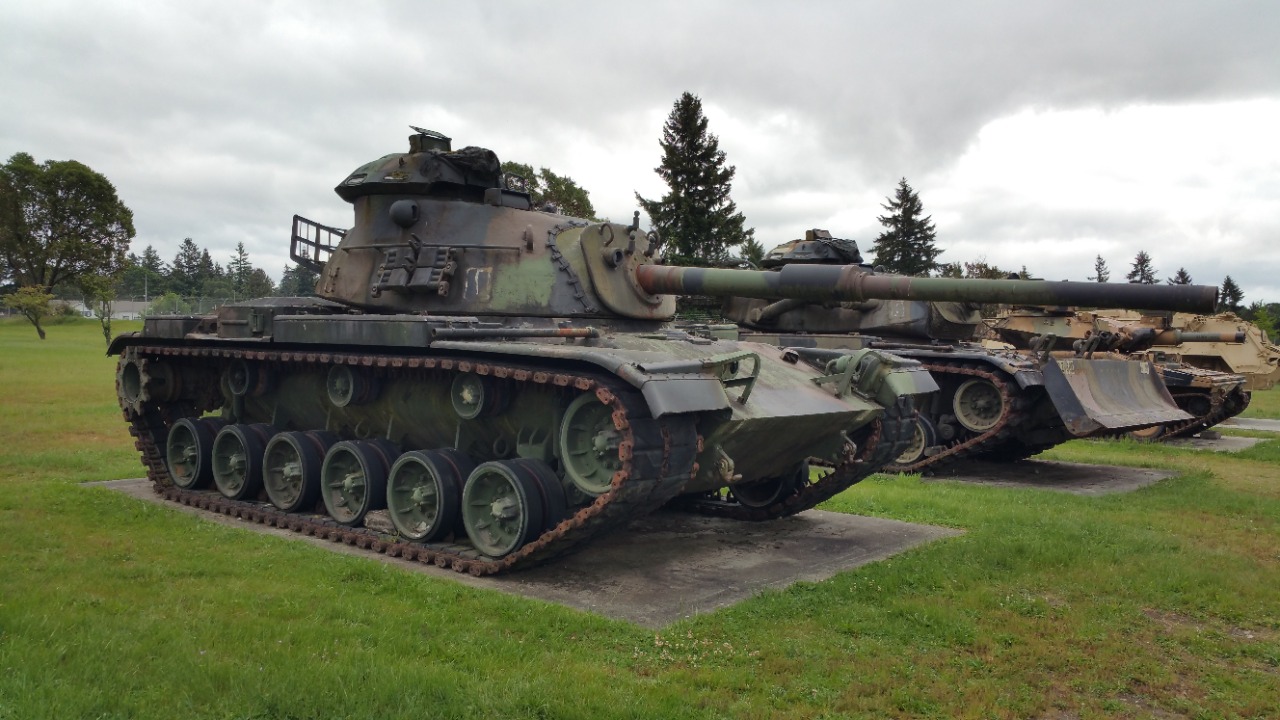
The M60 Patton main battle tank was born in the high-stakes environment of the Cold War, yet its design choices still echo through debates about how to build and field armored forces today. Long after more advanced machines have taken center stage, the M60’s blend of reliability, adaptability, and sheer numbers continues to offer hard lessons for militaries preparing for large-scale, high-intensity conflict. Those lessons cut to the core of modern questions about whether to prioritize exquisite technology, rugged simplicity, or the ability to keep tanks fighting after the first salvos land.
From its origins as a counter to new Soviet armor to its long service life across multiple variants, the M60 Patton shows how a well-conceived chassis can be stretched, upgraded, and repurposed for decades. Its record underscores that survivability in war is not only about armor thickness or sensor sophistication, but also about logistics, training, and the capacity to modernize at scale when budgets and industrial capacity are under pressure.
From Cold War counterweight to enduring workhorse
The M60 Patton main battle tank entered service at the start of the 1960s as a direct response to new Soviet designs that outgunned earlier American armor. Built around a powerful main gun, improved armor protection, and a long cruising range, it was conceived as a front-line system for a potential clash in Europe rather than a niche specialist vehicle. That origin story matters today because it shows how a tank designed for a specific strategic problem can still prove adaptable when the threat picture shifts, as long as its basic layout leaves room for growth.
Over time, the M60 evolved into a family of vehicles that reflected changing battlefield demands without discarding the underlying platform. The Patton Tank was not frozen in its early-1960s configuration; instead, it moved through successive upgrades in firepower, protection, and electronics that kept it relevant well into the late twentieth century. The fact that the Patton remained a credible combat system across multiple generations of armor highlights how a sound initial design, rather than the most cutting-edge technology of the moment, can anchor a long-lived capability that still informs how armies think about modernization cycles today.
Combat record from Europe to the Gulf and beyond
The M60’s combat history underscores that a tank’s value is measured not only in specifications but in how it performs under fire against real adversaries. The United States fielded its largest numbers of M60s during the Cold War, and the type later saw extensive action in Operation Desert Storm, where it served alongside newer designs in a fast-moving campaign. Although The United States eventually retired the M60 from front-line combat after that conflict, the tank’s participation in a modern, high-tempo war cemented its reputation as a dependable workhorse that could keep pace with evolving doctrine.
That record is even more striking when set against the M60’s original design era. A platform conceived for a potential clash with Warsaw Pact forces in Europe ended up fighting in the deserts of the Middle East decades later, often in harsh conditions that tested engines, suspensions, and maintenance systems. The fact that the M60 remained in service with multiple nations long after its retirement from U.S. front-line units, including in roles such as armored bridge layers and combat engineering vehicles, shows how combat-proven reliability can extend a tank’s utility far beyond its initial battlefield niche.
Adaptability, upgrades, and the power of a good chassis
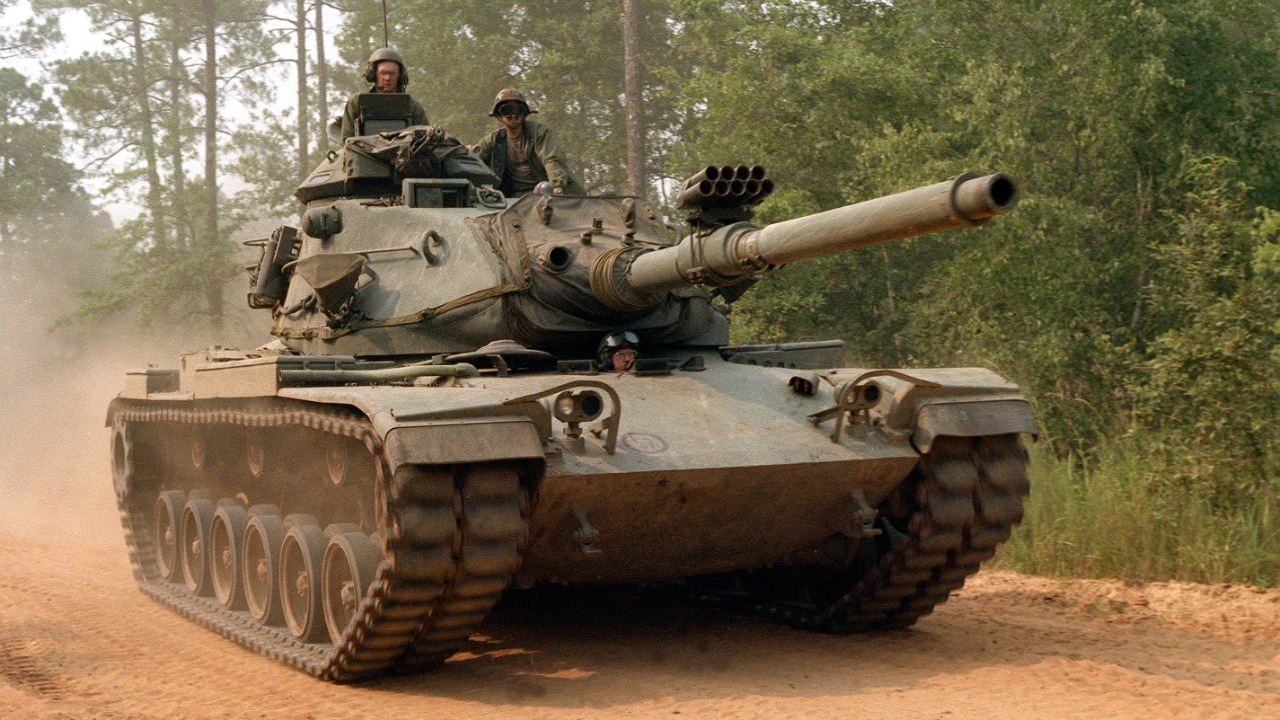
One of the clearest lessons the M60 offers modern planners is the value of designing a tank around a spacious, upgrade-friendly chassis. The M60 vs 72 comparison often highlights that the American vehicle’s larger internal volume made it easier to integrate new cannons, armor packages, and fire control systems over time. That roomy design turned what might have been a short-lived Cold War tank into a platform that could absorb technological advances without requiring a complete redesign every decade.
The M60A3 variant, often described as the Last and Best version of the Patton Tank, illustrates how far that adaptability could be pushed. Although the M60A3 Tank lacked some of the most advanced armor and electronics found on newer fourth-generation designs, it incorporated improved fire control, better sights, and reliability upgrades that kept it competitive in many scenarios. The fact that this Deep Dive into the final variant still emphasizes its reliability rather than exotic features is a reminder that a flexible, maintainable platform can remain relevant even when it does not match the latest technology on paper.
Service life extension and the logistics of staying power
The M60’s longevity also reflects deliberate choices to invest in upgrades instead of discarding older hulls at the first opportunity. Service Life Extension Programs, often abbreviated as SLEPs, took advantage of the Patton’s robust design to add new engines, transmissions, and suspension components that improved the tank’s speed and mobility without starting from scratch. Those efforts, highlighted in recent analysis of how the Patton Tank Has a continuing Message for the Army, show how incremental modernization can stretch limited budgets while still delivering meaningful battlefield gains.
Behind those upgrades lies a deeper logistical lesson that resonates in current debates about armored fleets. A tank that is rugged, easy to maintain, and supported by a mature supply chain can often deliver more combat power over time than a fragile, high-end system that spends long stretches in the workshop. The M60’s relatively simple mechanics, combined with widely available spare parts, meant that crews and maintainers could keep it running in austere conditions where more complex vehicles might falter. That experience reinforces the idea that logistics and maintainability are not secondary concerns but central design criteria for any armored vehicle expected to survive a prolonged, high-intensity war.
Training, quantity, and what the M60 says about future armored forces
The Patton’s straightforward design also made it a valuable training tool, a factor that is easy to overlook when discussions focus on armor thickness or sensor suites. Because the M60’s systems were less complex than those of many modern tanks, new crews could learn the basics of gunnery, driving, and field maintenance relatively quickly. That simplicity allowed armies to build a broad base of trained personnel who could then transition to more advanced platforms, while still having a capable tank available for reserve units, partner forces, or secondary theaters where the latest equipment was not available.
Equally important is the lesson the M60 offers about the strategic value of mass. While individually less lethal than some contemporary fourth-generation designs, the Patton’s availability in large numbers gave commanders options that a smaller fleet of elite vehicles could not match. The principle that quantity has a quality all its own is not a slogan but a hard reality in conflicts where attrition can rapidly erode even the most sophisticated forces. The M60’s history shows that a balanced mix of high-end tanks and rugged, numerous platforms can provide resilience when losses mount, a consideration that looms large as militaries contemplate how to structure armored brigades for potential peer conflict in the coming decades.