
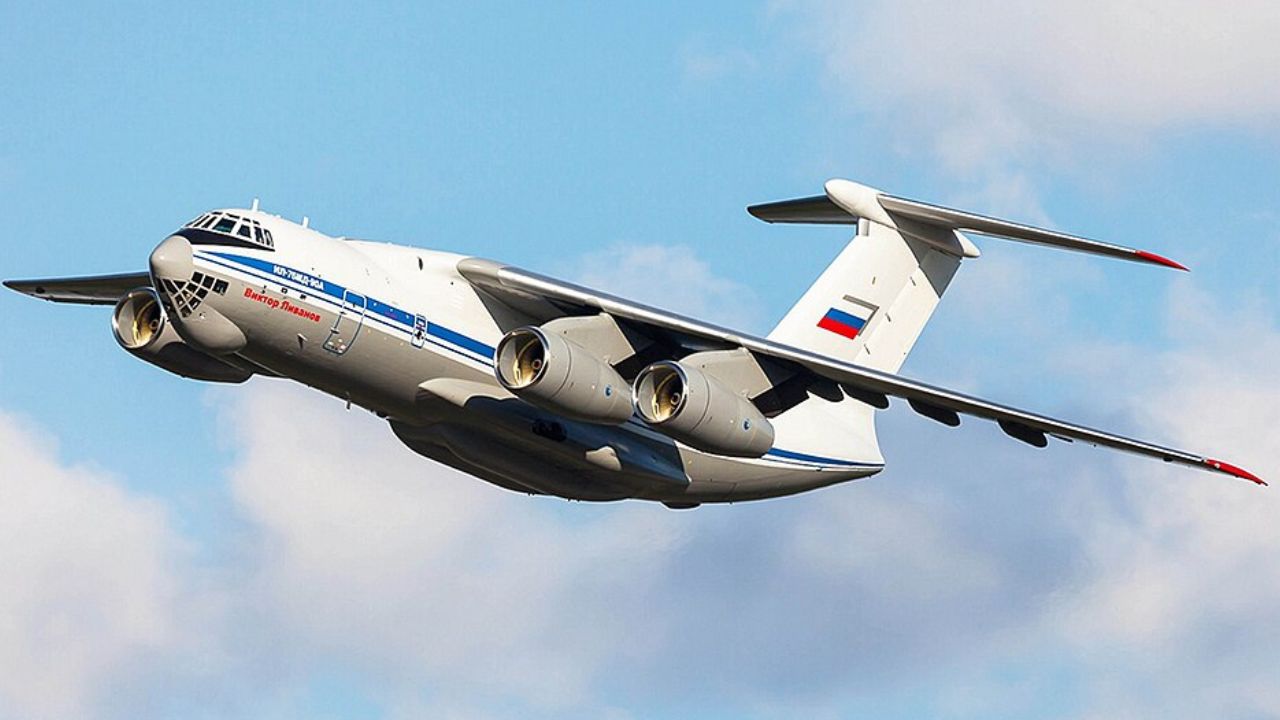
If you’ve ever seen a big, high-wing jet with a chunky fuselage, a tall T-tail, and four engines hanging under the wings like they mean business, there’s a decent chance it was an Il-76. For decades, this Soviet-designed workhorse has been the kind of airplane that shows up everywhere: military bases, disaster zones, remote airstrips, and the occasional news clip where something heavy needs moving fast. It’s not flashy, but it’s instantly familiar—like the cargo plane equivalent of a well-worn tool that still gets the job done.
The Ilyushin Il-76 earned its reputation the old-fashioned way: by flying a lot, carrying a lot, and surviving in places that aren’t exactly gentle on aircraft. From the late Cold War to today’s humanitarian missions, it’s been one of those platforms that just refuses to fade into history. And honestly, part of its charm is that it looks exactly like what it is—purpose-built muscle with wings.
A design born for rough airfields and big jobs
The Il-76 was developed in the late 1960s and entered service in the 1970s, built to solve a straightforward problem: move heavy cargo and troops across huge distances, then land where nicer jets wouldn’t dare. The Soviet Union needed an airlifter that could operate from semi-prepared runways, cope with harsh weather, and keep going even when support infrastructure was limited. That requirement shaped everything from its landing gear to its high-mounted wing.
Those design choices weren’t just theoretical. The Il-76’s sturdy structure and ground-handling features were meant for the real world—dusty airfields, icy pavement, and busy ramp operations where speed matters. You can see it in the tall stance, the robust undercarriage, and the overall “built like a truck” vibe that makes aviation fans nod in appreciation.
Why it’s so easy to recognize
Some aircraft are recognizable because they’re sleek. The Il-76 is recognizable because it looks like it could lift your entire neighborhood and still ask what else you’ve got. The high wing and T-tail give it that classic heavy-transport silhouette, while the four engines and distinctive wing planform make it stand out even in grainy footage.
Then there’s the sound and presence. People who’ve worked around them often mention how “serious” the airplane feels on approach—low, steady, and unmistakably heavy. It’s the kind of jet that doesn’t whisper past; it arrives with the confidence of something that expects the runway to cooperate.
A global career that went far beyond its original brief
Although it started as a Soviet military transport, the Il-76 quickly became an international sight. Variants and operators spread across multiple regions, and over the years the aircraft appeared in military inventories, state fleets, and commercial cargo operations. If there was a place that needed a rugged airlifter—and didn’t have the luxury of perfect runways—there was a reason the Il-76 kept getting the call.
That global footprint did something important for its reputation: it turned the Il-76 into a visual shorthand for “heavy lift is happening.” When cameras captured relief supplies being unloaded after disasters, or equipment arriving in austere locations, the airplane in the background often had the same familiar outline. Over time, it became part of the scenery of big logistics moments.
From troops and tanks to aid and firefighting
The basic role is simple: carry big loads. In military service, that can mean troops, vehicles, palletized cargo, and all the support gear that keeps operations moving. Its rear cargo ramp and spacious hold are the kind of practical features that make loading less of a headache, especially when time is tight.
But the Il-76 didn’t stay boxed into one mission. Some aircraft have been adapted for specialized roles like aerial firefighting, where modified versions can drop large volumes of retardant or water. Others have been used for humanitarian airlift, showing up with food, tents, generators, and medical supplies—proof that “military transport” doesn’t have to mean only military outcomes.
Upgrades, variants, and the secret to staying relevant
One reason the Il-76 has stayed in the conversation for so long is that it’s been updated and reworked in multiple forms. Different versions have appeared over the years, including modernized models with improved avionics and more efficient engines. The underlying airframe concept is solid enough that upgrades actually make sense, rather than feeling like a last-ditch effort to keep a relic alive.
It’s also a platform that lends itself to adaptation. Big fuselage, high payload capacity, and a design focused on rugged operations means it can be tailored to different customers and missions. In aviation terms, that’s the kind of flexibility that keeps an aircraft family circulating long after newer designs show up in brochures.
The Il-76 in today’s headlines
Even now, the Il-76 continues to appear in news coverage, sometimes in routine transport roles and sometimes in more dramatic contexts. Whenever there’s a major logistics push—whether for military deployments or large-scale relief efforts—heavy airlifters become part of the story, and the Il-76 is often among them. It’s a reminder that airlift is one of those behind-the-scenes capabilities that suddenly becomes very visible when the world needs it.
At the same time, modern operations come with modern expectations: efficiency, reliability, compliance, and maintainability all matter. That reality has pushed operators toward upgraded variants and better support pipelines. Still, the fact that the Il-76 remains in service in various forms says a lot about the original design’s staying power.
A reputation built on practicality, not hype
The Il-76 didn’t become iconic because it was rare or delicate. It became iconic because it was common in the places that mattered—where moving cargo by air is the difference between “we’ll get to it eventually” and “we’re there tomorrow.” It’s the kind of airplane that looks almost overbuilt until you remember what it’s asked to do.
In a world full of aircraft that try to look futuristic, the Il-76 is refreshingly honest. It’s big, tough, and purposeful, and it’s spent decades proving that those traits age pretty well. If aircraft had résumés, the Il-76 wouldn’t need fancy formatting—just a long list of jobs completed in difficult conditions, with a note that it’s still ready for the next one.