
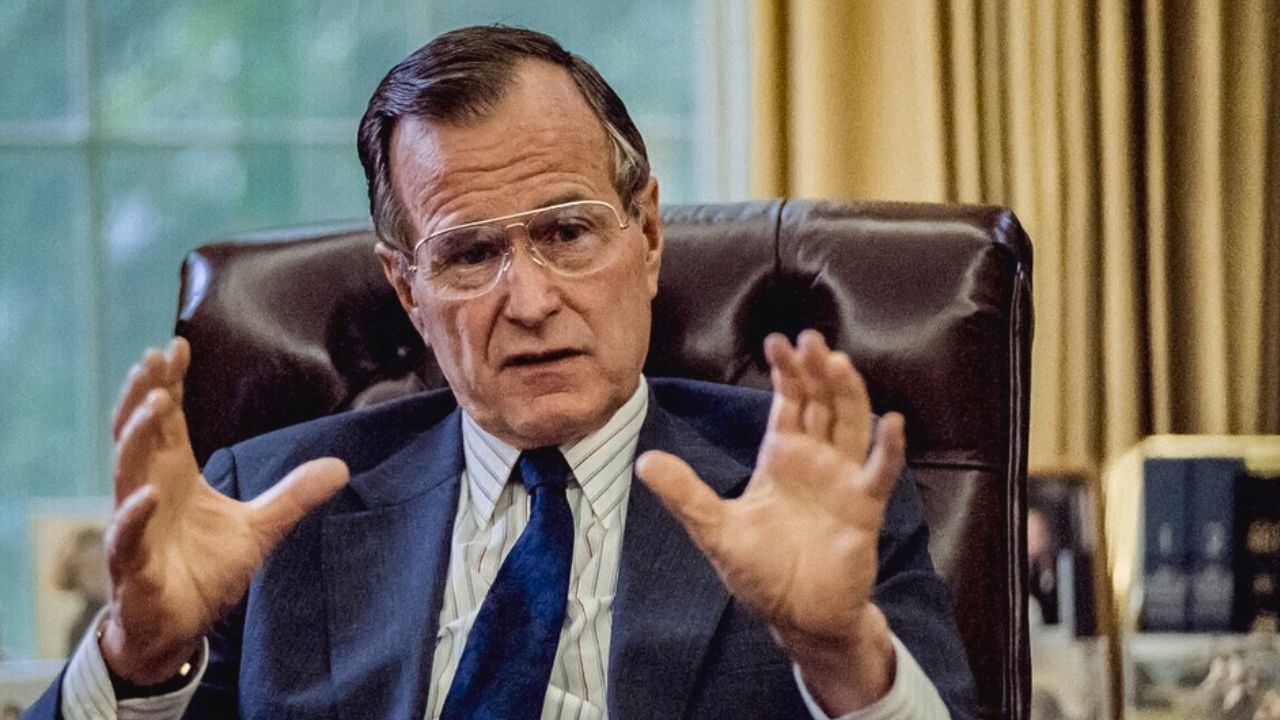
When George H.W. Bush walked into the White House in 1989, he inherited a world that was changing fast. The Cold War was wobbling toward its finale, the Soviet Union was starting to crack, and the U.S. was trying to figure out what “leadership” looked like without the usual superpower showdown. Then, in August 1990, Saddam Hussein’s Iraq invaded Kuwait—and suddenly Bush’s presidency had a defining test that wasn’t theoretical at all.
The conflict that followed, commonly called the Gulf War, didn’t just become the biggest foreign-policy story of his four years. It shaped how Americans saw Bush: steady, cautious, and intensely focused on alliances and rules. It also left behind a complicated legacy—part triumph, part “what if?”—that still gets debated whenever the U.S. talks about war, coalitions, or the Middle East.
A sudden crisis that demanded a fast answer
Iraq’s invasion of Kuwait on August 2, 1990, shocked Washington and much of the world. Kuwait was small but strategically crucial, sitting on massive oil reserves and along key shipping lanes. If Saddam controlled Kuwait and threatened Saudi Arabia, he could potentially choke global energy supplies and gain enormous leverage.
Bush’s team quickly framed the invasion as more than a regional dispute. This, they argued, was a direct challenge to the post–World War II idea that borders aren’t redrawn by brute force. If it stood, it would signal to other would-be aggressors that the international community might grumble, but wouldn’t act.
Building a coalition: Bush’s superpower move
One of the most striking parts of the Gulf War story is that it wasn’t a solo American show. Bush and Secretary of State James Baker went all-in on coalition-building—diplomacy, phone calls, arm-twisting, and plenty of behind-the-scenes bargaining. The result was a broad international coalition that included European allies and, critically, several Arab states.
That mattered for both legitimacy and practicality. A coalition meant shared burdens and a stronger message that Iraq was isolated. And in a region sensitive to Western military presence, having Arab partners helped blunt Saddam’s propaganda that this was simply the U.S. bullying an Arab country.
The UN route—and why it mattered
Bush also pursued United Nations backing in a way that now feels like a time capsule from a brief moment of post–Cold War optimism. The UN Security Council condemned the invasion and authorized force if Iraq didn’t withdraw. For Bush, UN authorization wasn’t just paperwork; it was a political shield and a moral argument rolled into one.
At home, it strengthened his case that this wasn’t a war of choice cooked up in Washington. Abroad, it helped rally countries that might’ve stayed on the sidelines. Critics later argued that “UN cover” can’t substitute for clear long-term planning, but in 1990–91 it made the operation feel unusually internationally sanctioned.
Operation Desert Storm and the era of televised war
The air campaign began in January 1991, followed by a ground offensive in late February. The military operation was swift and, for the coalition, devastatingly effective. Iraqi forces were driven out of Kuwait in a matter of days once the ground war started, and the coalition declared its main objective achieved.
Americans watched much of it unfold on television in near real time, with dramatic night-vision footage and round-the-clock updates. It was one of the first conflicts where the “home front” felt like it had a front-row seat. The war looked clean and high-tech on screens, even though the reality on the ground was far harsher than the video clips suggested.
The decision not to topple Saddam
Here’s where Bush’s defining moment gets complicated. After liberating Kuwait, the coalition did not march to Baghdad to remove Saddam Hussein. Bush and his advisers argued that their mandate was limited—restore Kuwait’s sovereignty—and that expanding the war could fracture the coalition and mire the U.S. in an open-ended occupation.
In the short term, that restraint looked like prudence. In the long term, it became one of the most debated choices of the era. Saddam remained in power, Iraq faced years of sanctions and periodic conflict, and the unresolved nature of the crisis hung over U.S. policy until the 2003 invasion under Bush’s son.
A surge in approval—and a political irony
Politically, the Gulf War initially made Bush look unbeatable. His approval ratings soared after the coalition victory, and the phrase “we’ve kicked the Vietnam syndrome once and for all” captured the sense that America had, at least briefly, regained confidence in using military force. The war was short, objectives were clear, and casualties for U.S. forces were far lower than many had feared.
But the glow didn’t last. By 1992, economic anxiety dominated the national mood, and Bush’s foreign-policy strengths didn’t translate into domestic political security. It’s one of the great ironies of modern U.S. politics: a president can lead a successful war abroad and still lose re-election because people are worried about jobs, wages, and the cost of living at home.
What the Gulf War revealed about Bush’s leadership
The Gulf War showcased Bush’s temperament in a way few other events could. He was cautious but decisive, more manager than showman, and deeply invested in alliances. He didn’t treat diplomacy as a warm-up act to military power; he treated it as part of the main event.
It also highlighted his comfort with the national-security machinery. Bush had been a WWII pilot, a congressman, CIA director, vice president—he knew the players and the levers. In a crisis, that experience translated into calm, coordinated action that many supporters still point to as a model of how to run a limited war with broad backing.
The long shadow: security, basing, and future wars
Even though the shooting war was brief, the aftermath stretched on. U.S. forces maintained a significant presence in the region, and no-fly zones and periodic strikes became part of the policy landscape. In many ways, the Gulf War marked the start of a more enduring American military footprint in the Middle East.
And it shaped expectations. Future presidents faced questions the Gulf War helped define: What counts as a “clear objective”? How important is a coalition? When do you stop—especially if the enemy leader survives? The fact that these questions came roaring back in the early 2000s is part of why the 1991 conflict remains such a reference point.
A defining moment, because it was both a win and a warning
If you want the simplest way to understand why the Gulf War became the defining moment of George H.W. Bush’s presidency, it’s this: it was a high-stakes success that also planted seeds of future turmoil. Bush proved he could rally the world, use force with a limited aim, and end a war quickly. At the same time, the choice to leave Saddam in power ensured the story didn’t neatly end when the tanks stopped rolling.
History tends to remember presidencies by their biggest tests. For Bush, the Gulf War was that test—an event that highlighted his strengths, exposed the limits of even a well-run victory, and reshaped America’s role in a world that was, for the first time in decades, no longer organized around the Cold War’s familiar lines.