
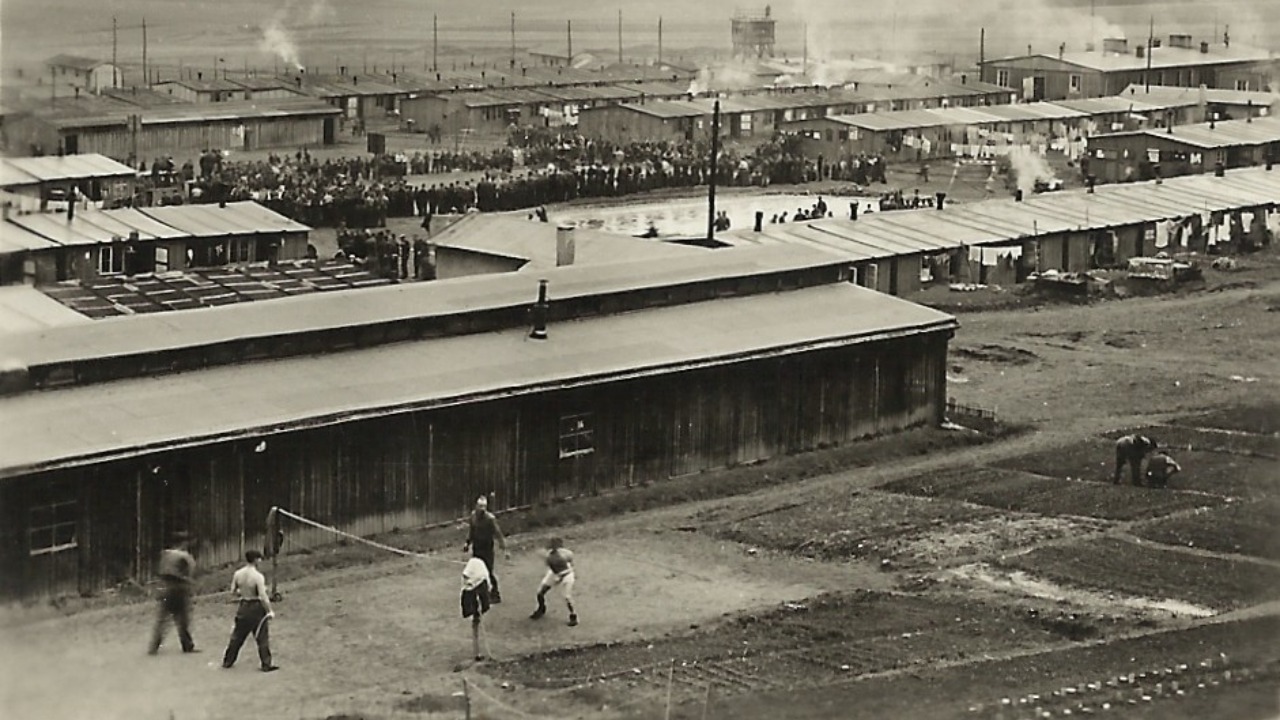
The mass breakout from the German prisoner of war camp Stalag Luft III was conceived as a daring bid for freedom and a way to tie up enemy resources. Instead, it became a death sentence for most of the men who slipped into the snow that night, a crime that would echo through postwar trials and popular culture alike. The story of how a meticulously planned escape for 76 Allied airmen ended with 50 of them murdered on orders from Adolf Hitler is both a testament to resistance and a stark lesson in the brutality of reprisal.
Behind the familiar film version lies a harsher reality: a supposedly escape proof camp, a clandestine underground network, and a chain of decisions at the highest levels of the Nazi state that turned captured officers into victims of extrajudicial execution. The Great Escape was not only an audacious operation, it was also a deliberate test of the Geneva Conventions that the regime chose to fail.
A “secure” camp and a quiet decision to resist
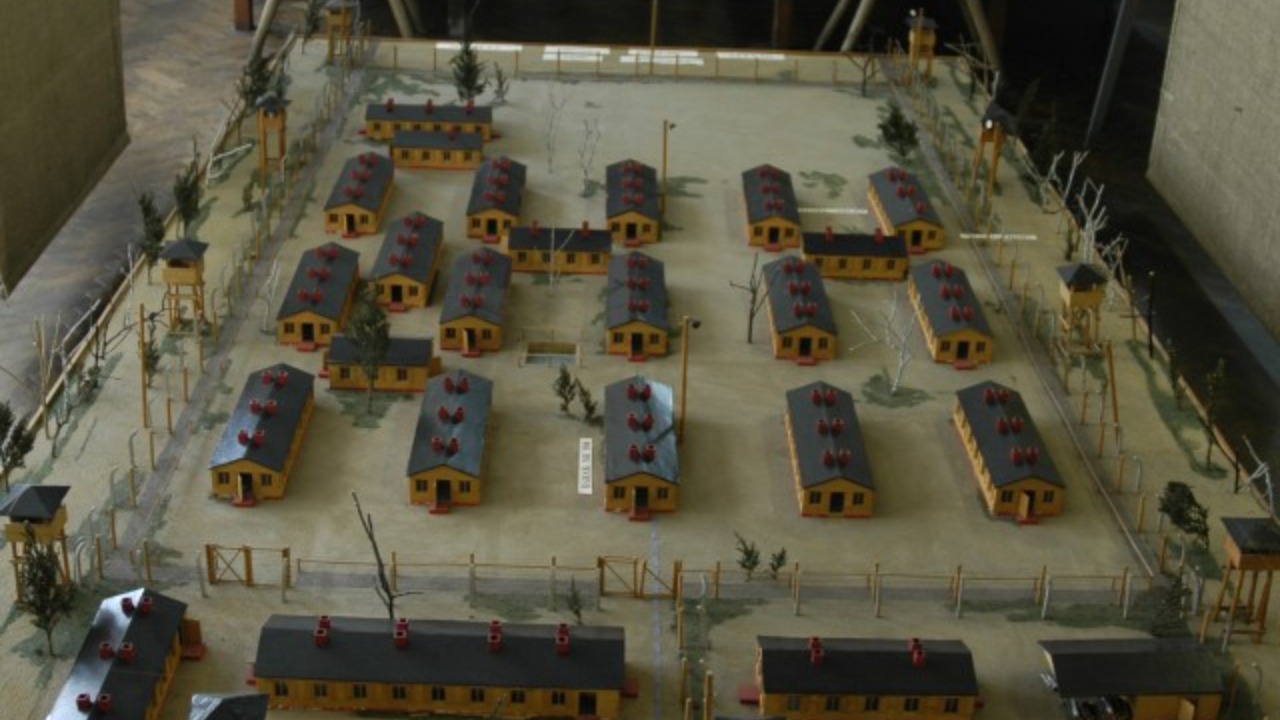
Stalag Luft III was designed by The Nazis to be the end of the line for captured aircrew, a high security facility near Sagan in occupied territory where tunnelling would be difficult and surveillance tight. The camp, run by the Luftwaffe, held Allied airmen who were expected under international law to be treated as POW officers, not common criminals. The Great Escape emerged from that tension, as prisoners weighed their duty to keep resisting against the risks of provoking a regime already known for contempt toward the Geneva Conventions, a contempt later underscored when Hitler personally intervened after the breakout, as detailed in accounts of Stalag Luft III.
The British approach to POW captivity treated escape as an extension of service, and with support from MI9, prisoners built an underground structure known simply as the X Organization. The British officers who led it turned the camp into a covert workshop, forging documents, tailoring civilian style clothes, and gathering intelligence on rail routes and patrol patterns. This Organization coordinated hundreds of men, channelling their skills into a single objective: a mass breakout that would force The Nazis to divert troops, police, and aircraft away from the front, a strategy outlined in research on The British POW Organization.
Three tunnels, one night, and 76 men in the snow
The escape plan was as ambitious as any operation outside the wire. RAF Squadron Leader Roger Bushell, known by the codename Big X, proposed building three deep tunnels, nicknamed Tom, Dick, and Harry, to overwhelm camp security and ensure that if one was discovered, the others might survive. Hundreds of prisoners spent nearly a year digging, shoring up walls with bedboards, and disposing of sand in their trousers during daily walks. One of the tunnels, completed in the winter of 1943, was sealed until conditions were right for a breakout, a detail recalled in later testimony about how the tunnel was kept hidden until the chosen night, as described in coverage of Mar.
On the chosen night, the prisoners discovered a critical miscalculation: the exit of Harry fell short of the tree line, opening into exposed ground instead of the protective woods they had counted on. The flaw slowed the flow of men into the darkness, forcing each to crawl out, wait for a signal, then sprint for cover. Despite the delay, 76 Allied prisoners managed to slip out before a guard spotted the 77th man and raised the alarm. That figure of 76 is consistent across detailed reconstructions of the breakout, including an account that notes how, on the night of March 24 to 25, 76 Allied prisoners of Stalag Luft III, a German prison camp, made it through the tunnel before discovery, as summarized in a narrative by Alan Burgess.
From breakout to manhunt to murder
What began as a triumph of ingenuity quickly turned into a continent wide dragnet. The Nazis launched a massive manhunt, deploying police, soldiers, and Gestapo units to comb rail stations, roads, and villages for the missing airmen. Of the 76 successful escapees, 73 were recaptured, most within several days of the breakout, a tally that appears in detailed postwar reconstructions of the Stalag Luft III murders. The scale of the search validated the prisoners’ original aim of tying up enemy resources, but it also placed the fate of the captured men in the hands of a leadership enraged by the embarrassment.
Infuriated by their brazenness, Hitler initially demanded that all the recaptured men be executed, a direct violation of the Geneva Conventions that governed the treatment of POW officers. Senior figures in the regime argued that such a blanket order would be difficult to conceal and might provoke retaliation, but Hitler still insisted that more than half of the escapees be killed. Heinrich Himmler then set the number at 50, a figure that appears in both legal analyses of the murders and historical summaries of how Hitler’s fury was translated into a specific quota for killing, as outlined in accounts of Hitler and Himmler and in reporting that notes how Hitler ordered all escapees be executed before being persuaded to limit the reprisal, a clear breach of the Geneva Conventions.
The 50 who never came back
The killings were carried out in a way that tried to mask murder as misfortune. Recaptured officers were taken from local jails in small groups, driven into the countryside, and shot by Gestapo teams who later claimed the prisoners had been killed while attempting to escape again. Of the 76 successful escapees, 73 were recaptured and 50 of whom were executed on the personal orders of Hitler, a sequence that is spelled out in detailed breakdowns of the murders. Unlike the film version, which compresses events and characters, historical research stresses that the victims were killed in scattered locations, often far from where they had been held, to make the deaths harder to trace back to a central directive.
The bodies of many of the murdered airmen were eventually brought together in cemeteries that now serve as focal points for remembrance. One such site near Poznan is described as the final resting place of the Great Escape servicemen, a location reached by a small lane off the Alasia Army Pausnan Road, with limited parking near an Army Museum and nearby Park, as noted in a commemorative description of the Great Escape servicemen. These burial grounds underline how a single night’s operation, intended to send men back into the fight, instead ended with rows of identical headstones in foreign soil.
Three who made it, and the long road to justice
Only three men ultimately turned the breakout into a true escape. Two Norwegian airmen, Per Bergsland and Jens Müller, managed to reach neutral Sweden by hiding on a freighter, while Dutch pilot Bram van der Stok threaded his way through occupied France and Spain to Gibraltar. Their journeys, reconstructed in postwar interviews and official histories, show that the plan was not entirely doomed, but that success required a combination of language skills, local help, and sheer luck that most of their comrades did not have. Their survival is consistent with accounts that note how 76 men got out, yet only three avoided recapture, a contrast highlighted in both narrative histories and analytical pieces on Stalag Luft III.
After the war, the murders became the focus of one of the most determined war crimes investigations undertaken by a single branch of a nation’s military. The Royal Air Force’s Special Investigation Branch tracked down 69 of the 72 individuals believed responsible for the killings, piecing together orders, transport records, and eyewitness accounts. Subsequent tribunals convicted 18 Gestapo officers of war crimes, with 13 of them executed for their roles in the shootings, a judicial reckoning that appears in detailed summaries of the postwar pursuit of justice for the Great Escape victims. The episode has since been retold in books, documentaries, and the film The Great Escape, but historians continue to stress that the real story, as outlined in research on The Great Escape and in analyses of how Infuriated Hitler violated the Geneva Conventions, is less about cinematic heroics and more about the lethal cost of defiance under a regime that treated law as an obstacle to be crushed.