
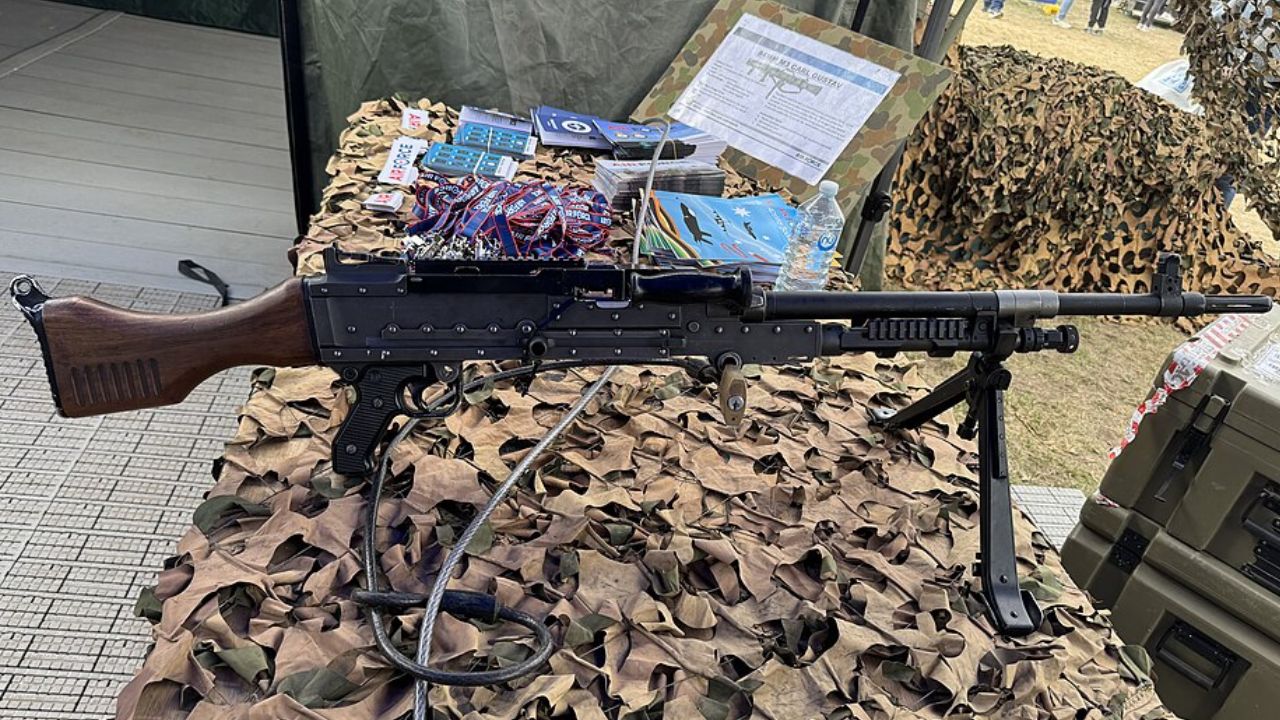
If you’ve ever talked to soldiers about “the gun that just keeps running,” the FN MAG comes up a lot. It isn’t flashy, it isn’t new, and it definitely isn’t light, but it’s earned a reputation the hard way: by working in places that break equipment and patience. Over decades of service, it’s become one of those rare weapons people trust almost instinctively.
The FN MAG (often called the MAG 58) is a 7.62×51mm NATO general-purpose machine gun, which is a fancy way of saying it can do a bit of everything. It can ride on a bipod for infantry, mount on vehicles, or sit in a tripod role for longer-range sustained fire. That flexibility is a big reason it spread so quickly, and why it’s still around.
Born from practical ideas, not marketing slogans
The MAG’s roots go back to Belgium’s FN Herstal in the early Cold War, when militaries wanted weapons that were rugged, standardized, and easy to keep fed. FN’s engineers didn’t try to reinvent the wheel—they borrowed what already worked. The MAG blends proven concepts, pairing a sturdy gas-operated system with a feeding arrangement that’s become a familiar sight to anyone who’s been around belt-fed guns.
The result was a machine gun that feels almost deliberately “unfussy.” Controls are straightforward, the gun is built like it expects to be dropped, banged, and dragged, and it tends to keep going even when conditions are less than polite. If weapons had a personality, the MAG’s would be the dependable friend who shows up early and complains quietly.
Why militaries kept choosing it
The simplest answer is that the FN MAG is reliable in a way that’s hard to overstate. Mud, dust, rain, and heat don’t magically stop it, and that matters because real-world operations rarely happen on a clean range with nice weather. When a unit is tired, short on time, and dealing with miserable terrain, “works anyway” becomes a superpower.
It also hits the sweet spot in capability. In 7.62 NATO, it can reach out further and punch harder than most 5.56 light machine guns, making it useful for suppressing positions at distance. And because it’s belt-fed, it’s built for sustained fire—exactly what you want when the goal is to keep an opponent’s head down so friendly forces can move.
A general-purpose machine gun that actually earns the name
Some weapons get labeled “general-purpose” mostly because brochures say so. The MAG earns it by showing up in multiple roles without feeling like a compromise in all of them. On a bipod, it gives infantry squads a serious base of fire; on a tripod, it becomes a steadier, longer-duration tool; on vehicles, it’s a workhorse for patrols and convoy defense.
This adaptability also helps with logistics and training. If an army can standardize around one machine gun family for different platforms, that simplifies spares, manuals, and muscle memory. Nobody misses the days when every mount and role needed a totally different weapon with totally different quirks.
The “GPMG on a truck” era: where it really shines
One of the MAG’s most famous careers has been as a vehicle-mounted gun. In British service it’s known as the L7, and in many places it’s simply the default 7.62 machine gun you expect to see on armored vehicles, patrol trucks, and boats. Mounted guns live a hard life—constant vibration, exposure to dust, and long hours outside—and the MAG’s reputation for endurance fits that job nicely.
There’s also a practical comfort in the way it handles heat and sustained firing when used correctly with barrel changes and good discipline. Nobody wants a machine gun that becomes a science experiment after a few belts. The MAG’s design and its doctrine-friendly approach to barrel swaps make it a steady performer instead of a drama magnet.
It’s heavy, sure—but there’s a reason for that
People love to point out that the FN MAG isn’t exactly something you’d want to hike with for fun. Depending on configuration, it’s typically in the “you’ll feel it after a few minutes” category, and that weight doesn’t include ammunition, spare barrel, and the rest of the kit. But the weight buys durability, controllability, and a sense that the gun won’t rattle itself apart.
In many units, the MAG’s heft is treated less like a flaw and more like a trade. You’re carrying a system designed for sustained fire, and physics isn’t negotiable. If you want a full-power 7.62 belt-fed gun that stays stable and survives abuse, a little extra mass is part of the deal.
Global adoption: the quiet sign of a winner
One of the clearest markers of the MAG’s status is just how widely it’s been adopted and produced. Variants and licensed versions have appeared across NATO and beyond, and it’s been used in conflicts spanning decades and continents. Weapons don’t get that kind of passport stamp collection unless they solve problems consistently.
There’s also something to be said for institutional trust. Militaries are conservative for a reason: switching weapons is expensive, complicated, and disruptive. The fact that the MAG has stayed in inventories even as other systems come and go tells you it’s doing its job well enough that replacement can wait—sometimes for a very long time.
How it stacks up against newer designs
Modern machine guns can be lighter, more modular, and sometimes more comfortable to configure for specific missions. You’ll see quick-change rails, improved ergonomics, and materials that shave ounces wherever possible. And yet, plenty of forces still keep the MAG close, because reliability and sustained performance aren’t trends—they’re requirements.
In practice, many armies modernize around it rather than discard it. New mounts, improved optics compatibility, updated stocks, and better accessories can keep an older core design relevant. It’s a bit like keeping a classic truck on the road with modern tires and a better radio: the engine still runs great, so why start over?
The real legacy: confidence under pressure
The FN MAG’s reputation isn’t built on internet hype or a single legendary battle. It’s built on a thousand small moments where it fired when it was supposed to, fed when it was supposed to, and didn’t become someone’s emergency problem at the worst possible time. That kind of dependability becomes part of a unit’s rhythm, and it’s hard to replace.
For a machine gun, respect isn’t about looking intimidating on a poster. It’s about being trusted when everything’s loud, chaotic, and uncertain. On that score, the FN MAG has earned its place—one belt at a time.