
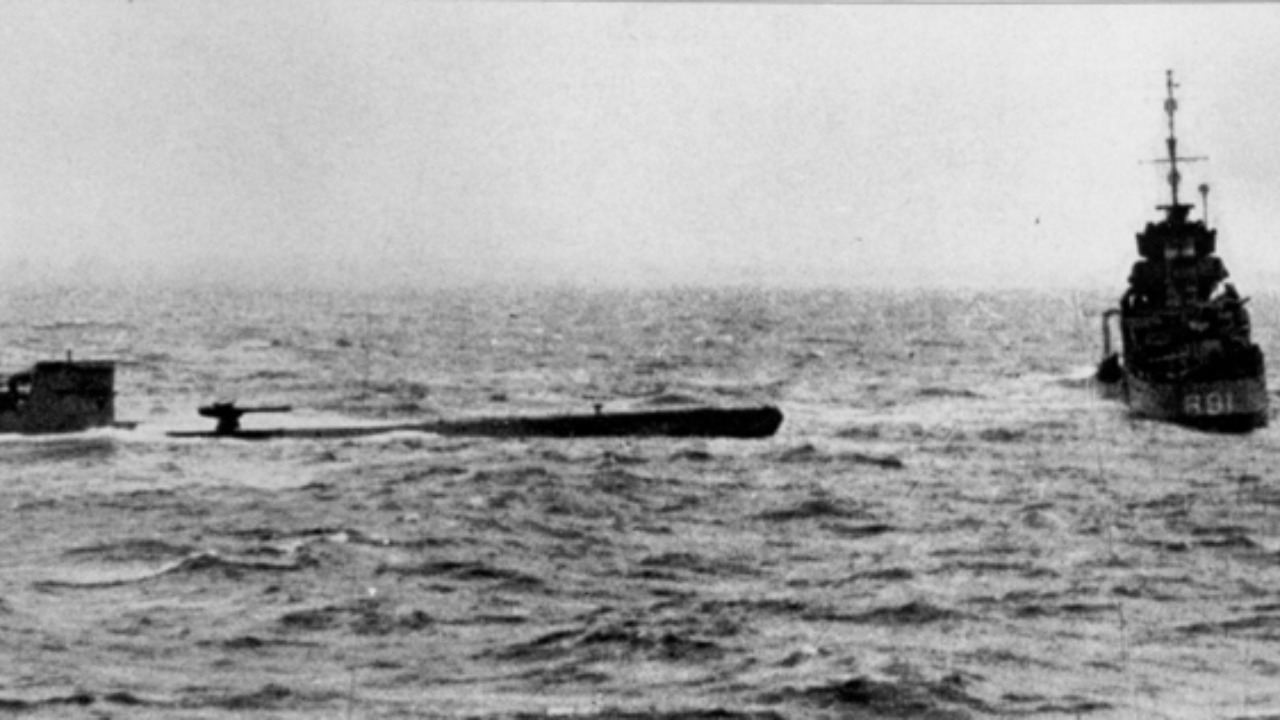
The struggle to read Germany’s Enigma traffic was not an abstract puzzle, but a brutal race to keep merchant ships alive in the Atlantic. By turning a supposedly unbreakable cipher into a source of daily intelligence, Allied codebreakers transformed the “code war” into a quiet victory that kept convoys moving and helped decide the outcome of World War II. Their success, built on international cooperation and relentless technical innovation, turned mathematics and machines into weapons as decisive as any torpedo.
From early breakthroughs in Poland to industrial-scale decoding at Bletchley Park, the Enigma story shows how information could be as lethal as a U-boat or as protective as an escort destroyer. The ability to read German naval orders in near real time allowed commanders to steer ships away from danger, ambush submarines, and ultimately secure the sea lanes that fed Britain and enabled the liberation of Europe.
The machine that powered a hidden front
Enigma began as a commercial cipher device, but in the hands of Germany it became the backbone of military communications, especially for U-boats hunting in the North Atlantic. German commanders relied on the machine’s shifting electrical rotors and plugboard to scramble messages into apparently random Morse characters, confident that no enemy could reconstruct the settings in time to matter. Contemporary accounts describe how Germany used this system to coordinate submarine “wolf-packs” and direct torpedo attacks against convoys, turning the Atlantic into a killing ground.
The scale of this encrypted traffic was immense, with thousands of messages carrying orders, position reports, and logistics details that shaped the tempo of the Battle of the Atlantic. As later technical histories of Cryptanalysis of the Enigma note, the cipher protected substantial volumes of Morse-coded signals that, if read, could reveal where U-boats were massing and which convoys were in their sights. The “code war” was therefore inseparable from the naval campaign itself: every undeciphered message was a potential ambush, and every cracked key a chance to turn the tables on the hunters.
From Marian Rejewski to Station X: building the codebreaking alliance
The first decisive blows in this intelligence struggle were struck not in Britain but in Poland, where mathematician Marian Rejewski and his colleagues attacked Enigma years before the wider war. Using algebraic techniques and limited access to commercial machines, they reconstructed the internal wiring and built early mechanical aids, known as “Bomba”, to speed up the search for daily keys. As tensions with Germany escalated, it became clear that Poland was likely to be targeted, and the Poles made a strategic decision to share their knowledge and replica devices with their British and French partners.
That transfer in 1939 gave the Allies a crucial head start when war erupted, allowing British cryptanalysts to begin where the Poles had left off rather than from scratch. At the secretive site later known as Station X, Bletchley Park assembled mathematicians, linguists, and engineers to industrialize this work. The facility, now preserved as Now Bletchley Park museum, became the nerve center of Allied cryptanalysis, turning the Polish foundation into a sustained campaign against evolving German procedures. This international chain of effort, from Warsaw to the English countryside, underpinned the later convoy-saving breakthroughs.
Alan Turing’s bombes and the birth of Ultra
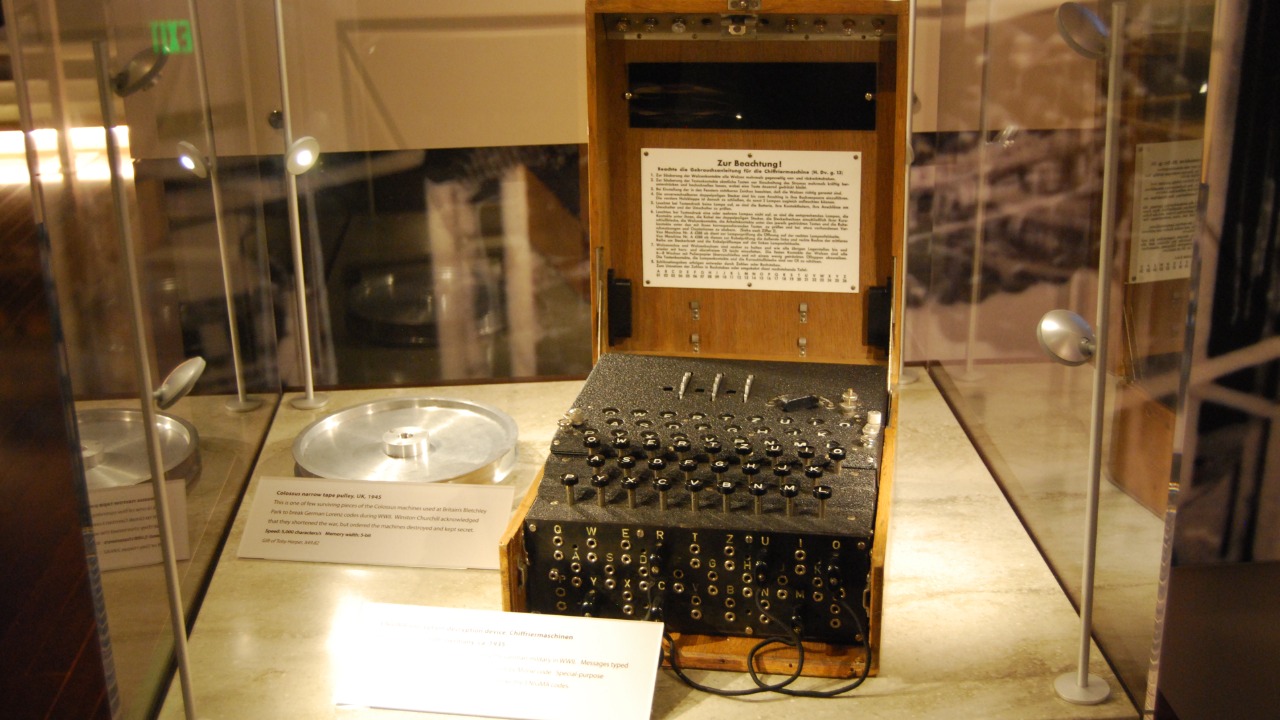
Within Bletchley, Alan Turing emerged as a central figure in attacking the naval variant of Enigma that shielded U-boat traffic. Drawing on the earlier Polish concepts but extending them dramatically, he designed electromechanical “bombes” that could test vast numbers of rotor settings against likely plaintext patterns. Accounts of How Alan Turing Cracked The Enigma Code describe how his main focus became the naval system, where each successful decryption could mean the difference between a convoy’s survival and its destruction. Earlier work notes that he pitted machine against machine, with a prototype prototype bombe evolving into a fleet of devices that ran around the clock.
The intelligence harvested from these efforts was grouped under the codename Ultra, a label that would become synonymous with high-grade secrets. Technical histories of Cryptanalysis of the Enigma emphasize that Ultra allowed the Allies in World War II to read substantial amounts of Morse-coded German traffic, including naval orders. Later assessments of The Impact of Turing and his Work on the War argue that this capability was especially decisive in the Battle of the Atlantic, where timely knowledge of U-boat deployments could be translated directly into new convoy routes and targeted anti-submarine operations.
Convoys, U-boats, and the turning of the Atlantic tide
The practical value of Ultra became most visible in the North Atlantic, where convoys carrying food, fuel, and munitions from North America to Britain were under constant attack. With decrypted Enigma messages in hand, naval staffs could reroute convoys away from known submarine concentrations, adjust escort patterns, and sometimes set traps for U-boats whose positions had been revealed. Analyses of Cracking the German Enigma argue that this intelligence edge is considered one of the decisive factors that hastened Allied victory in World War, with some estimates suggesting the war in Europe was shortened by two to four years.
Specific convoy battles illustrate how reading Enigma could blunt German tactics. The record of Convoy OB 318 shows how a North Atlantic convoy, designated 318, sailed during the Battle of the Atlantic in World War II at a moment when Allied codebreakers were beginning to penetrate the German naval Enigma code more consistently. During Operatio, as the campaign unfolded, the ability to anticipate U-boat movements helped limit losses and demonstrated to commanders that the code war was directly shaping outcomes at sea. This pattern repeated across the campaign: as decryption improved, convoy survival rates rose and the strategic initiative shifted away from the U-boats.
Capturing machines, correcting myths, and measuring impact
Breaking Enigma was not only a story of mathematics and machinery, but also of physical captures at sea that provided vital clues. One notable case involved the submarine U-505, where boarding parties seized documents and an Enigma machine. The Germans initially assumed submarine U-505 was sunk and made no major changes in naval Enigma, a miscalculation that preserved Allied access to their traffic. Later debates about Hollywood portrayals, particularly around U-571, have highlighted how such captures were collaborative efforts and how the drama behind the scenes often diverged from simplified film narratives, but the underlying fact remains that seizing hardware and codebooks materially strengthened the cryptanalytic campaign.
Retrospective assessments have tried to quantify just how transformative this hidden war was. Documentaries such as Breaking Enigma, framed as a World War II Game Changer and Narrated by Keith Morrison of Dateline, report estimates that reading Germany’s top secret Enigma code at Bletchley possibly saved 14 million lives. Other analyses of Allied intelligence emphasize that the codebreaking shortened the conflict and secured the logistical foundation for operations such as the Normandy landings. While exact figures are inherently estimates, the convergence of historical research around a dramatically shortened war and millions of lives preserved underscores that the Enigma breakthrough was not just a technical feat, but a humanitarian one.
The legacy of this code war now extends beyond military history into fields as varied as computer science and neuroscience, where researchers draw on wartime analysis methods to interpret complex data. Yet its core meaning remains rooted in the Atlantic convoys that kept Britain supplied and the Allied cause alive. By turning Enigma from a shield for U-boats into a source of Ultra intelligence, the Allies won a silent battle that saved ships, safeguarded supply lines, and helped tilt World War II toward victory.