
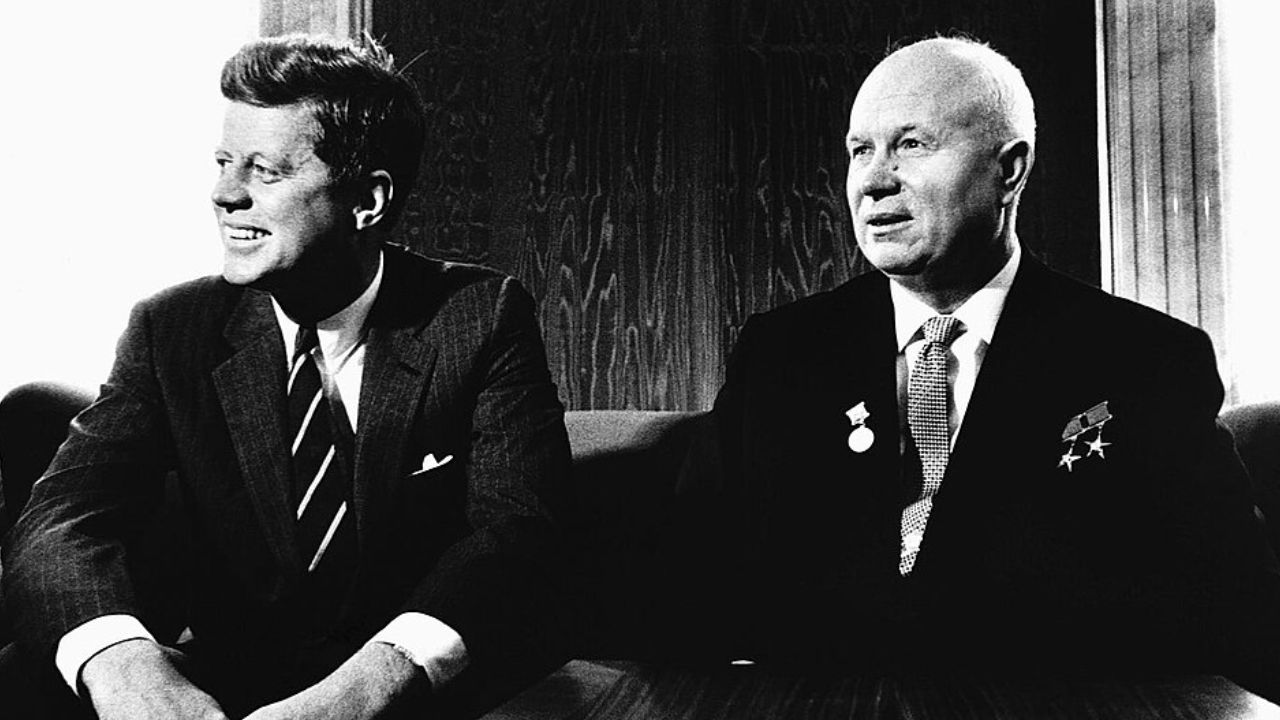
In October 1962, John F. Kennedy’s presidency ran headlong into a crisis that felt less like politics and more like the world holding its breath. American spy photos showed Soviet nuclear missiles being installed in Cuba, just 90 miles from Florida. Suddenly, the Cold War wasn’t an abstract chess match played on maps and speeches—it was a countdown sitting in someone else’s backyard.
For Kennedy, this wasn’t simply another foreign-policy problem to “manage.” It became the defining challenge of his time in office because it forced him to balance strength with restraint, secrecy with public trust, and military advice with moral and political reality. And it all happened at a pace that didn’t allow for many second chances.
How the missiles were discovered—and why it mattered so much
The crisis began with reconnaissance flights over Cuba that produced the kind of photographs that make generals go quiet. U-2 spy planes captured evidence of medium- and intermediate-range Soviet missiles under construction, capable of striking much of the United States. This wasn’t a theoretical threat; these were real launch sites, with real timelines.
The United States already lived under the shadow of nuclear weapons, but this was different. Soviet missiles in Cuba would cut warning times dramatically, shrinking the space for diplomacy and increasing the odds of miscalculation. It also felt like a direct challenge to American influence in the Western Hemisphere—an especially sensitive issue after the humiliating Bay of Pigs invasion the year before.
Kennedy’s pressure cooker: hawks, politics, and the ticking clock
Kennedy’s advisors formed a group known as the Executive Committee of the National Security Council, or ExComm, and their meetings became a crash course in how messy decision-making gets when the stakes are apocalyptic. Some pushed for immediate air strikes to take out the sites. Others argued for a full invasion of Cuba, essentially rolling the dice on war with the Soviet Union.
Meanwhile, Kennedy had politics to think about, too. He couldn’t look weak—especially with midterm elections approaching and critics ready to pounce on any sign of hesitation. But he also couldn’t ignore the obvious: hitting Soviet forces in Cuba could trigger retaliation in Berlin, in Turkey, or straight at the United States.
The “quarantine”: a blockade with a lawyerly name
Kennedy chose a naval blockade, carefully branded as a “quarantine” to avoid the legal implication that the U.S. was committing an act of war. The name might sound fussy, but the goal was simple: stop more Soviet weapons from reaching Cuba and buy time for diplomacy. It was a middle path—tough enough to signal resolve, cautious enough to leave room for the other side to step back.
On October 22, Kennedy went on television to tell the American public what was happening. It was one of those moments where the tone matters as much as the words: calm, firm, and unmistakably serious. People listened knowing, in the back of their minds, that the wrong move could mean nuclear war.
Thirteen days that felt like a lifetime
The blockade set up a tense standoff on the sea as Soviet ships approached the quarantine line. For a while, the world watched to see whether Soviet vessels would challenge it and force a direct clash with the U.S. Navy. Several ships turned back or stopped, which lowered the temperature—slightly—but nothing about the situation felt safe.
At the same time, construction continued on the missile sites in Cuba, and the U.S. military moved to a higher state of readiness. Behind closed doors, officials gamed out scenarios that ranged from “awkward but survivable” to “everyone’s gone.” It’s hard to overstate how quickly routine life can feel irrelevant when the news is basically, “We might not be here next week.”
The backchannel bargaining and the two Khrushchev letters
The diplomatic drama peaked when Soviet leader Nikita Khrushchev sent messages that didn’t exactly match each other. One letter sounded personal and conciliatory, suggesting the USSR would remove the missiles if the U.S. pledged not to invade Cuba. A second, more hardline letter added another demand: the U.S. should remove its Jupiter missiles from Turkey.
Kennedy and his team essentially responded to the first letter publicly while handling the Turkey issue more quietly. The U.S. agreed, in a private understanding, to remove the outdated Jupiter missiles later—without framing it as a direct trade under pressure. This careful threading of the needle let both sides claim something at home, which, in international crises, can be the difference between peace and pride-fueled disaster.
The moment it almost went off the rails
Even as negotiations advanced, events in the field threatened to ignite the whole situation. A U-2 spy plane was shot down over Cuba, killing the pilot, and pressure surged in Washington to retaliate. It was the kind of incident that can turn a controlled confrontation into a runaway one, because each side starts acting on fear and momentum rather than strategy.
There was also the frightening reality that not every decision required direct approval from the top. Local commanders, misunderstandings, and technical glitches can all matter when weapons are already in position. The crisis wasn’t just Kennedy versus Khrushchev; it was also Kennedy versus the chaos that war tends to generate all by itself.
How it ended—and why Kennedy “won,” sort of
On October 28, Khrushchev announced the Soviet Union would dismantle and remove the missiles from Cuba, with U.S. verification. In return, the U.S. publicly promised not to invade Cuba and privately committed to removing the Jupiter missiles from Turkey. The immediate nightmare eased, and the world exhaled—shakily, like someone who’s been holding their breath underwater.
Kennedy’s reputation soared because he appeared steady under pressure, avoiding war while forcing a dangerous rollback of Soviet capabilities close to U.S. shores. But “victory” came with an asterisk: the U.S. had also been willing to compromise, and everyone now understood just how close the superpowers had come to catastrophe. It was less a triumphal parade and more a stern warning delivered by reality itself.
Why it became the defining challenge of Kennedy’s presidency
The Cuban Missile Crisis crystallized what Kennedy’s presidency was ultimately about: managing power responsibly when ego, fear, and ideology are all tugging at the wheel. It tested his judgment more severely than any campaign, speech, or domestic program ever could. A single misstep could’ve ended not just a presidency, but millions of lives.
It also reshaped the way the U.S. and the Soviet Union handled each other. After the crisis, both sides had fresh incentives to avoid accidental war, leading to steps like improved communication and later arms-control efforts. Kennedy didn’t just navigate a moment; he helped set a precedent that nuclear brinkmanship had limits—because the alternative was unthinkable.
In the end, Kennedy’s legacy can’t be separated from those thirteen days. The crisis showed him at his most cautious and most decisive, wrestling with imperfect information and impossible options. And if history sometimes feels like a series of grand plans, October 1962 was the reminder that it can also hinge on a few strained conversations, a handful of photographs, and a leader trying to keep the world from tipping over the edge.