
During the most anxious years of the Cold War, American planners briefly entertained a chilling idea: turning high-altitude balloons into delivery systems for weapons of mass destruction. The concept, known as Weapon System 124A or “Flying Cloud,” tried to merge simple balloon technology with nuclear, chemical, and biological warfare ambitions. It never became operational, but the project reveals how far strategists were willing to stretch physics and ethics in the race to outmaneuver the Soviet Union.
The story of these proposed weaponized balloons sits at the intersection of improvised wartime experiments, early spy programs, and the enduring appeal of cheap platforms that can drift above defenses. From Japanese balloon bombs in World War II to modern surveillance incidents, the same basic technology has repeatedly tempted militaries looking for an edge, even as its limitations keep forcing them back to more precise and controllable systems.
From Japanese balloon bombs to American “Flying Cloud”
The idea of using balloons as weapons did not start in Washington. During World War II, Japan launched thousands of Fu-Go incendiary balloons across the Pacific, relying on the jet stream to carry explosive and fire-starting payloads toward North America. Those attacks caused limited damage but proved that simple gas envelopes could cross oceans, a lesson that shaped postwar thinking in the United States. Following World War II, United States planners studied these attacks and began exploring whether similar platforms could be adapted for their own purposes, including the development of the E77 incendiary balloon as a potential tool for starting large-scale fires on enemy territory, according to historical accounts of incendiary balloon programs.
Those early American efforts quickly ran into the same problem that had limited Japan’s campaign: inaccuracy. Balloons were at the mercy of winds and weather, and even with improved altitude control they could not be steered with the precision needed for modern targeting. As Cold War tensions deepened, however, the lure of a low-cost, high-altitude delivery system remained strong. By the early 1950s, the U.S. Air Force was experimenting with large hydrogen balloons that could ride the jet stream for long distances, work that fed directly into the conception of Weapon System 124A, codenamed “Flying Cloud,” as described in detailed histories of Cold War balloon weapons and broader surveys of Cold War balloon flights.
Inside Weapon System 124A, the plan to arm the sky
Weapon System 124A, or “Flying Cloud,” was initiated in March 1953 as a U.S. Air Force project to turn very large, hydrogen-filled balloons into long-range attack platforms. The concept built directly on reconnaissance programs such as Project Moby Dick and Project Genetrix, which had already shown that balloons could drift across the Soviet Union at high altitude while carrying cameras and sensors. In the attack version, those same envelopes would carry cluster bomb units instead of film, using the jet stream to carry them from launch sites toward targets deep inside Soviet territory, as outlined in technical histories of Cold War balloon flights and analyses of military nuclear balloon concepts.
The most disturbing part of the plan was the payload. Rather than focusing first on nuclear warheads, planners emphasized chemical and biological agents that could be dispersed over wide areas. Concepts included cluster munitions filled with pathogens and even turkey feathers treated with wheat rusts and rice blasts, designed to devastate crops and trigger famine. The same infrastructure could, in theory, be adapted to carry nuclear devices, and the military did conduct nuclear tests using tethered balloons during Operation Plumbbob in 1957, but free-floating nuclear attack balloons were quickly judged too inaccurate for strategic use. Accounts of Weapon System 124A and related balloon programs describe how these ideas pushed the boundaries of both technology and Cold War escalation, even if they never progressed beyond planning and testing.
Why the nuclear balloon never left the drawing board

By the mid 1950s, the Air Force had enough data from test flights to judge whether “Flying Cloud” could work as an operational weapon. The verdict was harsh. An August 1955 report found that only 24 percent of test balloons reached even a broad target area, a level of inaccuracy that made them unsuitable for any mission requiring discrimination between military and civilian areas. The same assessments noted that the balloons were slow and vulnerable, easy prey for fighters or ground fire once detected, a weakness that mirrored the experience of earlier incendiary designs and was reinforced by later Soviet efforts to intercept American reconnaissance balloons, as documented in studies of balloon-killer aircraft and technical reviews of balloon operations.
At the same time, the strategic landscape was shifting under the project’s feet. Advances in rocketry and guidance were rapidly improving the prospects for intercontinental ballistic missiles, which promised far greater speed, accuracy, and survivability than any drifting envelope. The Soviet launch of Sputnik in 1957 underscored that the future of long-range delivery would be in space and missile technology, not in platforms that rode the wind. As missile programs accelerated, the balloon-based attack concept was rendered obsolete for nuclear roles, and the ethical and political risks of deploying chemical or biological agents from such an imprecise system became even harder to justify. Analyses of Weapon System 124A and broader Cold War balloon efforts show how these factors combined to push the project into the archives rather than the arsenal.
Spy balloons, Soviet interceptors, and the limits of drifting technology
Even as the attack balloon concept faded, the United States continued to use high-altitude envelopes for intelligence gathering. Project Genetrix sent hundreds of so-called weather balloons over the Soviet Union and China, carrying cameras to photograph military sites from the stratosphere. These flights demonstrated that balloons could reach impressive altitudes and travel long distances, but they also exposed their vulnerability. Many were shot down or recovered by adversaries, providing both propaganda material and technical intelligence. Detailed accounts of Cold War balloon flights describe how these missions yielded some useful imagery but also highlighted the difficulty of controlling where the platforms would go or where they would eventually land.
The Soviet response underscored that balloons were not untouchable. From 1956 onward, Soviet forces developed specialized aircraft and tactics to hunt and destroy intruding envelopes, including bespoke interceptors designed to operate at high altitude and engage slow, drifting targets. Reporting on balloon-killer planes details how these aircraft were tailored to the unique challenge of engaging fragile but elusive objects that conventional fighters struggled to reach. The cat-and-mouse game between reconnaissance balloons and interceptors reinforced the same conclusion that had doomed Weapon System 124A: once an adversary understood the threat, balloons were relatively easy to counter, especially compared with faster and more maneuverable aircraft or missiles.
From Cold War experiments to modern balloon anxieties
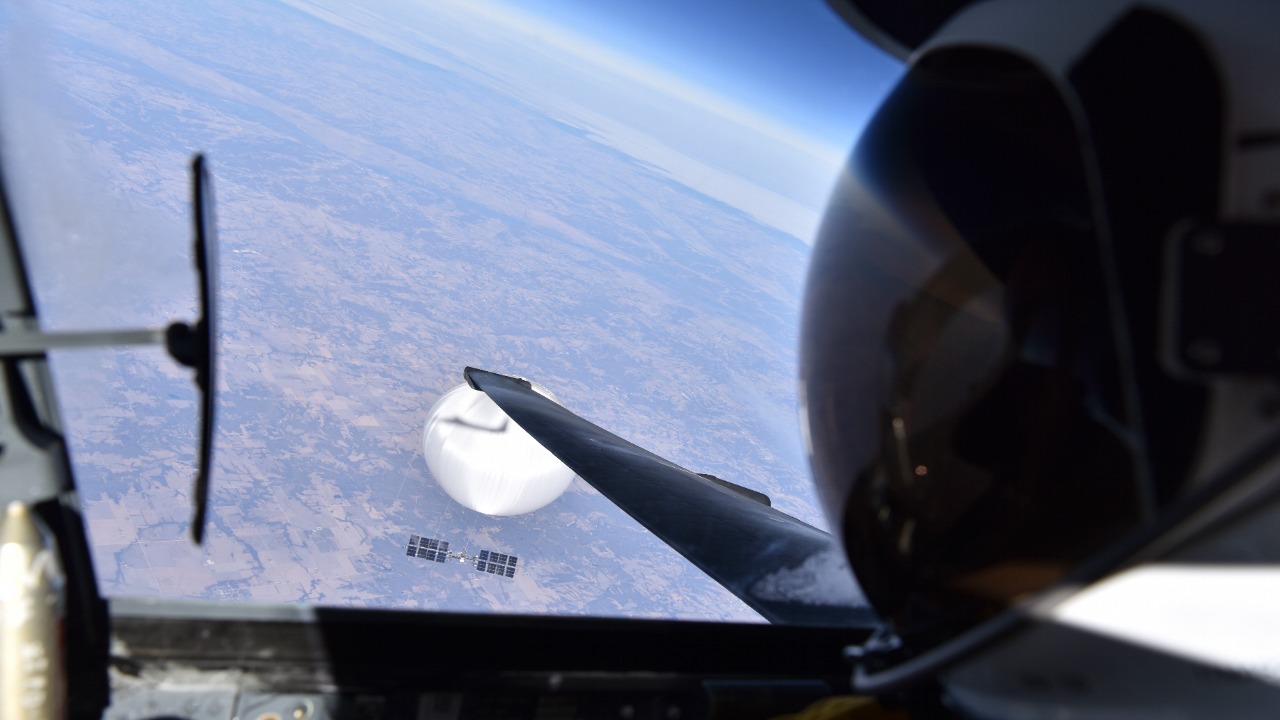
Despite their shortcomings as weapons, balloons have never fully disappeared from the security conversation. Their ability to loiter at high altitude, carry sizable payloads, and appear on radar as ambiguous objects keeps drawing interest from militaries and intelligence services. The 2023 Chinese balloon incident, in which a large high-altitude envelope crossed North America before being shot down off the U.S. coast, showed how quickly such platforms can trigger diplomatic crises and public alarm. Historical surveys of balloon use note that they have long been valued for battlefield observation and reconnaissance, and the recent incident suggested that modern sensors and communications gear can make them more capable than their Cold War predecessors, even if the basic physics remain unchanged.
The persistence of balloon projects also fits a broader pattern in defense technology, where seemingly simple or flawed ideas are periodically revived in new guises. The Pentagon’s airborne laser program, which mounted a powerful directed-energy weapon on a modified Boeing 747, was eventually shelved after being judged “fatally flawed” as a practical missile defense system, according to reporting on the mothballed 747 system. Like Weapon System 124A, it showed how attractive it can be to repurpose existing platforms for ambitious missions, and how unforgiving real-world performance can be when those concepts meet physics and adversary countermeasures. The Cold War plan to arm balloons with nuclear, chemical, or biological payloads ultimately failed for those reasons, but its legacy lives on every time a drifting object at high altitude forces governments to confront the uneasy mix of low-tech platforms and high-stakes strategy.