
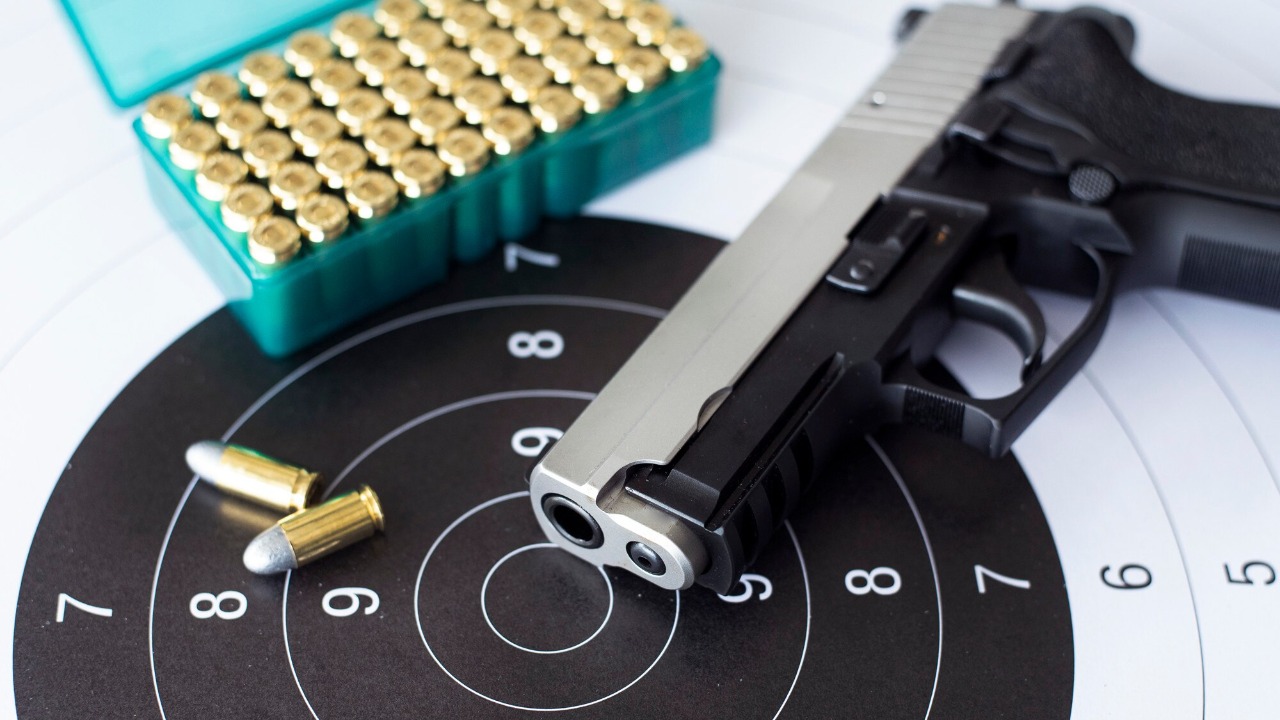
Rifle and handgun calibers tend to collect reputations that lag far behind modern ballistics. Some are dismissed as outdated, obscure, or “too niche,” yet current loads and smarter bullet design have quietly turned several of them into far more capable performers than their critics admit. Looking at how hunters, competitors, and defensive shooters actually use these cartridges reveals a short list that consistently punches above its public image.
Old-school hunting rounds that hit far above their stigma
Traditional big game cartridges are often written off as relics, but updated bullets and load data have transformed several of them into efficient, hard hitting tools. One example is the family of .338 magnums, which many still imagine only in the context of punishing recoil and overkill on deer. In practice, pairing these cases with controlled expansion bullets such as Nosler Partitions or Swift A-Frame has given hunters reliable penetration and weight retention on elk and larger game without the dramatic meat loss that older soft points could cause. When those same rifles are loaded with all copper designs like Barnes TSX, the result is a flatter shooting, cleaner killing setup that has convinced some experienced hunters to move their entire deer battery to copper, even when they previously relied on 338 m class magnums with premium lead cores.
At the opposite end of the glamour spectrum, non magnum big bores have long been stereotyped as slow, rainbow trajectory curiosities. Modern loads have changed that equation. Updated factory ammunition for one classic .40 non magnum for bolt actions now pushes a .423-inch 400-grain bullet fast enough to keep drop manageable inside typical hunting distances while still carrying the authority to handle just about anything on earth. That combination of 40 caliber frontal area, a 423-inch diameter projectile, and a 400-grain weight gives hunters deep penetration and straight line tracking that belies the old “brush gun only” label. These cartridges may never trend on social media, but in the field they deliver terminal performance that rivals or exceeds more fashionable magnums, especially when paired with bonded or monolithic bullets that hold together on heavy bone.
Mid-bore and ELR calibers that outperform their niche status

In long range circles, a few mid bore cartridges have quietly built a record of success that outstrips their name recognition. The 7 SAUM is a prime example. Competitive shooters have found that this short action round offers better performance than the 300 Win Mag while fitting in a package that is almost as small as the 6.5 Creedmoor. That balance of case capacity and bore diameter lets the 7 SAUM push high ballistic coefficient bullets at speeds that stay supersonic well past typical match distances, yet recoil and barrel life remain more manageable than many larger magnums. As bullet designs continue to evolve, especially in heavy for caliber 7 millimeter projectiles, the SAUM case gives shooters a flexible platform that can be tuned for extreme long range or practical field matches without the punishing blast associated with oversized cases.
Extended long range specialists have also highlighted how these “in between” calibers open new opportunities for precision work. While the 300 and 6.5 Creedmoor families dominate marketing, the 7 SAUM and similar rounds occupy a sweet spot where shooters can run lighter rifles without sacrificing hit probability at distance. Reports from ELR matches show that when competitors pair these cartridges with modern optics and carefully tuned handloads, they achieve consistent impacts at ranges that used to be reserved for much larger magnums. That real world performance has not yet translated into mainstream popularity, but among professionals who care more about hit percentage than hype, these mid bores are already treated as serious tools rather than experimental curiosities.
AR-platform calibers that quietly fixed the 5.56 problem
Within the AR-15 world, several alternative calibers were designed to solve specific shortcomings of 5.56 NATO, yet they still live in the shadow of the standard round. One of the most capable is 6.5 G, better known as the 6.5 Grendel. Long range shooters have steadily adopted it as a way to get more reach and energy out of the AR-15 without moving up to the heavier AR-10 platform. The Grendel case allows the use of long, high BC 6.5 millimeter bullets that retain velocity and resist wind drift, which is why it is described as ever growing in popularity with long-range shooters looking to get the most out of their AR-15 rifles at speeds well past 1,000 yards. All that is required is a dedicated upper and magazines, which makes the switch accessible for owners who already have a lower and want more downrange authority without changing ergonomics.
Another underappreciated performer is the 6.8 cartridge developed in 2004 as a joint operation between Remington Arms, U.S. Special Operations Command, USSOCOM, and the U.S. Army Marksm units. That collaboration focused on improving terminal performance from the M4 carbine at realistic combat distances, particularly in intermediate barriers and soft targets. While the 6.8 never fully replaced 5.56 in service, its design goals and test results showed that modest case capacity increases and optimized bullet weights could significantly improve lethality without a wholesale change in weapon platforms. In the civilian market, both 6.5 Grendel and 6.8 remain overshadowed by 5.56 and .300 Blackout in terms of sales, yet their real world ballistics, especially in hunting and practical competition, demonstrate that they solved many of the complaints shooters had about the standard small bore, only without the marketing push that would have made them household names.
Defensive handgun calibers that deliver more than internet debates admit
Handgun caliber debates tend to focus on 9 mm versus .45 ACP, but some of the most effective defensive rounds sit in between those poles and are often dismissed as “too much” or “too old.” The .357 Magnum is a prime example. In controlled testing, the 357 M shows more velocity and delivers more energy both at the muzzle and on downrange targets than common semi automatic pistol rounds in the same size class. Under the heading of Power and Penetration, analysts note that this Magnum cartridge can reliably expand and still reach the depth needed to disrupt vital structures, which is the core requirement for a defensive handgun. Revolvers chambered in .357 also offer the flexibility to train with lighter .38 Special loads, then carry full power Magnum ammunition, a versatility that is rarely acknowledged in online arguments that focus solely on capacity.
The same pattern appears when looking at how experts rank calibers for self defense more broadly. Evaluations that weigh recoil, controllability, and terminal performance often place .357 Magnum near the top because it balances manageable recoil in medium frame revolvers with the ability to effectively eliminate a threat when loaded with modern jacketed hollow points. While polymer striker fired pistols have dominated the market, the underlying physics of a high pressure revolver round have not changed. For shooters who prioritize penetration through intermediate barriers like auto glass or heavy clothing, the Magnum label is more than marketing. It reflects a performance envelope that, in many scenarios, exceeds that of more fashionable semi automatic calibers, even if it does so from a platform that carries fewer rounds.
Obscure and “dated” calibers that still make practical sense
Beyond mainstream hunting and defensive rounds, a cluster of older or less common calibers continues to deliver strong results for shooters who look past popularity contests. Enthusiasts discussing underrated options often point to the 8mm Mauser, describing it as basically 7.62 NATO’s cool older brother with how many countries used it. In the same conversations, the 45-70 Government is singled out as the only Government cartridge that can be loaded from mild to extremely powerful levels depending on the rifle action. Modern factory loads and handloading data have turned the 45 and 70 G combination into a flexible tool that can handle everything from whitetail to large bears, especially when paired with heavy, controlled expansion bullets. These rounds may not be common on big box shelves, but their real world performance has kept them alive among hunters who value deep penetration and reliable terminal behavior over flat trajectory alone.
Mid caliber “tweener” rounds also deserve more credit than they receive. The 25-06, for example, is frequently mentioned in discussions of his and hers do it all calibers. Shooters list its Pros with phrases like Seems like a slam dunk ballistically, noting its flat trajectory and mild recoil, while acknowledging Cons such as Ammo being pricier or harder to find. In practice, the 25-06 offers a blend of speed and sectional density that makes it ideal for pronghorn, deer, and even lighter elk with appropriate bullets, yet it rarely appears in marketing campaigns or rental racks. Similarly, debates over the most accurate hunting rifle caliber often circle back to fundamentals like Shooter Skill, with analysts stressing that Ultimately the human element cannot be ignored. Now that accuracy is better understood as a system of rifle, ammunition, and shooter, cartridges like the .308 Winchester remain time tested benchmarks, while less fashionable rounds such as the 25-06 or 8mm Mauser quietly deliver sub MOA performance in the hands of disciplined marksmen.
Even in online communities that celebrate cutting edge gear, there is a growing recognition that some of these overlooked calibers offer practical advantages that newer designs have not fully replaced. Discussions of the best calibers that are not popular highlight how cartridges like 7.62 based military rounds, the 45-70 Government, and mid bores such as 8mm Mauser combine historical depth with modern bullet technology to produce results that surprise shooters who only know them by reputation. When those same shooters see how these rounds behave on steel at distance or on game in the field, the gap between myth and performance narrows quickly. The pattern is consistent across platforms: once bullet construction and load data catch up, many so called obsolete or niche calibers reveal capabilities that make their modest popularity more a function of marketing cycles than of what happens when the trigger is pressed.