
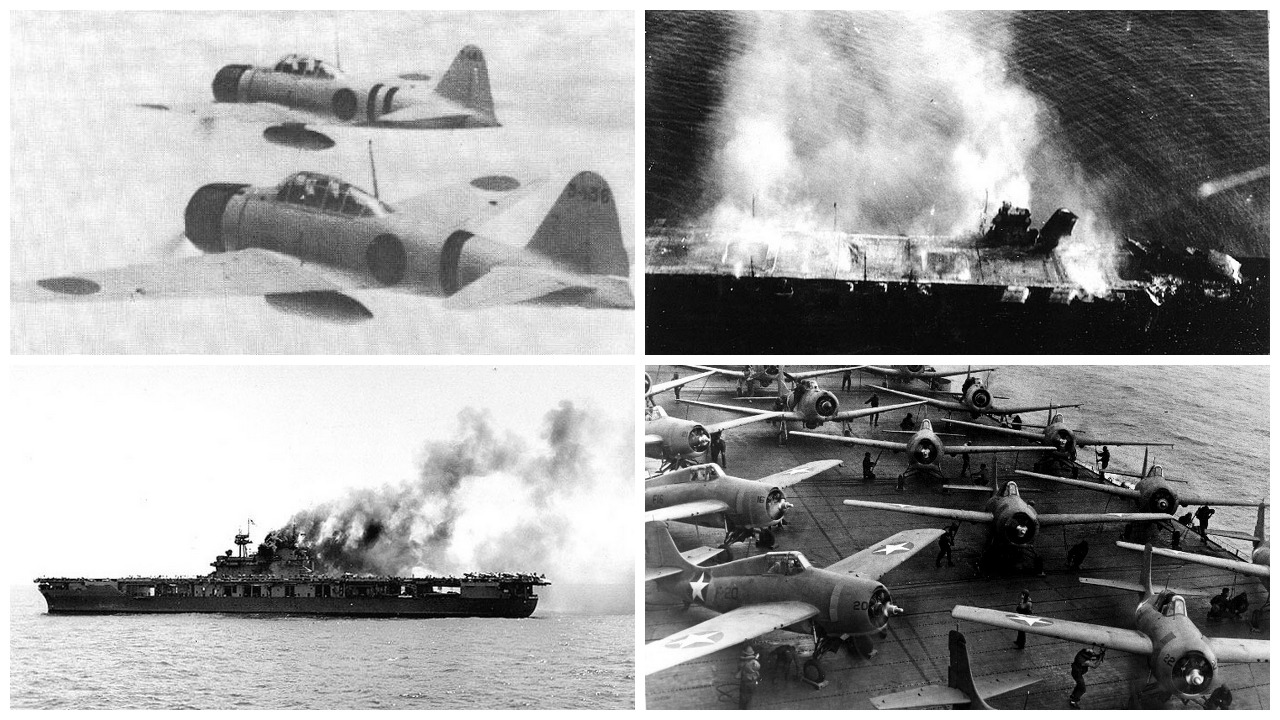
In early June 1942, a handful of American dive bombers found the Imperial Japanese Navy’s most powerful carriers exposed in the open Pacific. Within six minutes, their attack shattered Japan’s offensive momentum and rewrote the balance of power in the Pacific Theater of World War II. The Battle of Midway became the moment when a seemingly unstoppable advance met a sudden, irreversible check.
Those few minutes over the Akagi, Kaga, and Soryu were not an isolated miracle but the culmination of code-breaking, calculated risk, and brutal attrition that had been building since Pearl Harbor. Understanding how the battle unfolded, and why those six minutes mattered so much, reveals why Midway is still described as the point where the Pacific War’s tide turned.
From Pearl Harbor to a showdown off Midway
After the attack on Pearl Harbor, the Japanese pushed rapidly across the Pacific, striking at Allied territories and seeking to eliminate American naval power before it could recover. Their strategy relied on carrier task forces that had already devastated battleships at anchor and threatened supply lines across the region. By mid 1942, Japanese planners aimed to seize Midway Atoll, a small but strategically vital outpost that guarded the sea approaches to Hawaii and offered a forward base for air operations in the central Pacific. Control of Midway would have extended Japan’s defensive perimeter and potentially drawn out the remaining American carriers into a decisive ambush.
The Battle of Midway was a major naval clash in the Pacific Theater of World War II, pitting four Japanese fleet carriers against three American carriers and the island’s air garrison. American cryptanalysts had broken key elements of Japanese naval codes, allowing U.S. commanders to anticipate the attack and position their forces northeast of the atoll. This intelligence edge meant the Japanese sailed into a trap of their own making, believing they were springing one on a weakened opponent. The stage was set for a carrier duel in which neither side’s surface ships would ever see each other, yet the outcome would decide who held the initiative in the Pacific War.
A chaotic morning before the decisive strike
On the morning of 4 June, American aircraft launched in waves from the carriers USS Yorktown, USS Enterprise, and USS Hornet. From the American decks, TBD Devastator torpedo bombers and other aircraft went out first in poorly coordinated attacks that struggled to find and hit the Japanese carriers. According to the battle overview, these early torpedo runs were largely ineffective and suffered heavy losses as Japanese fighters and anti-aircraft fire tore into the low-flying formations. Carrier strikes continued throughout the morning, still ineffective due to the lack of American coordination, and the Japanese combat air patrol shot many attackers out of the sky.
Yet those failed assaults had a critical, if unintended, effect. Carrier strikes continued throughout the morning of 4 June, still ineffective due to the lack of American coordination, but they forced the Japanese to keep their fighters low and their carriers maneuvering hard. As described by the National Museum of the Pacific War, the Japanese flight decks were crowded with armed and fueled aircraft being prepared for another strike, while returning planes circled low on fuel. The need to rearm for either a second blow at Midway or a strike on American carriers left bombs and torpedoes scattered in hangars and on decks, turning each ship into a floating powder magazine at the worst possible moment.
Six minutes that gutted Japan’s carrier force
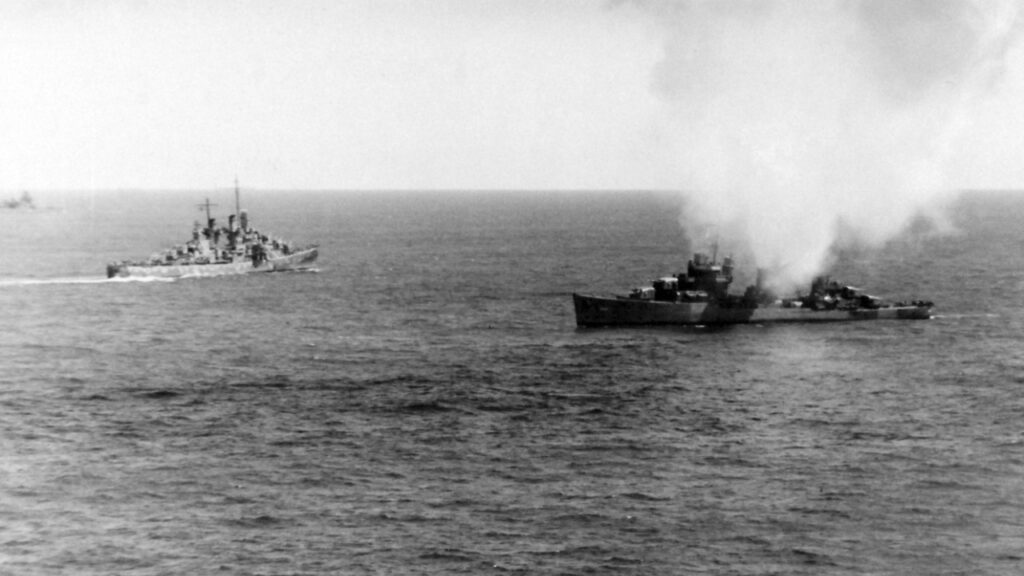
It was into this volatile scene that American SBD Dauntless dive bombers from Enterprise and Yorktown arrived almost unnoticed around 10:22 a.m. U.S. dive bombers closed on the Japanese carriers just as their combat air patrol was drawn down to sea level chasing the last torpedo planes, leaving the high approaches dangerously exposed. As one detailed account of Six Minutes at Midway notes, the American pilots rolled into their dives with the Japanese carriers framed almost perfectly below, their decks cluttered with aircraft and ordnance.
After a brief but effective attack, three of the four Japanese carriers, the Akagi, Soryu, and Kaga, were on fire and about to sink. In just six minutes, three-quarters of the Japanese carrier force at Midway had been destroyed, as bombs detonated among fueled planes and munitions, sending towering flames through the hangars. A separate analysis of those Japanese losses emphasizes how quickly the situation flipped from apparent dominance to catastrophe. The flagship Akagi, along with Kaga and Soryu, was fatally hit, leaving only the carrier Hiryu operational. Later that day, American strikes located and sank Hiryu as well, completing the destruction of all four Japanese carriers committed to the operation.
Human memory of a turning point
For those who fought there, Midway was not an abstract turning point but a desperate contest for survival. Two World War II veterans who took part in the battle later reflected on how the engagement felt from the cockpit and the deck, describing the intensity of anti-aircraft fire and the sight of aircraft being shot out of the sky. Their recollections, preserved in a feature on the Battle of Midway remembered, underscore that the outcome was never guaranteed for the aircrews who flew into walls of flak and swarms of defending fighters.
Few military campaigns of World War II have been so closely studied, yet the veterans’ accounts keep the focus on individual courage and loss rather than only on strategy. They recall how torpedo squadrons pressed home attacks despite knowing their odds of survival were slim, and how dive bomber pilots had only seconds to line up their targets before pulling out of near-vertical dives. These personal memories sit alongside official histories and operational analyses, reminding readers that the six minutes that broke Japan’s momentum were built on hours of sacrifice and years of training by crews on both sides.
Why Midway changed the Pacific War
The American success at Midway was a major victory over the Imperial Japanese Navy, one that the Importance of the US Victory analysis describes as a decisive shift in naval power. All four Japanese fleet carriers that had spearheaded the Pearl Harbor attack were lost, along with hundreds of experienced pilots and support crew who could not be easily replaced. The American carriers, though damaged, survived as a core around which new task forces could be built. From that point, the Imperial Japanese Navy was forced onto the defensive, unable to mount large scale offensive action in the Pacific with the same confidence or reach.
Significance of the U.S. Victory in the Battle of Midway goes further, noting that although combat around the atoll ended within days, the strategic effects rippled through the rest of the war. The loss of four carriers and their air groups meant Japan could no longer easily replace its front line naval aviation, while American industrial capacity was already ramping up to produce new carriers and aircraft. The balance of naval air power shifted in favor of the Allies, and subsequent campaigns in the Solomon Islands and across the central Pacific were fought with the United States increasingly dictating the tempo. Midway did not end the war, but it marked the moment when Japan’s expansion stopped and a long, grinding Allied advance began.