
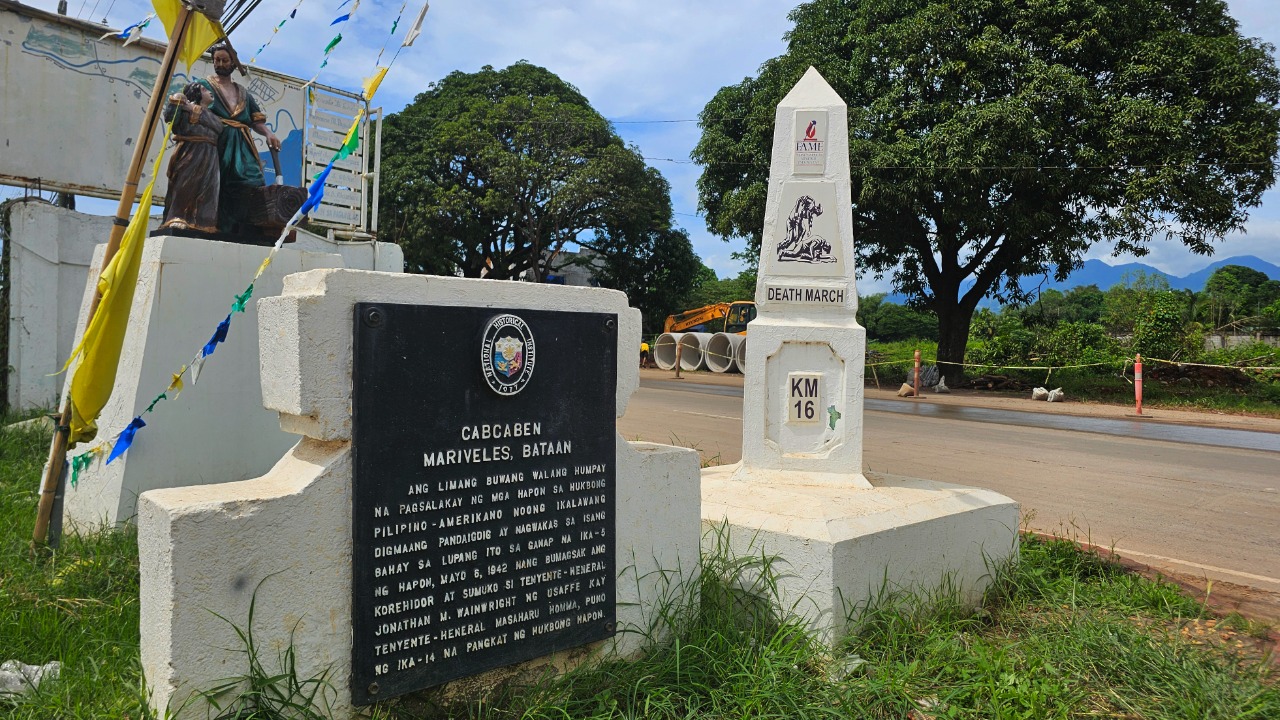
The Bataan Death March has become a shorthand for calculated brutality, a moment when surrender did not bring safety but a new ordeal. Under Japanese control, tens of thousands of exhausted prisoners were forced along a punishing route where starvation, beatings, and executions were not breakdowns of discipline but tools of terror. The story of those days, and of the years of captivity that followed, is ultimately one of survival under deliberate cruelty rather than the chaos of battle.
Understanding what happened on that Philippine peninsula also means tracing how it reshaped the rest of the Pacific war and how it is remembered today. The march was born from a hopeless military situation, but its legacy endures in survivor testimony, war crimes trials, and modern memorials that try to translate unimaginable suffering into public memory.
The collapse at Bataan and the decision to march
The ordeal began with a defeat that was already extraordinary in scale. After a demanding three month struggle on the Bataan peninsula, close to 80,000 American and Filipino troops were left exhausted, malnourished, and short of ammunition. When Troops in Bataan, Philippines finally laid down their arms, it became the largest surrender in United States history, with Major General Edward King Jr. (identified in one source only as Major General Edward) choosing capitulation to avoid what he believed would be pointless slaughter of his men. The Bataan Death March did not arise from a negotiated transfer of prisoners but from this sudden collapse of a defensive line that had been expected to hold much longer.
On April 9, 1942, the surrender on the peninsula set the stage for what followed. On April, tens of thousands of Filipino and American World War II soldiers were taken into captivity, and approximately 75,000 American and Filipino Soldiers were forced by their captors onto a route that would become infamous as The Bataan Death March. Within a matter of months, more than 70,000 Americans and Filipinos would endure what one commemorative account describes as “unimaginable cruelty” along a roughly 65-mile route to prison camps. Though the situation was hopeless, USAAF personnel battled to defend Bataan to the end, only giving up when they were physically unable to continue, a context that underscores how sudden the shift was from organized resistance to coerced movement of prisoners.
Deliberate cruelty on the road to the camps
What made the march notorious was not only the distance but the way it was conducted. Prisoners were already weakened by disease and hunger, yet guards routinely denied them food and water, beat those who fell behind, and carried out summary executions along the roadside. Accounts collected in official histories describe how captives were forced to march in the tropical heat with little rest, and how those who tried to drink from roadside ditches or wells were sometimes killed on the spot. Within a matter of days, the route itself became a trail of bodies, a visible record of how captivity had turned into a moving killing ground.
Later analysis of the campaign stresses that this was not simply the chaos of a retreating army but a pattern of abuse. One official fact sheet notes that, though the situation was hopeless, USAAF personnel and other defenders of Bataan fought on until they were ordered to surrender, only to pay a “high price” afterward in captivity, language that reflects how the suffering did not end with the last shot fired. The Bataan Death March took place in 1942, where approximately 75,000 American and Filipino Soldiers were forced by their captors along the route, and contemporary commemorations emphasize the brutality of their captors as a defining feature of the event. Within months, more than 70,000 Americans and Filipinos had been pushed through this system of forced movement and confinement, a scale that underlines how the cruelty was systemic rather than incidental.
Survival, memory, and the human cost

For those who lived through it, survival meant enduring not only the march but years of imprisonment that followed. One survivor-focused account notes that it was called a death march not because of how many died on the road alone, but because of the long arc of captivity that followed. Of the 12,000 Americans taken prisoner in this episode, only about 1,700 lived to come home, a stark ratio that captures the lethal combination of forced marches, disease, malnutrition, and harsh treatment in prison camps. Within that grim arithmetic, individual stories stand out, such as the testimony of veterans who recall watching friends collapse on the roadside or disappear into makeshift graves.
Decades later, those who survived have become living links to the event. In one recorded interview, a veteran introduces himself simply: “my name is Paul Kirchum. i was born 25 January 1920 i’m 102 years old. and I’m a batan death march. survivor.” His understated description of youth, capture, and endurance on Bataan illustrates how the memory of the march is carried not only in official histories but in the voices of those who walked it. Their recollections, often recorded at commemorative events, reinforce the idea that survival under deliberate cruelty required not just physical resilience but a determination to bear witness long after the war ended.
Aftermath, war crimes, and the wider Pacific war
The suffering on the march did not end when the columns reached their destinations. Aftermath accounts describe how prisoners were herded into overcrowded camps where disease spread rapidly and food remained scarce. Though the situation was hopeless, USAAF personnel and other captives continued to resist in small ways, sharing rations, caring for the sick, and maintaining military discipline where possible. The same official summary that details the defense of Bataan also emphasizes the “high price they all paid” in captivity, underscoring that the march was only the first phase of a longer ordeal that lasted until liberation.
In the postwar period, the treatment of prisoners on Bataan became a central issue in Allied war crimes trials. One analysis notes that, according to PBS, historian Philip Piccigallo argued that General Homma was convicted for the actions of his troops rather than for direct orders he personally gave, and that he was executed by firing squad. The legal proceedings reflected a broader Allied determination to treat the march and subsequent camp conditions as criminal, not merely tragic byproducts of war. At the same time, the brutality at Bataan and the Japanese capture of the Philippines at Corregidor fed into a wider American narrative of the Pacific enemy as fanatical and cruel, encapsulated in wartime slogans like “Kill more Japs!” that circulated on the home front.
Commemoration, education, and the burden of memory
Today, the Bataan story is kept alive through plaques, museums, and living-history events that try to convey both the scale and the human texture of what happened. One monument dedicated to the “Battling Bastards of Bataan” notes that the bulk of the soldiers were untrained and unequipped, and that communication between the troops was difficult, with Many of the U.S. and Filipino forces cut off from reliable supply and support. That inscription, presented by veterans and their families, highlights how the defenders were asked to hold an impossible line, then left to endure the consequences when the line finally broke. Official exhibits on the aftermath of the Bataan Death March similarly stress that, though the situation was hopeless, USAAF personnel and their comrades fought on and then suffered in captivity, framing their experience as both sacrifice and warning.
Commemoration has also taken on a physical form that echoes, in controlled and symbolic ways, the ordeal of the march itself. The Bataan Memorial Death March, described by organizers as “more than just a marathon,” invites participants to cover a desert route in honor of those who were forced along the original path. The event’s own historical summary reminds entrants that The Bataan Death March began On April 9, 1942, when tens of thousands of Filipino and American World War II soldiers were surrendered and then compelled to walk under brutal conditions. Modern military commentary on why people complete the memorial march today emphasizes that it is meant to honor approximately 75,000 American and Filipino Soldiers who were forced by their captors, and to educate new generations about the brutality of their captors and the resilience of those who survived. In that sense, every step taken in the memorial event is framed as a conscious act of remembrance, a way to confront the reality that survival on Bataan meant enduring cruelty that was not accidental but engineered.