
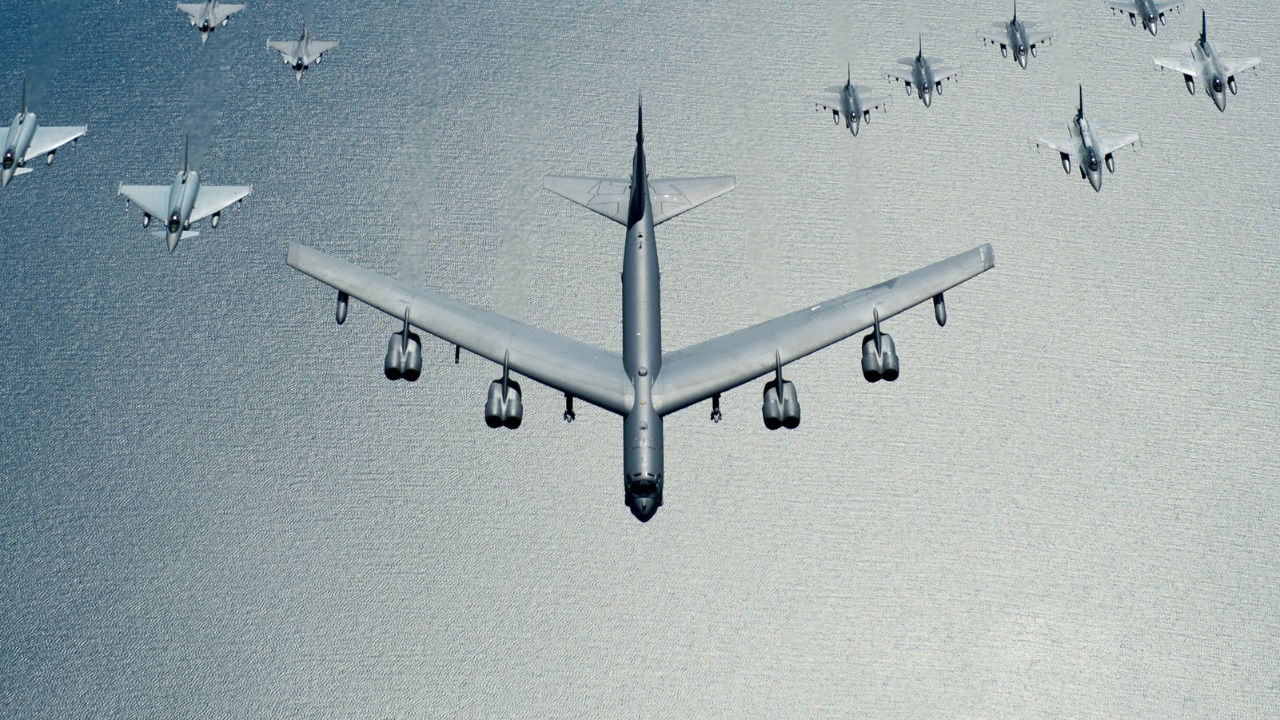
The B-52 Stratofortress is on track to do something no other combat aircraft has ever done: remain in front-line service for roughly a hundred years. What began as a straight-wing nuclear bomber is being methodically rebuilt into a digital, networked arsenal platform that can share the sky with stealth bombers and fifth-generation fighters well into the 2050s and potentially beyond. The path to that century mark runs through a tightly choreographed series of upgrades that touch almost every system on the jet while preserving the rugged airframe that made it a workhorse in the first place.
Far from a nostalgia project, the B-52J modernization is a hard-nosed bet that a large, efficient, and flexible bomber still has a role in an era of hypersonic weapons and contested airspace. The U.S. Air Force is investing in new engines, sensors, weapons interfaces, and electronic defenses to turn the venerable Stratofortress into a modern standoff strike platform that can complement stealthier aircraft rather than compete with them.
The case for keeping an old bomber young
For the Air Force, the argument for extending the B-52 is rooted in capacity and cost as much as sentiment. The service plans to keep the Stratofortress operational well into the middle of this century, treating it as a backbone of the strategic arsenal rather than a museum piece, a role underscored in analysis that frames the B-52J as exactly what the Air Force needs to sustain global reach. The bomber’s sheer payload, long range, and ability to launch a wide mix of conventional and nuclear weapons give planners options that newer, smaller platforms cannot easily replace in large numbers. That calculus is especially important as the service fields the stealthy B-21 in limited quantities and faces a growing list of global commitments.
The B-52 has also proven unusually adaptable compared with its Cold War peers, which helps explain why it has survived while other bombers retired. Reporting on why the aircraft has endured so long describes the B-52 as an Ideal Multipurpose Bomber that has aged better than contemporaries from a logistical standpoint, with a maintenance ecosystem and supply chain that can still support it efficiently. That combination of flexibility and sustainment has turned the Stratofortress into one of the most successful platforms in U.S. aerospace history, giving modernization advocates a strong foundation for arguing that new systems can be bolted onto a proven frame rather than starting from scratch.
Engines and efficiency: the Commercial Engine Replacement Program
The most visible and consequential change on the path to the B-52J is the Commercial Engine Replacement Program, which will swap the bomber’s eight aging Pratt & Whitney TF33s for modern Rolls-Royce F130 turbofans. Earlier re-engining efforts never made it off the drawing board, and official histories note that Despite the amount of work poured into past proposals, they simply faded away once the Air Force shifted priorities. The current program is different, backed by a clear requirement to cut fuel burn, extend range, and reduce maintenance downtime on aircraft that are expected to fly for decades more.
Analysts tracking the engine upgrade highlight that the new powerplants are projected to deliver a 25 to 30 percent gain in fuel efficiency, which translates directly into longer unrefueled range and more time on station for the B-52Js. That improvement, paired with lower sustainment costs, is expected to save billions over the life of the fleet and help offset the broader modernization bill, a point underscored in reporting that details how the next engine will reshape the bomber’s economics and enable new communications and networking upgrades. The result is not just a more efficient aircraft, but a more reliable one, with engines designed to stay on the wing far longer between overhauls than the TF33s they replace.
New radar, sensors, and a digital cockpit
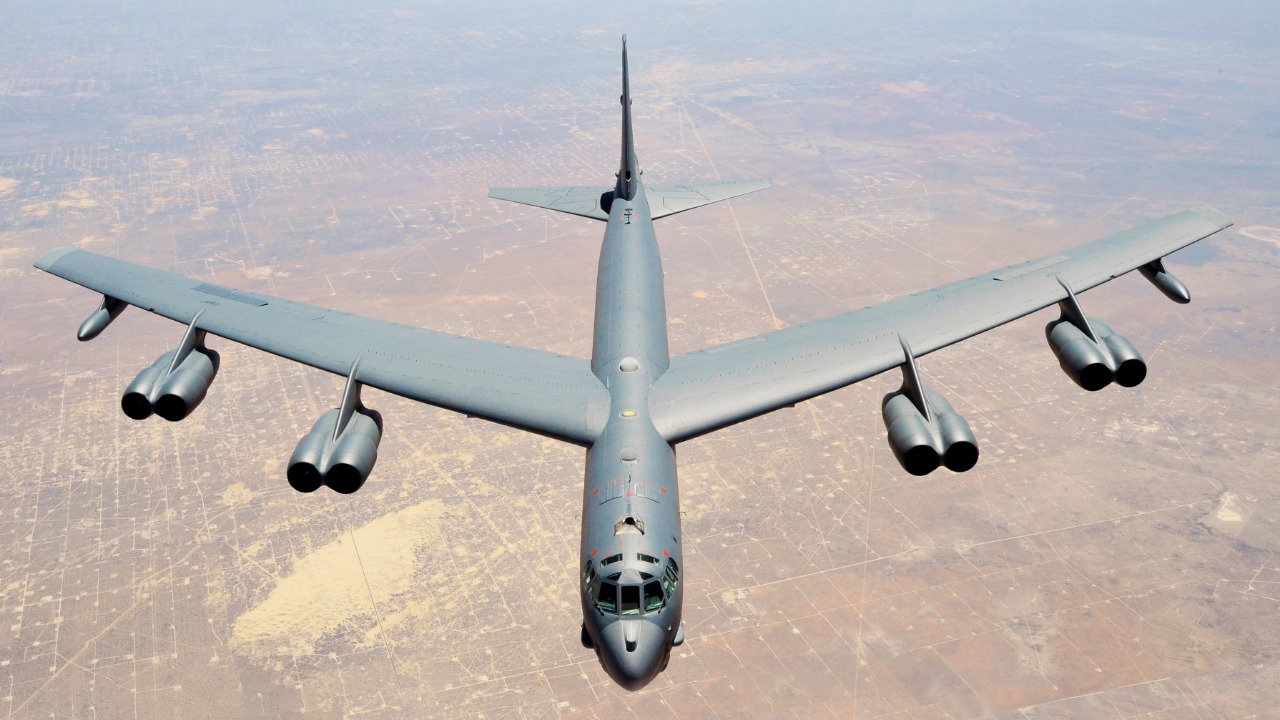
Powerful engines alone will not keep the B-52 relevant in contested airspace, which is why the upgrade roadmap includes a sweeping overhaul of the bomber’s sensors and avionics. A central piece is the Radar Modernization Program, which will replace the legacy mechanically scanned system with a modern active electronically scanned array. The new radar, identified as The AN/APQ system, brings multi-mode AESA capabilities that dramatically improve situational awareness, targeting precision, and reliability. AESA radars can track multiple targets, resist jamming, and support both air-to-ground and air-to-air roles, giving the Stratofortress a sensor suite more in line with modern fighters than with its Cold War origins.
To accommodate the new radar and associated electronics, the B-52’s iconic nose blisters are being removed in favor of a clean radome, part of a broader effort to streamline the jet’s profile and reduce maintenance burdens. Official descriptions of the re-engined variant note that the B-52’s nose-mounted electro-optical fairings will disappear as the new radar is installed, with the full B-52J configuration expected to be in service by the end of the decade. Inside the cockpit, the CONECT program is digitizing what was once a sea of analog gauges, adding multifunction displays, modern mission computers, and secure data links that allow crews to receive updated targeting information in flight and integrate seamlessly with joint networks.
Weapons, pylons, and the shift to standoff strike
Modernization planners are not trying to turn the B-52 into a stealth penetrator. Instead, they are leaning into its strengths as a long-range truck for precision weapons that can be launched from outside the densest air defenses. That shift is reflected in the development of new external pylons, often referred to as Hercules, which are designed to carry much heavier loads than the racks they replace and to host future weapons like hypersonic missiles. The goal is to quadruple the weight capacity per pylon so the Stratofortress can haul large standoff munitions without sacrificing the number of weapons it can bring to a fight, a concept that aligns with broader plans to integrate systems such as the Hypersonic Attack Cruise Missile and the Long Range Stand Off nuclear cruise missile.
Senior leaders at U.S. Strategic Command have been explicit that the B-52’s future is tied to these next-generation weapons. In public remarks, the STRATCOM chief has argued that, While Cotton was pleased with progress on the B-21 and the LRSO, the B-52 armed with the AGM-181 Long Range Stand Off missile will remain a critical part of the nuclear triad, with the new cruise weapon expected to extend the bomber’s service life to 2050 or beyond. That pairing of an old airframe with cutting-edge standoff munitions is central to the century-long vision, allowing the Stratofortress to threaten targets deep inside defended territory without having to fly directly over them.
Electronic warfare, survivability, and the standoff role
As air defenses grow more sophisticated, the B-52’s survival will depend less on speed or stealth and more on its ability to operate at range while confusing or avoiding enemy sensors. The upgrade path therefore includes a comprehensive refresh of electronic warfare systems, from radar warning receivers to jammers and decoys, aimed at giving the bomber greater resilience in standoff roles. Reporting on the B-52J program notes that, in addition to the engine replacement, Boeing is integrating a broad suite of new systems into the B-52H airframe to improve survivability, communications, and mission flexibility. These enhancements are designed to let the aircraft operate as a high-end standoff platform, launching long-range weapons while staying outside the most lethal threat rings.
That approach reflects a broader strategic shift in how the United States plans to use its bomber force. Analysts describing the current reboot emphasize that, Key Points and Summary show that, Despite its age, the B-52 Stratofort remains central to U.S. power projection, able to respond to crises or challenges across the globe. By pairing upgraded electronic defenses with long-range precision weapons, planners aim to keep the bomber relevant even as adversaries field advanced surface-to-air missiles and integrated air defense networks.
A century in the air: timelines and tradeoffs
The scale of the B-52J effort is not lost on the Air Force, which is effectively committing to fly an aircraft type from the early 1950s into the 2050s and potentially beyond. Official accounts of the bomber’s 70th anniversary stress that the current wave of upgrades is critical to the plan of keeping B-52s active into the 2050s, a roadmap that would see the plane fly for a century if the modernization stays on track, a point underscored in coverage of how the Air Force is marking the milestone. That longevity is unprecedented, even in a military that has kept aircraft like the KC-135 and U-2 in service for generations.
There are tradeoffs. Every dollar spent on re-engining and re-equipping the B-52 is a dollar not spent on additional stealth bombers or other emerging systems, and critics periodically question whether it makes sense to keep such an old design in the inventory. Yet advocates point to the bomber’s track record and the relatively modest cost of upgrades compared with buying entirely new fleets. Commentary on the B-52J program frames the aircraft as something the Air Force truly needs, with analysis noting that the service plans to keep the Stratofortress in front-line service as part of a mixed force that includes stealth platforms and long-range missiles. In that vision, the B-52J is not a relic, but a modernized workhorse that bridges generations of technology and keeps flying long enough to see its own centennial.