

Switzerland is trimming its once headline-grabbing F-35 shopping list after a sharp jump in the American price tag pushed the deal beyond what voters were promised. A cost surge of roughly $610 million has turned a sleek procurement plan into a political headache, forcing Bern to scale back the order to stay within a tightly policed budget ceiling.
The Federal Council now finds itself trying to square three stubborn facts at once: a binding spending cap, a contract partner that will not freeze prices, and a domestic electorate that remembers exactly what it approved. The result is fewer jets, more scrutiny, and a rare reminder that even in high-end defense shopping, the customer is not always right.
Sticker shock at altitude
At the heart of the drama is a simple problem that would make any car dealer blush: the price of the F-35 package went up after the Swiss said yes. Switzerland originally planned to buy 36 Lockheed Martin F-35A aircraft within a budget envelope endorsed by voters, only to discover that the overall bill had climbed by about $610 million, or roughly $1.6 billion in Swiss franc terms, compared with earlier estimates. That jump pushed the program beyond the ceiling that had been sold to the public, turning what was supposed to be a flagship modernization into a lesson in why you always read the fine print on a multi-billion-dollar fighter contract.
Officials in Bern have been blunt that the increase is not a rounding error but a structural problem for a country that treats defense budgets like precision watches rather than open tabs. Reporting on the decision notes that the Federal Council de linked the higher costs directly to the United States side of the deal, with the American package for the F-35A fleet now exceeding the amount that Swiss voters had authorized in the original procurement plan. The government has framed the move as a forced correction rather than a change of heart, stressing that the extra $610 million simply cannot be squeezed into the existing mandate without breaking faith with the electorate.
From 36 jets to “maximum possible”
Faced with that financial wall, Switzerland has opted for the one lever it still controls: quantity. Instead of the full fleet of 36 aircraft that had been the political and military baseline, the Federal Council has decided to cut the planned order and buy only as many F-35s as can be squeezed under the voter-approved budget. In its public messaging, the government has carefully described this as acquiring the “maximum possible number” of jets while staying within the financial framework, a polite way of saying that the air force wish list is being trimmed to fit the wallet.
Swiss Defence Minister Martin Pfister has been unusually candid about the arithmetic. Speaking in Bern, Swiss Defence Minister Martin Pfister acknowledged that “we do not know exactly” how many aircraft will ultimately be purchased, because the final count depends on the evolving cost picture of the American package and associated support. He also underlined that Switzerland “cannot acquire 36 aircraft today,” a clear signal that the original figure is off the table and that the final fleet size will be a function of how far the $610 million overrun can be clawed back through reductions in quantity and adjustments in support elements.
The fixed-price deal that never was
If this sounds like the kind of mess that a fixed-price contract might have avoided, Swiss officials appear to agree, at least privately. The Federal Council had hoped to secure a more predictable arrangement for the F-35A buy, only to run into a firm refusal from the United States side to lock in a fixed price for the full package. Instead, Switzerland found itself exposed to cost increases on the American portion of the deal, which then rippled straight into the domestic budget ceiling that voters had been told would not be breached.
Reporting on the negotiations notes that the United States declined to offer a fixed-price framework for the Lockheed Martin F-35 Lightning II Joint Strike Fighter, or JSF, leaving Switzerland to absorb the impact of shifting cost estimates. That refusal has now become a central part of the political narrative in Bern, where officials are at pains to explain that the overrun is not the result of Swiss miscalculation alone but of a procurement structure that left them with limited leverage once the evaluation phase was over and the aircraft type had been selected. In other words, the customer asked for a price guarantee, the supplier said no, and the bill went up anyway.
From flight evaluation to political turbulence
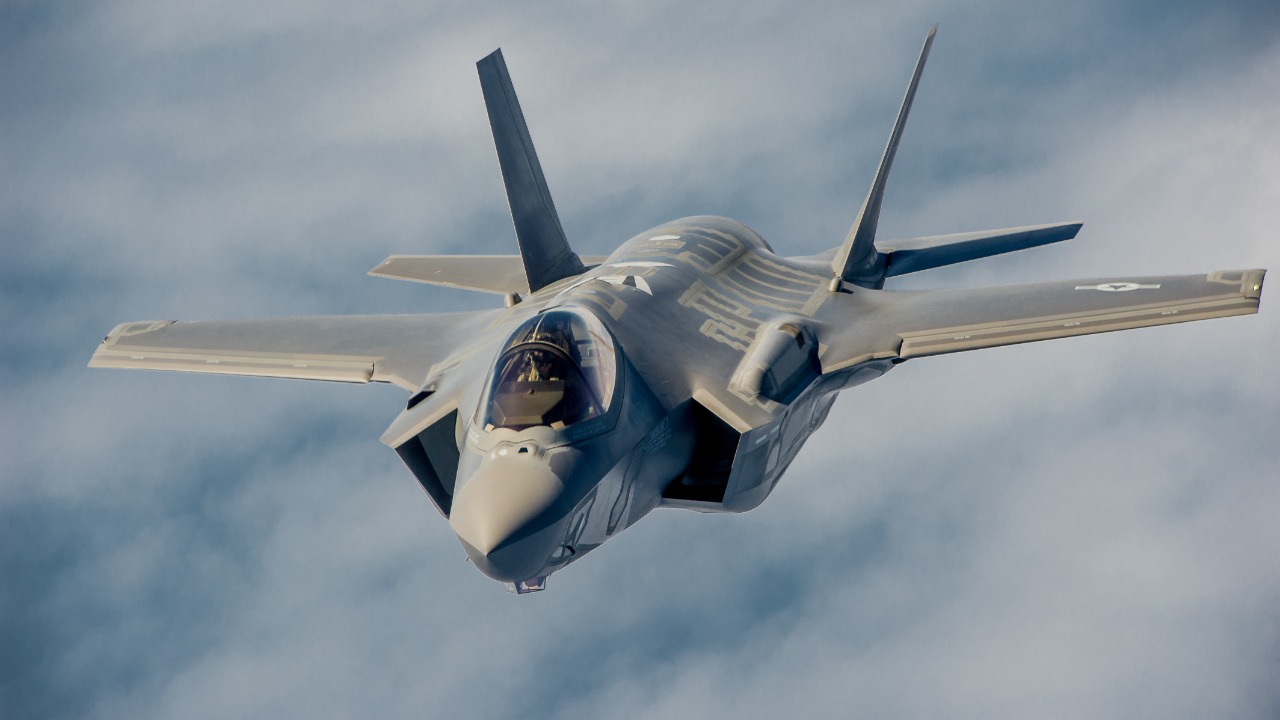
The irony is that Switzerland did not stumble into the F-35 choice with its eyes closed. The aircraft went through a detailed evaluation process, including flight trials in Swiss conditions, before being selected as the preferred option. During those assessments, F-35As were put through their paces in June 2019, with Swiss teams comparing performance, lifecycle costs, and industrial offsets against rival contenders. On paper, and in the air, the American jet came out ahead, promising advanced capabilities and long-term value that justified the investment.
What the evaluation could not fully capture was the political turbulence that would follow once the price started to drift upward. Earlier reporting on the program highlighted that Switzerland would cut back its plans as costs mounted, with the government now effectively re-running the cost-benefit calculation under tighter constraints. The same aircraft that impressed during evaluation flights is still the technical favorite, but the financial and political context has shifted. Instead of a clean modernization story, the F-35 has become a case study in how even a meticulous evaluation can be overtaken by later budget realities and supplier decisions.
Domestic politics and the price of trust
In a country where referendums are a national sport, the political stakes of overrunning a voter-approved budget are obvious. The Federal Council has repeatedly stressed that it must respect the mandate given by the electorate, which endorsed a specific spending ceiling for the fighter replacement program. Any move to quietly absorb the extra $610 million would have risked a backlash that could spill over into future defense projects and erode trust in how Bern presents big-ticket procurements to the public.
That is why the official line now leans heavily on the phrase “maximum possible number” of F-35s within the existing budget, rather than asking voters to reopen the entire question. The government has acknowledged that the price increase has raised concerns among financial policymakers, who are wary of setting a precedent where international partners can effectively push domestic budgets higher after the fact. By cutting the order instead of stretching the ceiling, the Federal Council is signaling that the political contract with voters matters at least as much as the industrial contract with Lockheed Martin, even if that means accepting a smaller fleet than the air force originally wanted.
Strategic trade-offs in a smaller fleet
Of course, fewer jets are not just a spreadsheet issue, they are a strategic one. A reduced F-35 fleet will inevitably shape how Switzerland plans air policing, training, and maintenance cycles over the coming decades. With fewer aircraft to rotate through operations and overhaul, planners will have to squeeze more availability out of each airframe, or accept narrower margins for surge capacity in a crisis. For a country that prides itself on readiness, that is not a trivial adjustment, even if the F-35’s advanced capabilities partly compensate for the smaller headcount.
Officials have tried to reassure skeptics that the final fleet, whatever its exact size, will still be sufficient to maintain credible air defense. The government has pointed out that the F-35’s technology, from sensors to networking, offers a qualitative leap over the aging jets it will replace, which means that each aircraft can do more than its predecessors. At the same time, the acknowledgment by Swiss Defence Minister Martin Pfister that the exact number of jets is still uncertain underscores how fluid the trade-offs remain. Until the final contract figures are nailed down with the United States, Switzerland is essentially flying on instruments, adjusting its ambitions to match a moving price target.
What this means for future buyers
For other countries eyeing the F-35 or similar high-end systems, the Swiss experience is a cautionary tale with a very clear moral: do not assume that early cost estimates will survive contact with reality, and do not expect a fixed-price deal just because you would like one. Switzerland entered the process with a detailed evaluation, a clear budget, and a direct democratic mandate, yet still found itself forced to cut its order once the American side declined to lock in prices and the bill rose by $610 million. If a country as process-obsessed as Switzerland can be caught in that squeeze, others are unlikely to be immune.
The episode also highlights the growing tension between domestic political constraints and the economics of cutting-edge defense programs. As more buyers line up for platforms like the F-35 Lightning II Joint Strike Fighter, suppliers have little incentive to shoulder cost risk through fixed-price arrangements, especially when demand is strong. That leaves governments to manage the fallout at home when numbers shift, whether through stealthy budget top-ups or, as in Switzerland’s case, very public cuts to planned fleets. For now, Bern has chosen to protect its political credibility by trimming its order, even if that means flying fewer of the jets it spent years evaluating and defending to its own voters.