
Striker-fired pistols have gone from niche curiosities to the default sidearm for police departments, concealed carriers, and first-time buyers, yet the shift has not ended the argument over what shooters lose when they trade steel and hammers for polymer and strikers. At stake is more than nostalgia: the debate pits consistency and simplicity against craftsmanship, trigger feel, and a sense of mechanical character. Whether these guns represent a modern upgrade or a soulless tool depends on how much value an owner places on performance metrics versus personality.
Across ranges, forums, and factory floors, the same themes repeat. Striker-fired designs promise easier training, lower costs, and sleek ergonomics, while hammer-fired pistols hold on through their triggers, aesthetics, and deep cultural roots. The market has largely chosen the striker, but the emotional center of gravity in handgun culture still leans heavily on the 1911 and its descendants.
The mechanics behind the argument
The split starts with how each system works. A striker-fired pistol stores energy in a spring loaded firing pin that is compressed by the rearward movement of the trigger, then released to ignite the primer in a single, consistent motion. That design gives every shot essentially the same trigger pull, which is why so many instructors describe strikers as easier to learn and to run under stress, a point echoed in technical breakdowns of how a striker pistol has a spring loaded firing pin that must be fully compressed before it releases. Hammer-fired pistols, by contrast, rely on an external hammer that can be cocked manually or by slide movement, which introduces double action and single action modes with very different trigger weights and travel.
That mechanical divergence shapes how each platform feels in the hand. Striker-fired triggers are often described as utilitarian, with a rolling break and tactile reset that favor consistency over romance, while single action hammer systems like the classic 1911 deliver a short, crisp break that many shooters still consider the gold standard. Training schools and range resources note that many individuals claim hammer-fired pistols to be tried and true, while others see striker-fired designs as the future because they simplify the manual of arms without compromising ignition reliability. The result is a technical tie that leaves room for personal preference to dominate.
Trigger feel, safety, and the training problem

For many critics, the heart of the “soulless” complaint is the trigger. Enthusiasts who grew up on tuned 1911s or DA/SA metal guns often find stock striker triggers vague, with a mushy wall and less feedback about exactly when the shot will break. That sentiment surfaces in online communities where shooters used to traditional ergonomics struggle to adapt to polymer duty pistols, including threads where users bluntly admit they do not understand how others shoot Glocks and similar striker designs well. Supporters counter that the uniform pull from first shot to last makes it easier to build consistent habits, especially for newer gun owners who might be overwhelmed by mastering both a heavy double action and a light single action on the same pistol.
Safety and liability concerns push the conversation beyond feel. Modern striker-fired pistols rely heavily on internal safeties, trigger blades, and drop protection, which allow them to be carried ready to fire without external levers. Training materials on defensive carry emphasize that many modern firearms, particularly those used for concealed carry or law enforcement, forego external safeties in favor of simplicity, while some traditional designs still incorporate manual safeties as an added layer. In parallel, law enforcement and instructor circles stress that the final link in most negligent discharges is not the mechanism but the human finger, noting that while the circumstances of each accident are unique, the final link in the chain is always the same – THE UNINTENTIONAL TRIGGER PULL. That reality has pushed many trainers to favor platforms that are simple to operate and easy to keep consistent under pressure, even if they lack the tactile romance of a tuned hammer gun.
Culture, aesthetics, and the charge of being “soulless”
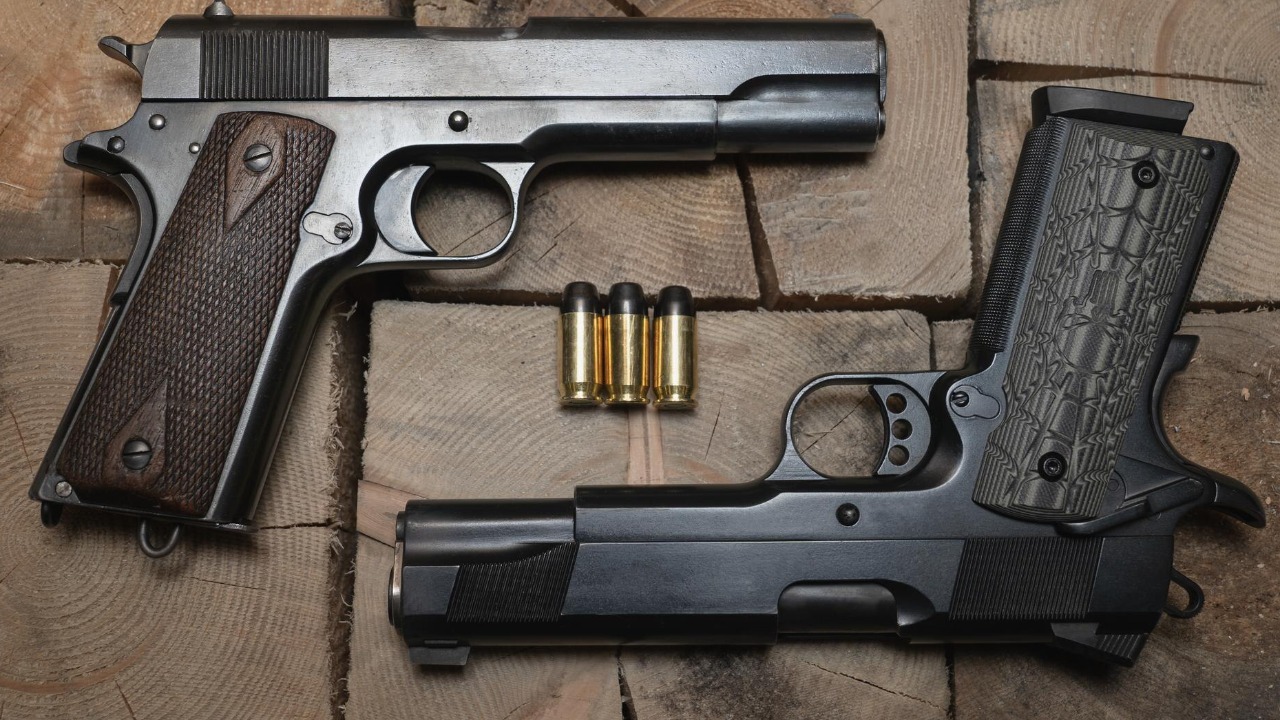
Beyond mechanics, the debate is cultural. Hammer-fired pistols, especially the 1911 family, carry a century of military history, competition pedigree, and custom gunsmithing tradition that no polymer striker can match. Manufacturers lean into that lineage, with marketing that explicitly frames new hybrids as bridges between eras, noting that ever since then, there have been countless debates and arguments over the merits of 1911s vs striker-fired handguns, and positioning new models as offering the best of both worlds. In that context, “soul” often means visible steel, finely machined parts, and a trigger that rewards deliberate practice.
Design language reinforces the divide. Some modern hammer-fired pistols embrace futuristic styling that still showcases their mechanical complexity, such as the Kimber Rapide Scorpius, whose futuristic looks and elaborate slide cuts highlight the steel parts that traditionalists prize. On the striker side, companies have tried to answer the “soulless” critique by elevating both form and function, as seen in compact carry guns where reviewers note that when a brand known for classic 1911s announced a new striker-fired model, people took notice because the design goes beyond aesthetics and focuses on functionality. The aesthetic gap is narrowing, but for many owners, the emotional connection still favors exposed hammers and polished flats.
Market dominance and the pull of practicality
Despite the nostalgia, the market has tilted decisively toward striker-fired pistols. Manufacturers face intense pressure to deliver reliable, precise firearms that are also easy to use and economical to produce, and industry overviews point out that while producing reliable, precise firearms is challenging enough, today’s firearms manufacturers continue to strive for ease of use and cost efficiency in designs that still earn the honor to be called engineering masterpieces. Striker-fired platforms, with their fewer parts and modular frames, fit that brief neatly. They are cheaper to build at scale, easier to adapt to different hand sizes with interchangeable backstraps, and simpler for agencies to maintain.
Legal and liability considerations also nudge buyers toward out-of-the-box striker guns. Self-defense attorneys and training organizations warn that extensive mechanical modifications can complicate courtroom narratives, noting that there are two primary reasons: reliability and legal appearance when advising shooters not to over-tune their carry pistols. That guidance dovetails with the striker-fired ethos of buying a duty-ready pistol that needs minimal alteration. At the same time, range instructors and competitive shooters acknowledge that hammer-fired guns still dominate certain precision disciplines because their triggers and weight can be tuned to a degree that most striker systems cannot easily match.
Voices from the firing line
On the range, the divide is less doctrinal and more pragmatic. Video discussions featuring instructors and gunsmiths often conclude that neither system is inherently superior, with one popular segment featuring hosts who concede that the idea a striker is automatically better than a hammer is a myth and that they cannot favor one over the other, a sentiment captured in debates like Smyth Busters: Is a Striker Better Than a Hammer?. Other commentators frame the choice in terms of mission: home defense, concealed carry, competition, or duty use, with each role rewarding different strengths.
Enthusiast channels and personalities highlight how personal history shapes preference, from “1911 and 2011 fanatics” who will not give up their hammers to newer shooters who have only ever known polymer strikers. Training schools echo that both systems can serve effectively for home defense and carry if the owner commits to practice. In that light, the question of whether striker-fired pistols are a modern upgrade or a soulless tool becomes less a verdict on the hardware and more a reflection of what individual shooters value: mechanical romance, or the cold efficiency of a tool that simply works every time the trigger is pressed.