
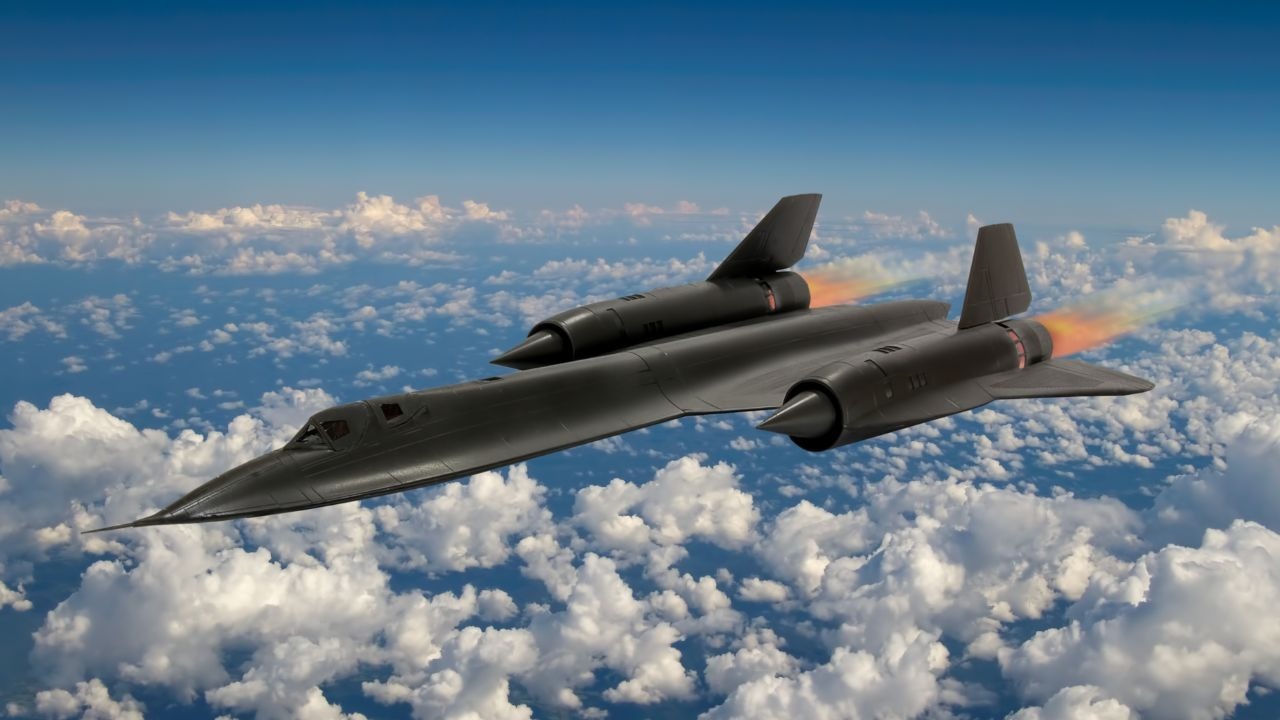
The mid-air breakup of an SR-71 at extreme speed did more than test one pilot’s luck. It exposed how thin the margin can be when an aircraft flies faster than a rifle bullet and higher than most mountains. The event, and the survival that followed, still shapes how engineers and crews think about the risks of extreme high-speed flight.
The Blackbird was built to outrun threats, not to fail gently. When one SR 71 came apart at around Mach 3, the violence of the disintegration, the automatic expulsion of the crew, and the post-crash investigation all revealed vulnerabilities that remain relevant as new aircraft again push toward similar speeds.
The day the Blackbird came apart at Mach 3
The breakup that haunts SR 71 history occurred when a Blackbird cruising at about Mach 3 and around 78,000 feet suddenly lost stability and disintegrated. Accounts describe the structure failing so quickly that the pilot had no time for a conscious ejection sequence before being hurled into the thin air. One detailed narrative explains that the aircraft was flying at Mach 3.18 when loads on the airframe and inlet system combined into a catastrophic upset that tore the jet apart and effectively threw the pilot clear of the wreckage, a sequence that later reporting described as the pilot being “ripped out of the aircraft” at speed, a phrase that captures both the violence and the absence of human control in those seconds, as noted in coverage of how SR 71 Blackbird.
That narrative has often been linked with the experience of test pilot Bill Weaver, who was flying SR 71 tail number 952 when it broke up in flight. The aircraft, identified as Blackbird 952, came apart after an inlet problem that began with a shock wave moving out of position in the engine intake and ended with the nose section separating from the rest of the fuselage. The protection provided by the full pressure suits worn by Weaver and his reconnaissance systems officer was tested in that event, when Blackbird 952 disintegrated mid-air, and the crew found themselves exposed to the stratosphere, as detailed in an account of how the Blackbird 952 protection.
Bill Weaver and the limits of human survival
Bill Weaver’s experience has become a case study in how human physiology interacts with extreme speed. He later explained that he never pulled an ejection handle and had no memory of the breakup itself, which suggests that he lost consciousness as the aircraft failed. The SR 71 used a system that could sense catastrophic structural loads and automatically initiate a “shock expulsion” of the crew, and in Weaver’s case, that system, combined with his pressure suit and parachute, likely made the difference between life and death. A detailed account of his SR-71 test flight describes how the accident sequence began with an inlet unstart and ended with the pilot separated from the aircraft at very high dynamic pressure, and how the first pilot to survive exposure that should have been unsurvivable.
Medical and engineering analysis of Weaver’s survival helped refine assumptions about what a human body can endure in such an event. At Mach 3.18 and around 78,000 feet, the partial pressure of oxygen is too low to support consciousness without a sealed suit, and the temperature can kill within seconds if protective systems fail. Yet Weaver’s suit remained intact and his parachute deployed, allowing recovery teams to find him alive. Later reviews of the incident have described it as a “miracle,” but behind that language lies a chain of design decisions about suit pressurization, helmet locks, and automatic separation that collectively shifted the odds in the crew’s favor, as highlighted in technical reflections on how Mach 3.2 Blackbird.
Engineering lessons from a mid-air disintegration
The SR 71 program treated the breakup not as an isolated mishap but as data. Investigators traced the sequence to the complex relationship between the aircraft’s inlet system and its engines, which depended on a movable shock wave inside each intake. If that shock shifted suddenly, the flow could separate, causing what crews called an “unstart” that produced violent yaw and roll. The specific incident that destroyed Blackbird 952 showed how a rapid unstart on one side could impose asymmetric loads that exceeded the structure’s capacity, a finding later echoed in technical summaries of how SR 71 engines depended on precise inlet control and how a single disturbance could trigger cascading failures.
The investigation found that the nose section had broken off aft of the rear cockpit and that the remaining structure could not remain intact once that separation began. Engineers concluded that the Flight and Inlet Control System needed changes to reduce the chance of sudden unstarts and to give the crew more authority to manage them. Those findings led to refinements in automatic control logic and training that stressed immediate recognition of inlet problems and rapid corrective action, as set out in the report that described how the Investigation of the reshaped procedures.
What the SR 71 breakup means for future high-speed flight
The SR-71 experience still informs how designers think about new aircraft that aim for similar speeds. The Blackbird remains one of the fastest and highest-flying operational aircraft in history, and its record came with a cost that included 12 accidental losses, all from mechanical or human causes and none to enemy action, as summarized in a review of Key Takeaways Blackbird. Any future platform that flies at Mach 3 or beyond must account for the same combination of structural heating, inlet complexity, and human vulnerability that nearly killed Bill Weaver and destroyed aircraft like Blackbird 952.