
Spain has again pushed the boundaries of reconstructive surgery, completing the world’s first face transplant using tissue from a donor who chose assisted dying. The operation, carried out in Barcelona, links two of the most sensitive frontiers in modern medicine: euthanasia and highly complex facial transplantation. It also places the country back at the center of a field it helped pioneer more than a decade ago.
The recipient, identified only as Carme, had lost much of her face to devastating infection and could no longer eat, speak, or appear in public without severe distress. Her new face, donated by a woman who requested euthanasia and explicitly consented to organ and tissue donation, has given her a chance at a more ordinary life while forcing ethicists and clinicians to confront how assisted dying and donation can coexist.
The operation that rewrote two medical rulebooks
The transplant was performed at Vall d’Hebron Hospital and, according to the surgical team, is the first time a face has been transplanted from a donor who died by euthanasia. A Barcelona hospital coordinated the procedure after the donor, a middle aged woman, opted for assisted dying and agreed that her organs and tissues could be used to help others. The case required synchronizing end of life care with transplant logistics in a way that respected the donor’s autonomy while safeguarding the recipient’s prospects of success, a balance that specialists describe as both technically and ethically demanding.
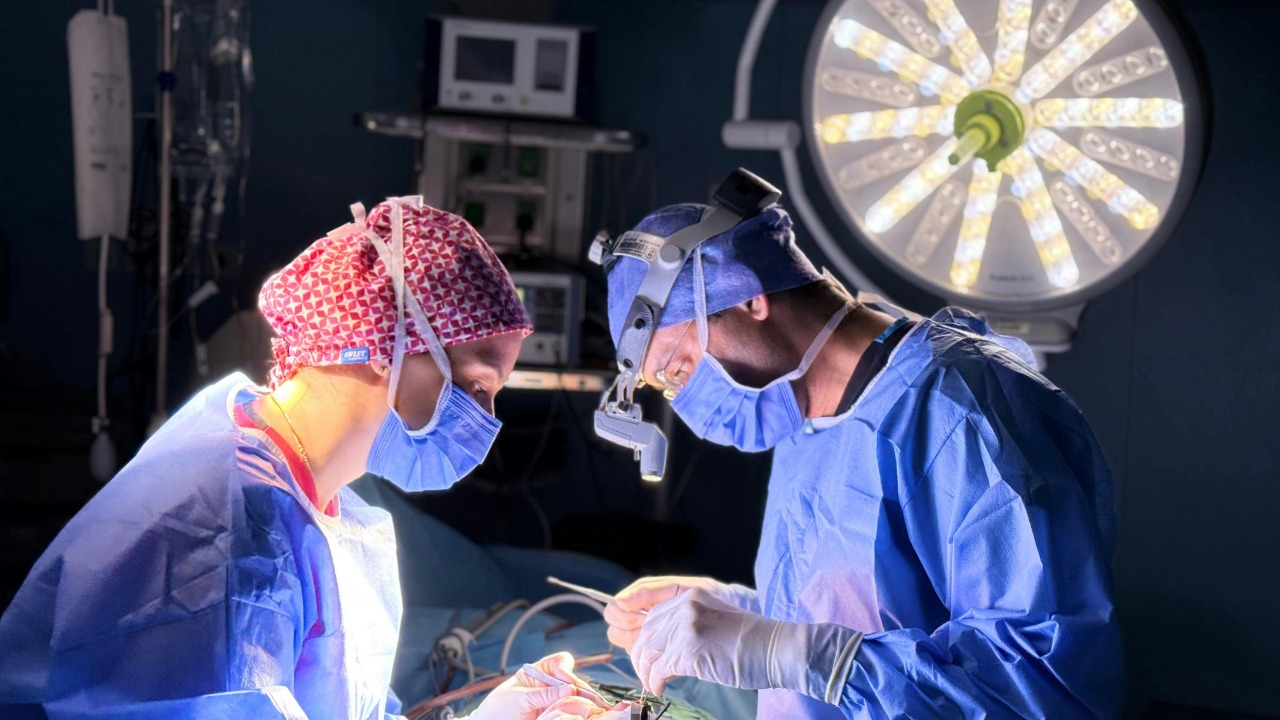
Hospital leaders have framed the surgery as a world milestone that blends cutting edge technology with an unusual act of generosity. At Vall d’Hebron, a team of 100 professionals worked in parallel operating rooms to retrieve and implant the donor’s facial structures, while a spokesperson for the Barcelona hospital later confirmed that privacy concerns meant the exact date of the operation would not be disclosed. The institution has already been involved in some of the most complex transplants ever performed in Spain, and this latest procedure cements that reputation.
Carme’s ordeal and the promise of a new face
Before the transplant, Carme’s life had been narrowed to survival. She developed facial tissue necrosis after a bacterial infection that followed an insect bite while she was in the Canary Islands, a sequence that left her fighting for her life and ultimately cost her half her face. Reports from the Canary Islands incident describe how the infection destroyed bone and soft tissue, leaving her unable to chew or speak properly and dependent on a feeding tube. Surgeons concluded that conventional reconstruction could not restore basic function, which is why she was evaluated for facial transplantation at the Barcelona center.
The recipient, identified publicly only by her first name Carme, was eventually matched with a donor who had a similar head size and compatible tissue profile. According to detailed accounts of Carme, the transplant has already allowed her to start regaining facial expression and to contemplate returning to everyday activities that once felt impossible. In interviews cited by local media, she has spoken of no longer dreading going out on the street and of hoping to rebuild a “normal life,” a sentiment echoed in coverage of her rehabilitation at Vall d’ Hebron Hospital.
A donor’s final decision and Spain’s assisted dying framework
The donor’s role in this story is as consequential as the surgical feat itself. Before her death, she clearly expressed her wish to donate her organs and tissues after euthanasia, a decision that allowed clinicians to plan the retrieval of her face and other organs in a controlled setting. Accounts of the case emphasize that before her life ended, she had gone through the legal process for assisted dying and then separately consented to donation, which transplant coordinators say is essential to avoid any perception that organ needs could influence end of life decisions.
Spain legalized assisted dying under strict conditions, and government data cited in more world coverage indicate that a growing number of patients are requesting help in dying. In this case, the donor’s choice intersected with Spain’s long-standing culture of organ donation, which already gives the country some of the highest donation rates globally. Reports on the transplant note that the woman who chose euthanasia was middle aged and that her decision to donate has been described by clinicians as a “light between technology and generosity,”.
Spain’s leadership in face transplants and what comes next
This latest breakthrough did not come out of nowhere. Spain has been a reference point in facial transplantation since the world’s first full face transplant was completed there in March 2010 by a team at Vall d’Hebron University Hospital in Barc, a landmark described in historical overviews of face transplant surgery. That earlier operation, performed on a man who suffered severe disfiguration, established the Barcelona center as a global leader in complex reconstructive work and laid the groundwork for the protocols, imaging, and microsurgical techniques that have now been adapted to a donor who died by euthanasia. The new case reinforces Spain’s reputation for combining surgical innovation with a robust national donation system.
Clinicians and ethicists now expect the Barcelona experience to influence guidelines in other countries where assisted dying is legal but organ donation from such patients remains rare or untested. Detailed reporting on the case notes that a spokesperson for the hospital declined to say the exact date of the procedure for privacy reasons but confirmed that the operation took place earlier this year, and that it involved coordination across surgical, psychological, and ethical teams on a scale rarely seen even in high end transplant centers.