
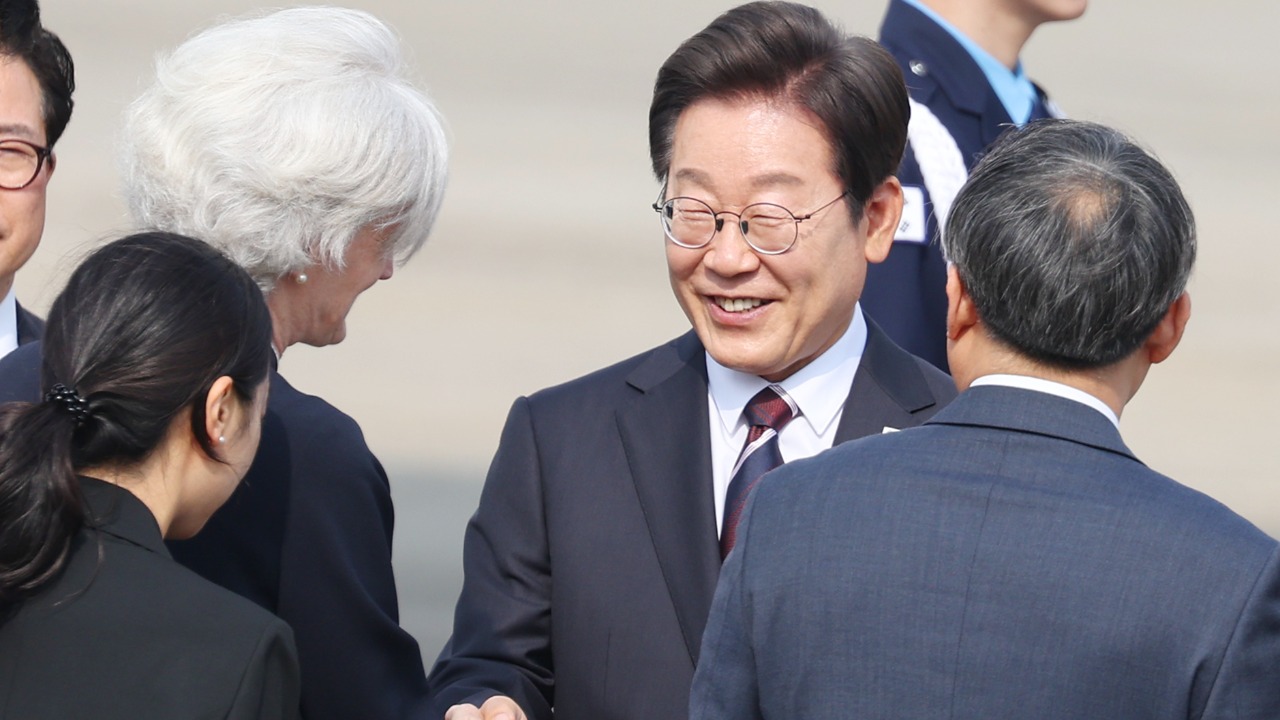
South Korea is racing to tighten control over civilian drones as President Lee Jae Myung warns that even an amateur flight across the border could be treated as an act of war by Pyongyang. His push for better tracking and stricter rules reflects a wider effort to prevent private technology from colliding with the Korean Peninsula’s most volatile fault line.
The campaign comes as North Korea sharpens its rhetoric and South Korean politics remain unsettled by the legal downfall of former President Yoon, who is accused of using drones for his own covert missions. Against that backdrop, Lee is trying to show that the state, not freelancers or political operatives, will decide what flies near the Demilitarized Zone.
Lee’s war warning and the new urgency on drones
President Lee Jae Myung has framed unauthorized drone flights toward North Korea as a direct threat to national security, not a hobbyist’s mistake. During a Cabinet meeting at the Blue House in central Seoul, he ordered a sweeping investigation into alleged civilian incursions and said that sending unmanned aircraft over the border was “the same as starting a war,” a phrase that underlined how easily Pyongyang could misread a small quadcopter as a hostile probe. His comments were aimed at both domestic audiences and North Korea, signaling that the government intends to treat any cross-border drone activity as a matter of state responsibility rather than private risk-taking, and that it will not tolerate citizens freelancing in one of the world’s most militarized airspaces, as reflected in his directive to the Cabinet.
The immediate trigger was a claim by a South Korean man that he had sent drones into North Korea, a boast that prompted the ruling party to demand a full probe into whether privately operated aircraft had in fact crossed the border and been captured by the North. Authorities summoned a civilian suspect after a North Korean accusation that drones had flown in from the South, and Lee publicly warned that any such flights were a “grave act” that could be seen as an attempt to provoke Pyongyang, stressing that the government would investigate both the technical feasibility and the intentions behind the alleged missions, according to accounts of the summons and the man’s claim.
From one suspect to a widening probe
What began as a single allegation has quickly widened into a complex investigation that touches on politics, technology, and the legacy of the previous administration. Lee first ordered a joint probe into any possible civilian drone flights into North Korea after the accusation from Pyongyang, instructing agencies to review incidents dating back to at least September 2025 and to coordinate with the military on radar and tracking data, a move that underscored how seriously he views even unconfirmed reports of cross border flights, as described in his order for a joint probe.
As investigators dug deeper, they found that two key figures in the case were alumni of the same university and had both worked at the presidential office during former President Yoon’s tenure, a connection that raised questions about whether political networks had intersected with sensitive drone activity. Lee has insisted that the probe continue until all links are clarified and has called for a thorough review of how civilian drones are registered, tracked, and distinguished from models operated by the military, a stance reflected in his remarks reported By Yonhap and in the expanded case file.
Yoon’s legal troubles and the politics of unmanned flights
The drone controversy is unfolding as former President Yoon faces his own legal reckoning, including allegations that he used unmanned aircraft for clandestine operations targeting North Korea. Yoon has already been sentenced to five years in prison on separate charges and is also standing trial on accusations of treason, with prosecutors pursuing an espionage case that portrays him as having abused state power and sensitive tools for personal and political ends, according to detailed accounts of the espionage proceedings.
Those charges build on earlier indictments that accused Yoon of directing drone flights over North Korea while in office, a claim that, if proven, would show that the country’s highest leader once treated unmanned aircraft as a personal instrument in the confrontation with Pyongyang. Reports on his ouster describe how he and close associates allegedly orchestrated flights from Seoul into North Korean airspace, a pattern that now hangs over the current debate and helps explain why Lee is so determined to draw a bright line between state-controlled operations and any private activity near the border, as reflected in the account of Yoon’s indictment.
Managing Pyongyang’s volatility with tighter tracking
Lee’s insistence on better drone tracking is also a response to the unpredictable mood in Pyongyang, where Kim has recently fired a vice premier and publicly reprimanded senior officials during a tour of a new machine complex. That shake-up, which included harsh criticism of his own cadres, suggests a leadership that is both sensitive to perceived slights and eager to project control, a combination that makes accidental provocations especially dangerous and helps explain why South Korea is calling for more reliable monitoring of any aircraft that might cross the border into North Korea.
In that climate, Lee’s message is that technology must be subordinated to strategy, and that even consumer drones need to be logged, tracked, and, near the frontier, possibly grounded. His government has already ordered agencies to improve coordination on radar coverage and to distinguish more clearly between civilian and military models, while warning that any future cross-border flights will be treated as potential triggers for conflict rather than technical glitches, a stance that aligns with his earlier order for a joint investigation and his warning that civilian incursions are tantamount to starting a war.