
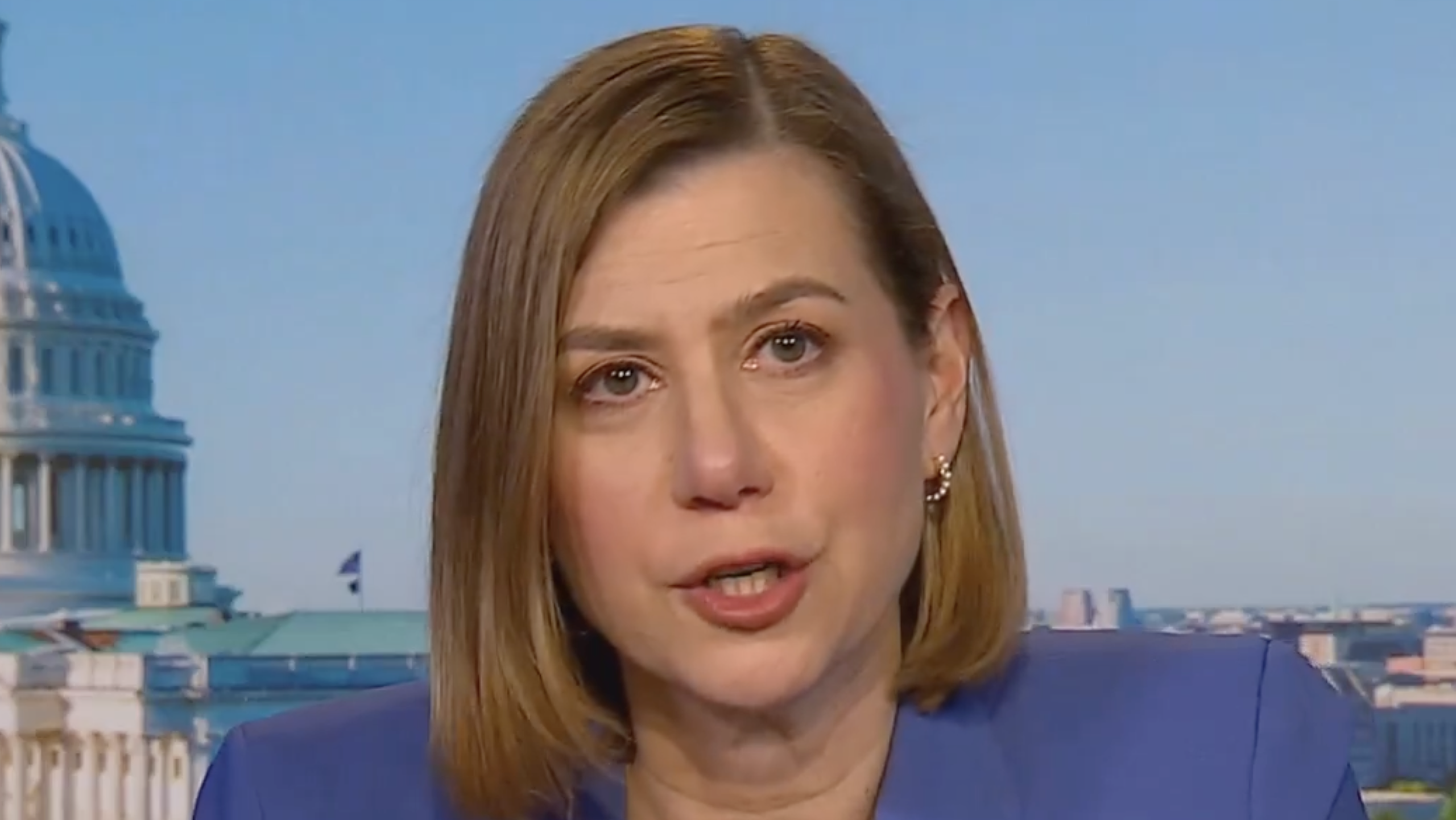
WASHINGTON — Sen. Elissa Slotkin (D-Mich.) introduced legislation on June 18, 2026, that would tighten federal restrictions on deploying armed military personnel or federal law enforcement agents to polling places. The bill, called the Protect Our Polls Act, was co-sponsored by Sens. Tammy Baldwin (D-Wis.), Ruben Gallego (D-Ariz.), Mark Kelly (D-Ariz.), Amy Klobuchar (D-Minn.), Alex Padilla (D-Calif.), Jacky Rosen (D-Nev.), and Raphael Warnock (D-Ga.) — all Democrats.
“President Trump has been saying the quiet part out loud: he wants to undermine our elections any way he can, and he refuses to rule out sending uniformed military to the polls, or to collect ballots and voting machines,” Slotkin said in a statement announcing the bill. “Our legislation prevents President Trump from weaponizing our military and armed federal officers to interfere in our elections.”
What the Bill Would Do
According to the bill’s official one-pager, released by Slotkin’s office, the Protect Our Polls Act would strengthen existing federal law restricting the deployment of military forces and armed federal agents to polling places. Federal law has long barred armed troops or federal agents from polling locations, with a narrow exception allowing deployment to repel “armed enemies of the United States.” The bill would require Congress to pass a Joint Resolution of Approval before that exception could be invoked, and would require the president to provide Congress with intelligence, legal justification, and evidence that state or local authorities cannot handle the threat on their own, at least 48 hours before any such deployment.
The underlying restriction dates to the Civil War era and is codified in part at 18 U.S.C. § 592. As of publication, the bill had not yet been assigned a number or posted to Congress.gov, which is typical for legislation introduced the same day; the full announcement is available on Sen. Slotkin’s official Senate website. The bill faces a difficult path in the Republican-controlled Senate.
Co-Sponsor Statements
Sen. Gallego, a Marine veteran, said: “As a Marine, I took an oath to the Constitution, not a president. As did all troops. Using our servicemembers to intimidate Americans at the polls is disgusting, illegal, and exactly the kind of abuse this bill stops cold.” Sen. Kelly, a retired Navy combat pilot, said federal law “has protected polling places from military interference since the Civil War for a reason,” adding that the bill was meant to ensure those limits could not be circumvented. Sen. Klobuchar said the bill “reiterates that those attempts at voter intimidation are unlawful.” Sens. Baldwin, Rosen, Padilla, and Warnock issued similar statements framing the bill as a response to comments by Trump and administration officials that they said had left open the possibility of federal agents being present at polling sites.
What Prompted the Bill
The legislation follows a series of comments by Trump and administration officials over recent months that critics said failed to definitively rule out deploying federal agents or troops near polling places, even as some officials separately stated there were no such plans. Asked by a PBS NewsHour correspondent on May 12 whether he would send the National Guard or ICE agents to polling locations in November, Trump responded, “I’d do anything necessary to make sure we have honest elections. We have to have honest elections,” without directly answering the question.
Separately, Trump ally Steve Bannon said on his War Room podcast in March that ICE’s deployment to airports could serve as a “test run” for “ICE’s involvement in the 2026 midterms,” saying, “ICE is going to be there in the fall of ’26, just like they’re in airports today.” Homeland Security Secretary Markwayne Mullin said during his confirmation hearing that ICE could be sent to polling places in the event of a “specific threat,” according to the Brennan Center for Justice.
Administration Statements Denying Such Plans
Administration officials have at other points stated explicitly that no such deployment is planned. Heather Honey, deputy assistant secretary of homeland security for election integrity, told state election officials on a call in February, “Any suggestion that ICE is going to be present at polling places is simply disinformation. There will be no ICE presence at polling locations for this election.” A Department of Homeland Security official separately told CNN that “ICE is not planning operations targeting polling locations.”
Those assurances have not fully satisfied some state election officials. Arizona Secretary of State Adrian Fontes told Votebeat he was skeptical of Honey’s pledge, citing her prior public role questioning the legitimacy of the 2020 election results. White House Press Secretary Karoline Leavitt, asked about the issue separately, said she had not heard the president discuss deploying immigration agents to polling sites but did not rule it out, saying, “That’s not something I’ve ever heard the president consider, no.”
Broader Context
The legislation comes amid broader Democratic concern over federal involvement in election administration. Sen. Adam Schiff (D-Calif.) raised similar concerns earlier this year after Director of National Intelligence Tulsi Gabbard’s office was involved in operations that seized voting machines and data in Puerto Rico and ballot materials from the 2020 election in Fulton County, Georgia. The Trump administration has also filed legal requests for voter roll data from a number of states, and the U.S. Postal Service has proposed rules tying mail-in ballot processing to states sharing voter roll information with federal authorities. Several states, including Virginia, have separately introduced or passed legislation establishing buffer zones to keep federal agents away from polling locations.
Slotkin’s office noted that she has raised the issue of military involvement in elections directly with administration officials in prior hearings, including with Defense Secretary Pete Hegseth and the commander of U.S. Northern Command, and that a related amendment she offered during this month’s Senate Armed Services Committee markup of the 2027 Pentagon budget was blocked by Republican members of the committee.
Republican and Administration Response
No Republican senators have signed on to the Protect Our Polls Act, and Senate Republican leadership has not issued a public statement on the bill. The White House did not immediately respond to the bill’s introduction. Republican members of the Armed Services Committee, who blocked Slotkin’s earlier budget amendment on the same subject, have not publicly detailed their reasoning for that vote.