
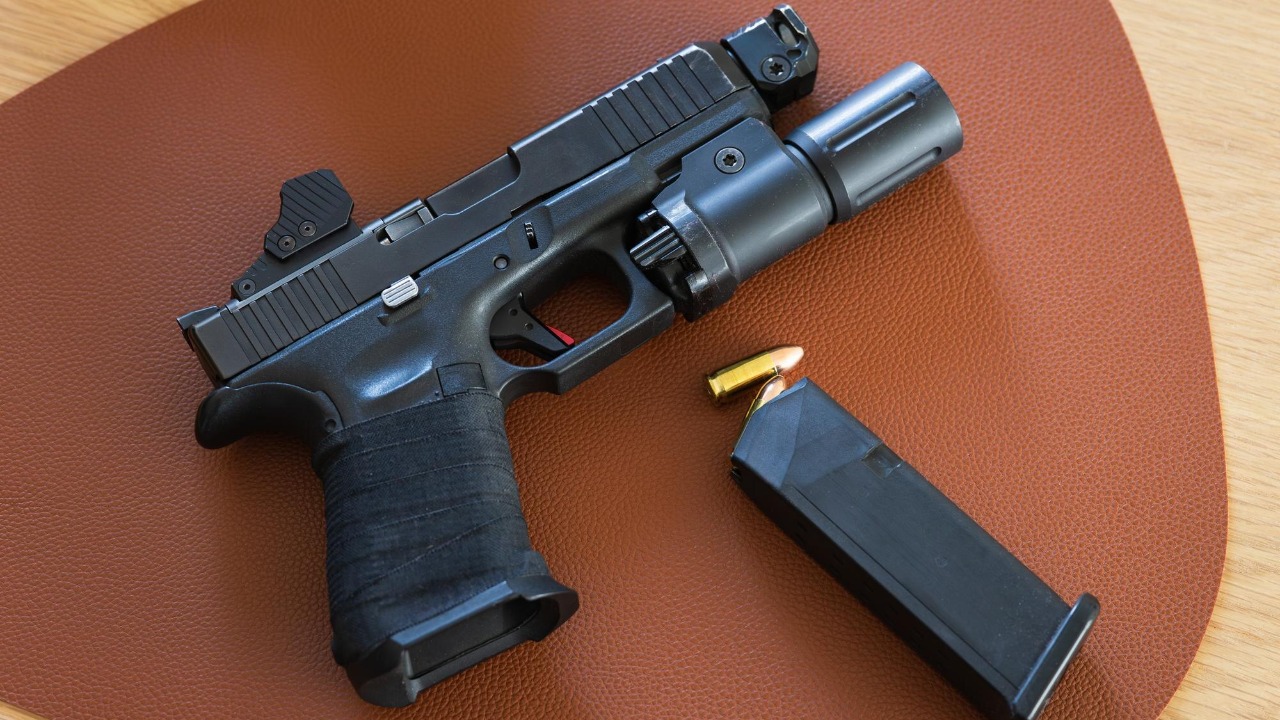
Everyday carry pistols are increasingly treated like compact toolkits, with shooters bolting on optics, upgraded sights and weapon lights in search of an edge. The question is whether a light belongs on every concealed handgun or whether it is a specialized accessory that solves specific problems at the cost of bulk and complexity. The answer sits at the intersection of safety rules, real-world crime patterns and the practical limits of what people will actually carry.
Why target identification drives the weapon light debate
The core argument for putting a light on an everyday carry pistol is simple: a defender must be able to see and identify a target before pressing the trigger. That principle is baked into the rule to know what a shooter is aiming at, and some trainers fold it into a broader focus on the importance of target identification and so-called PID, or positive identification, as a non-negotiable step before any shot. One analysis of pistol lights frames this as a direct extension of the safety rule to know a target and what is beyond it, then concludes that if a person cannot see, they should use a light, tying the entire case for a weapon light to that single safety requirement through the lens of The Importance of Target Identification. In that view, the light is not a gadget but a way to avoid catastrophic mistakes when a bump in the night turns out to be a family member or an innocent bystander.
Advocates also point out that a weapon-mounted light lets a shooter keep both hands on the pistol while illuminating a threat, which can matter when recoil control and fast follow-up shots are critical. Guidance aimed at concealed carriers describes this as a basic advantage of weapon light use, emphasizing that a compact light can let a person light up the night while maintaining a solid two-handed grip, a point that sits at the heart of Weapon Light Basics for those considering a light on their CCW. In that framework, the light is not just about seeing, it is about shooting more effectively once a threat has been clearly identified.
Why some carriers still leave the light at home
Despite those safety and performance arguments, a significant slice of concealed carriers still choose to run their pistols without a light, and their reasons are grounded in how attacks actually unfold. One discussion among Washington gun owners captures a common view that a person is very unlikely to be attacked in complete darkness, because attackers themselves need to be able to see, and that most violent encounters happen in low light or lit environments rather than in pitch black conditions, a point that surfaces in a poll asking if You carry a light. That argument does not deny the value of illumination, but it suggests that the marginal benefit of a dedicated weapon light may be lower than many assume in typical street or parking lot confrontations.
Others point to the tradeoffs that come with hanging hardware off a compact handgun that must disappear under a T-shirt or inside a waistband. A weapon light adds length and weight, which can make concealment harder, limit holster options and change how the pistol balances in the hand. One analysis of whether a weapon-mounted light is right for everyday carry notes that while the author personally carries a weapon with a light and sees clear benefits, they also walk through the cons, including the risk of muzzling anything that needs to be illuminated and the need to avoid shooting whenever possible, concerns that frame the question of Why Carry a Weapon Light as a balance of pros and cons rather than a universal mandate. For many carriers, those downsides are enough to keep their pistols slick and compact, especially if they already carry a separate handheld flashlight.
How weapon lights compare with night sights and other aiming aids

Part of the confusion in the weapon light debate comes from mixing up tools that do very different jobs. Night sights, red dots and weapon lights are often discussed in the same breath, but they solve separate problems and are not interchangeable. One trainer who examined whether night sights are worth the investment made a point of stating that the purpose of a weapon light is to see what a shooter is aiming at, while the purpose of night sights is to see the sights themselves, a distinction that sits at the center of the question Are Night Sights Worth the cost. In that framework, a pistol can have glowing tritium dots and still leave the shooter blind to what is in front of the muzzle if there is no ambient light on the target.
That division of labor matters when deciding what belongs on a carry gun. A person who prefers a particular sighting system, such as a bright front night sight or a micro red dot, might still need a way to illuminate a threat, whether through a weapon light or a handheld. The same trainer who discussed night sights described a preferred setup when not running a dot, highlighting that sight choice is its own decision under the broader question of What Sighting System Do You Like and should not be treated as a substitute for target identification. In practice, that means a carrier might reasonably choose high-visibility sights and a handheld light instead of a weapon-mounted unit, or they might pair a compact rail light with standard irons, but each component is solving a distinct part of the shooting problem.
Training, holsters and the realities of concealed carry
Even the best hardware is only as useful as the training that supports it, and weapon lights are no exception. Instructors who walk students through the pros and cons of pistol lights emphasize that a light changes how a handgun is drawn, presented and used under stress, and that it demands practice to avoid flagging non-threats while searching. One breakdown of pistol lights for concealed carry ties the case for lights directly to the need for deliberate target identification and PID, but it also notes that the light must be integrated into a broader training plan that respects the rule to know what a shooter is aiming at and what lies beyond, a point that anchors the discussion of Not only is this one of the fundamental rules of gun safety. Without that training, a light can become a crutch or, worse, a liability that encourages a person to point a loaded gun at anything they want to see more clearly.
Holster choice is another practical constraint that often decides whether a light-equipped pistol is realistic for daily carry. Many popular inside-the-waistband holsters are molded to specific combinations of handgun and light, which means a carrier who adds or changes a light may need to replace their holster entirely. One analysis of whether a weapon-mounted light is right for everyday carry notes that the author personally carries a weapon with a light and then walks through how that choice affects holster selection, concealment and comfort, using their own setup as an example of how Personally, I do carry a weapon with a light but still have to manage the added bulk. For many people, the need to find a compatible holster that fits their body type and clothing is the deciding factor between running a light or keeping the pistol as slim as possible.
When a weapon light makes sense, and when it does not
As with most gear debates, the most honest answer to whether every everyday carry pistol should wear a light is that context matters. Some trainers frame the question in terms of environment and mission, asking whether a person is more likely to face threats in dark indoor spaces, such as apartment hallways or parking garages, or in relatively well-lit public areas. One detailed look at whether to run a weapon light on a handgun describes the broader debate over weapon-mounted lights and then walks through scenarios where a light can be a clear advantage, such as home defense or duty use, while also acknowledging that concealed carriers must weigh concealment, comfort and the risk of muzzling non-threats, a balance that sits at the heart of Should You Run a Weapon Light on Your Handgun. In that framing, a person who spends most of their time in dim indoor spaces might reasonably prioritize a light, while someone whose routine keeps them in bright offices and daylight commutes might not.
Other guidance aimed at concealed carriers takes a similar conditional approach, asking whether a person should run a light on their CCW and then outlining the basics of light use, including the ability to light up the night with two hands on the pistol and the importance of understanding how a light affects draw stroke and concealment. That analysis, which treats the question of Should You Run a Light on Your CCW as a matter of individual needs, ultimately suggests that a light is a powerful tool but not a universal requirement. Combined with the perspective from carriers who argue that attackers, like defenders, usually need some light to operate and that a person may not need to prepare for complete darkness, as voiced in the discussion where Attackers were said to need to see as well, the emerging consensus is that weapon lights are best treated as mission-driven tools. For some everyday carriers they are indispensable, for others they are an unnecessary complication, but in every case the decision should be grounded in realistic scenarios, solid training and a clear understanding of what the light is actually there to do.