
A War and Defense Report
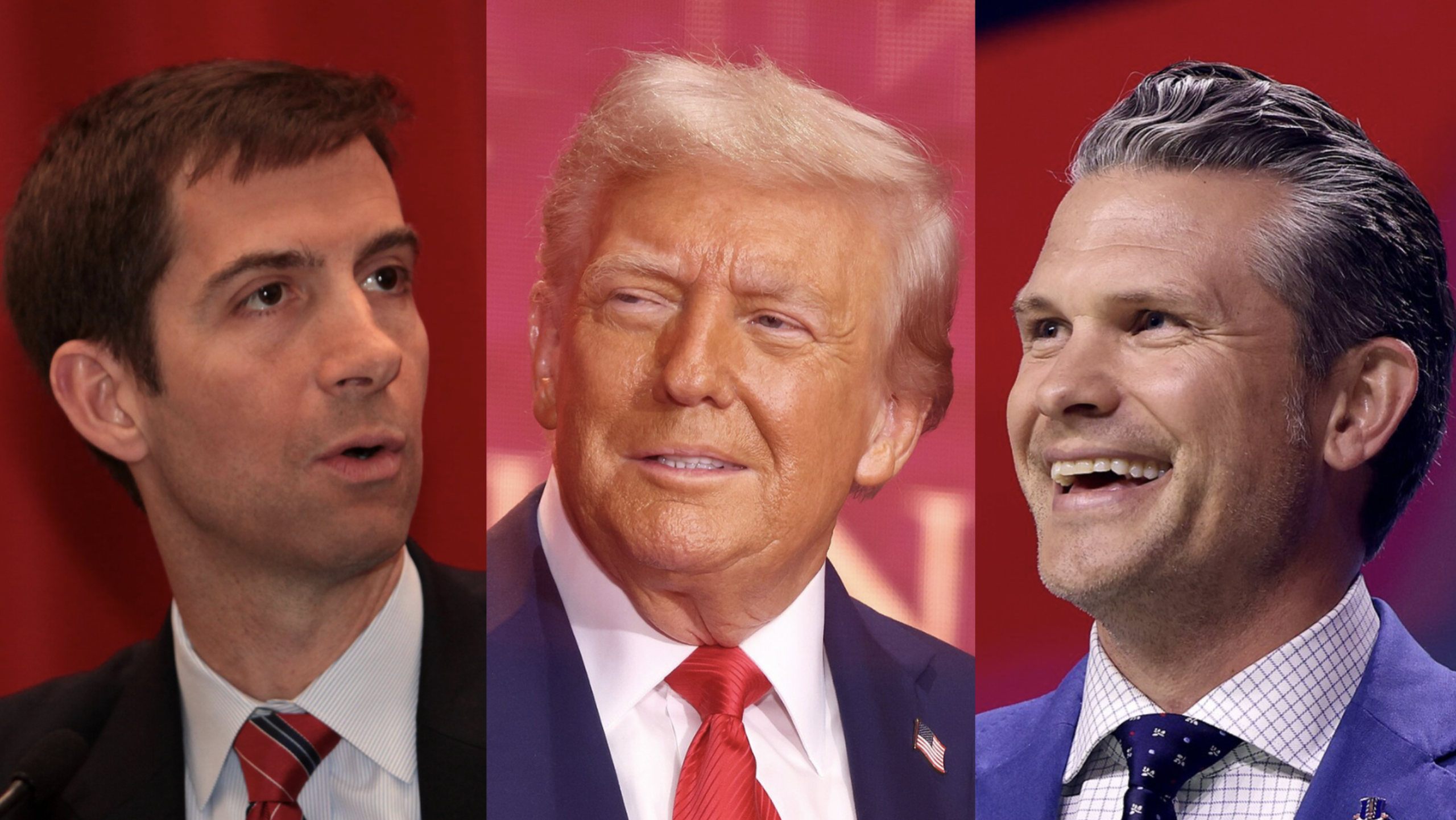
Senator Tom Cotton (R-Arkansas) on Wednesday credited President Donald Trump, Secretary of War Pete Hegseth, and U.S. troops with making the United States safer following confirmation that American forces killed a senior ISIS leader in northwest Syria, framing the strike as further evidence of the administration’s aggressive counterterrorism posture.
Cotton’s remarks came in response to a public release from U.S. Central Command (CENTCOM) announcing that its forces had conducted an airstrike in northwest Syria on June 19 that killed Ali Husayn al-‘Ulaywi, identified by the command as a senior ISIS leader. In a post on X published at 10:29 a.m. on June 24, 2026, Cotton wrote: “ISIS savages kill Americans and threaten our homeland. President Trump, @SecWar, and our troops are making our country safer by successfully executing these terrorists.”
CENTCOM’s release, published the same day, stated that the strike was part of a continuing campaign against the terror group’s remaining networks in the region. “U.S. Central Command (CENTCOM) forces conducted an airstrike in northwest Syria, June 19, that resulted in the death of a senior ISIS leader,” the command said. “The precision strike killed Ali Husayn al-‘Ulaywi and is part of ongoing U.S. efforts to disrupt and eliminate terrorists seeking to attack Americans abroad or the U.S. homeland.” CENTCOM said its forces continue to operate alongside regional partners in pursuit of the group’s remaining fighters.
Adm. Brad Cooper, the CENTCOM commander, was quoted directly in the release affirming the command’s continued focus on ISIS remnants in the region. “CENTCOM and our partners remain committed to rooting out remaining remnants of ISIS to ensure its enduring defeat,” Cooper said. “We will continue to defend the U.S. homeland, our service members, and allies and partners across the region.”
Part of a Broader Pattern of Statements on the Administration’s Wartime Record
Wednesday’s post is consistent with a string of statements Cotton has made throughout 2026 crediting the Trump administration’s military and intelligence operations, particularly regarding Iran, terrorism, and broader national security policy.
On March 18, 2026, Cotton delivered a floor speech opposing a War Powers Resolution aimed at limiting presidential authority over military operations against Iran, framing Operation Epic Fury as a long-overdue response to decades of Iranian aggression. “For 47 years, Iran’s outlaw regime has waged a war of death, destruction, and terror on the United States, our friends, our allies, and indeed the civilized world,” Cotton said. “And now, after 47 years of indecision and timidity, America has finally put our foot down. President Trump has sent a clear message that Iran will never have a nuclear weapon and they will never be able to threaten the rest of the world again.”
In that same speech, Cotton invoked the legal authority underpinning the operation, arguing that the administration’s actions fell squarely within the president’s constitutional powers. “From a legal perspective, Operation Epic Fury was well within the president’s constitutional authority and duty as commander-in-chief to defend Americans,” Cotton said, adding that Iran had effectively “loaded and cocked the gun” before U.S. forces acted.
That same day, in his role as chairman of the Senate Intelligence Committee, Cotton opened the panel’s annual Worldwide Threat Assessment hearing by detailing what he described as a dramatic shift in Iran’s regional posture following U.S. military action. “Thanks to the efforts of our military and intelligence personnel—including my fellow Arkansans who are now serving in the Middle East—the Iranian revolutionary regime that terrorized the world for forty-seven years is finally knocked on its back foot,” Cotton said. “Last summer, we devastated Iran’s nuclear facilities. And in recent weeks, we’ve eliminated Iran’s top leadership, pummeled its military, sunk its navy, destroyed its missiles, neutered its proxies, and left its economy reeling.”
Cotton, a former Army infantry officer who sits on the Senate Armed Services Committee, has also repeatedly defended Hegseth specifically. In December 2025, following a Pentagon inspector general report concerning Hegseth’s handling of sensitive information in a Signal group chat, Cotton said he retained full confidence in the secretary’s leadership, telling reporters he had “100 percent” confidence in Hegseth despite the findings.
Continued Focus on Iran, Intelligence Authority, and National Security Funding
Beyond Iran-specific military operations, Cotton has used his position atop the Senate Intelligence Committee to press for sustained funding and legal authority to support ongoing counterterrorism and counter-Iran operations. In May 2026, the Senate Intelligence Committee passed the Intelligence Authorization Act for Fiscal Year 2027 on a bipartisan 14-3 vote, with Cotton highlighting provisions aimed at restricting adversarial nations’ access to U.S. intelligence infrastructure. “I’d like to thank my colleagues for their work on this bill, which will keep America safe and make our intelligence agencies more transparent and efficient.”
Cotton has also pressed the administration to take additional action against Iran’s economic and military activity outside the battlefield. In a May 22, 2026 letter to Treasury Secretary Scott Bessent, Cotton urged sanctions against entities he said were illegally facilitating Iranian access to the Strait of Hormuz, a critical global shipping corridor.
More recently, Cotton has turned his attention to intelligence-gathering authorities he argues are essential to sustaining the campaign against terrorist networks. In a June 11, 2026 floor speech supporting a short-term extension of Section 702 of the Foreign Intelligence Surveillance Act, Cotton argued that the authority remains indispensable to ongoing counterterrorism operations. “Well over half of every item in the president’s daily brief is derived from Section 702,” Cotton said. “It has stopped terrorist attacks. It’s stopped the flow of deadly drugs into our country. It’s protected our troops overseas. It’s allowed us to rescue troops overseas.”
Strike Comes Amid Broader Regional Volatility
The strike that killed al-‘Ulaywi comes as ISIS has sought to reassert itself in parts of Syria following the collapse of the Assad government in late 2024. The group declared a new operational phase earlier this year targeting the government of Syrian President Ahmed al-Sharaa, who has since joined the U.S.-led coalition against ISIS, and has claimed responsibility for a series of attacks in the country since February, including a recent assault near Manbij in Aleppo province that Syrian officials said killed two soldiers.
U.S. forces have maintained a reduced but active footprint in the region throughout this period. American troops shuttered their remaining bases in Syria in April after more than a decade of operations tied to Operation Inherent Resolve, the long-running U.S. campaign against ISIS, though CENTCOM has continued strikes against the group’s remaining leadership and previously transferred thousands of ISIS detainees from Syrian custody to facilities in Iraq amid security concerns following the breakdown of the Assad regime.
Outlook
Cotton’s statement reflects a consistent and ongoing alignment with the Trump administration’s military approach in the Middle East, an alignment he has voiced repeatedly across operations against Iran, counterterrorism strikes against ISIS, and broader intelligence and national security policy throughout 2026. As CENTCOM continues operations against ISIS remnants in Syria, Cotton’s response on Wednesday signaled that his public assessment of the administration’s record on counterterrorism, and of Hegseth’s leadership at the Pentagon, remains unchanged.