
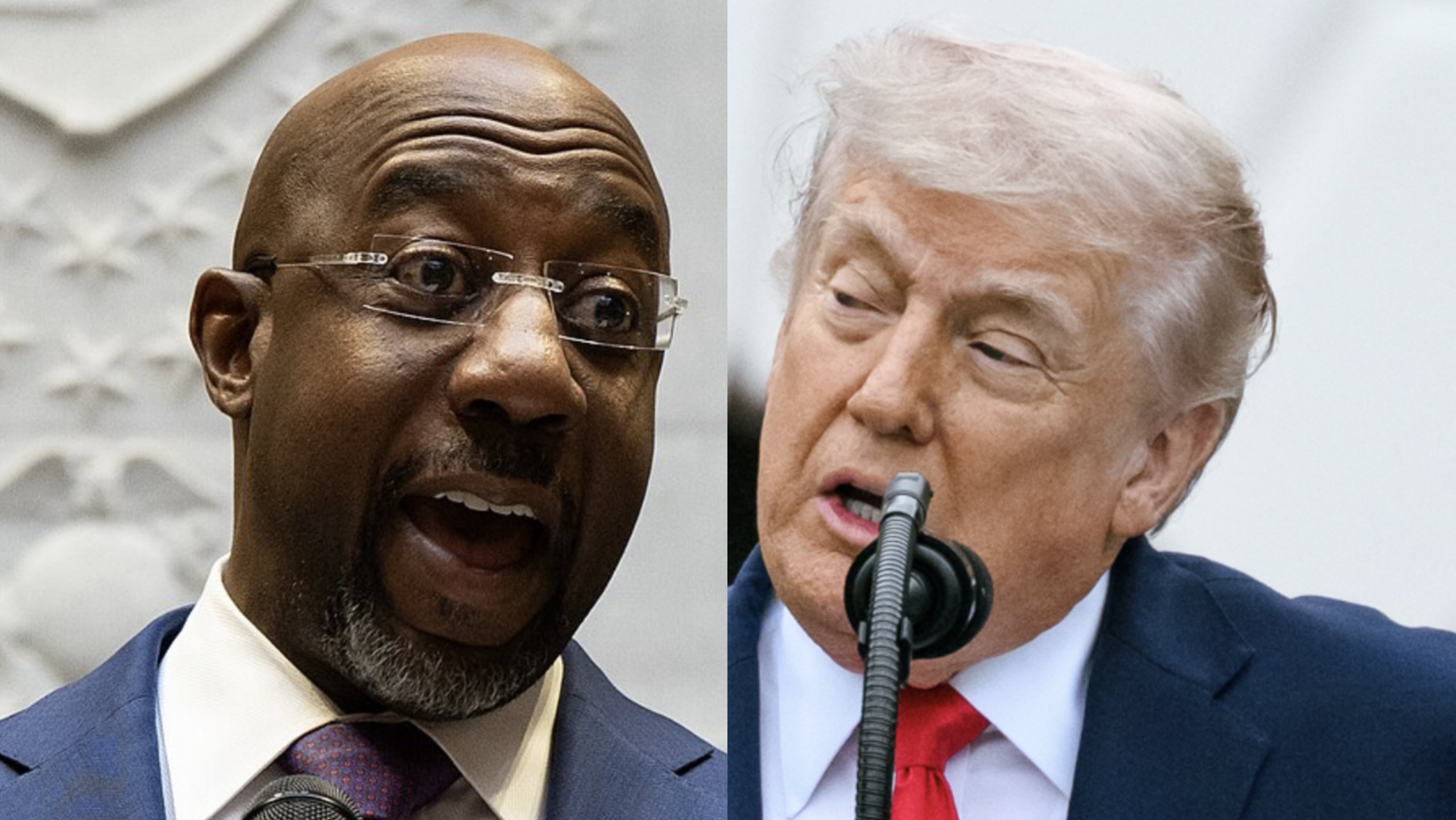
WASHINGTON, D.C. — Senator Raphael Warnock of Georgia had spent years fighting to get a ban on private equity firms mass-purchasing single-family homes into federal law. He’d built a bipartisan coalition, secured the Senate’s backing by a vote of 89-10, watched the House pass the bill overwhelmingly, and seen a signing ceremony put on the calendar. Then, on Wednesday morning, President Donald Trump canceled it — demanding Congress first pass his contentious voter ID legislation before he would sign anything. Warnock’s response was unsparing.
“The President is refusing to sign my provision to ban private equity from mass-purchasing homes,” Warnock wrote on X Wednesday morning at 10:28 a.m. “He’s trying to use it as leverage to jam through his voter suppression bill. When authoritarians feel their grip on power slipping, they start pulling stunts like this.”
Trump’s Cancellation
Trump announced the cancellation via Truth Social just before the noon ceremony was set to begin, posting: “Today’s Housing News Conference and Signing is hereby cancelled until such time as we pass the desperately needed SAVE AMERICA ACT, which I consider to be a National Emergency. Thank you for your attention to this matter! President DJT.” The SAVE America Act would require photo identification to vote in federal elections and proof of U.S. citizenship to register, while also compelling states to turn over their voter registration rolls to the Department of Homeland Security.
As of June 2026, the Senate has officially failed to pass the bill on multiple occasions, with Republicans holding 53 seats but needing 60 to overcome the chamber’s filibuster threshold. Trump has insisted since March that he would not sign any legislation until the SAVE America Act was sent to his desk.
Warnock’s Provision — And What Was at Stake
For Warnock, the cancellation was not merely a political setback — it was the derailment of a flagship legislative effort he had fought for since arriving in the Senate. As a member of the Senate Banking Committee, which oversees federal housing policy, Warnock worked for years to stop the spread of private equity institutional investors in the single-family and starter home housing markets.
The provision Warnock secured in the 21st Century ROAD to Housing Act would ban large corporations that own more than 350 single-family homes from purchasing any additional single-family homes, imposing a fine of the greater of either $1 million or three times the purchase price on any corporate investor that purchases a home above the cap. For Warnock, the stakes were personal and political: Georgia’s housing market, he argued, was suffocated by private equity, with 30 percent of Atlanta’s single-family rental market owned by institutional investors.
“Private Equity’s Greed Is Squeezing First-Time Homebuyers Out”
Warnock had been sounding the alarm for months. When the Senate passed the ROAD to Housing Act in March with his provision included, he declared: “Today is a win for homebuyers in Georgia and across the country. Let me make it plain: private equity’s greed is squeezing first-time homebuyers out of the market and pushing the American Dream further out of reach. I thought Congress ought to get something done; that’s why I’ve worked tirelessly for months to get this over the finish line.”
The bill earned broad support beyond Washington. Warnock hosted a press conference in Paulding County, Georgia, to spotlight the issue of large corporations buying up single-family homes, warning that “dreams have been deferred because too many are finding themselves in fierce competition with private equity” and calling his bill “an important first step” while stressing that “there is so much more work that needs to be done.”
In the Senate chamber after the bill’s passage, Warnock described the housing market as “a mess” and called the generational affordability crisis a congressional imperative, adding that he hoped the bipartisan bill would be “the beginning and not the end” of legislative action.
Atlanta as “Ground Zero”
Warnock described Atlanta as “ground zero for private equity’s domination of the housing market,” pointing to a 2024 U.S. Government Accountability Office report that placed Atlanta among the top markets for homes owned by private equity firms, with 25 percent of single-family homes in the city owned by such a firm.
The senator was careful to draw a distinction between the interests of renters and homebuyers, arguing that the real adversary was not working-class competition but Wall Street consolidation. “Renters are not in competition with other working people who are just trying to buy a home,” Warnock said during a press call ahead of the Senate vote. “Their problem is private equity swooping up all of the stock.”
“Voter Suppression Bill”
Warnock’s framing of the SAVE America Act as a voter suppression measure placed him squarely within the Democratic Party’s unified opposition to the legislation. The Brennan Center for Justice has described the bill as the most restrictive voting legislation ever to come before Congress, warning it would block millions of eligible American citizens from voting by requiring documents — passports or birth certificates — that approximately 21 million Americans do not have ready access to.
Opponents have also pointed out that noncitizen voting in federal elections is already illegal and considered vanishingly rare, with multiple state-level reviews turning up virtually no examples of the problem the bill purports to solve.
The Broader Political Moment
With less than five months until November midterm elections that threaten to end Republican majority control of Congress, Senate Republicans have begun to resist Trump on several fronts, including passing legislation to halt U.S. military action against Iran over White House objections — a move that drew a sharp rebuke from the president.
Senate Majority Leader John Thune responded to Trump’s canceled signing by telling reporters it was “his call to make,” while noting the housing bill was a “great piece of legislation” and expressing hope the president would “find his way to sign it.”
For Warnock, however, the moment was about something more fundamental than legislative procedure. By characterizing Trump’s move as the behavior of an authoritarian feeling threatened, the Georgia senator framed the canceled signing not as a policy dispute but as a warning sign — one that voters, he implied, should not miss.