
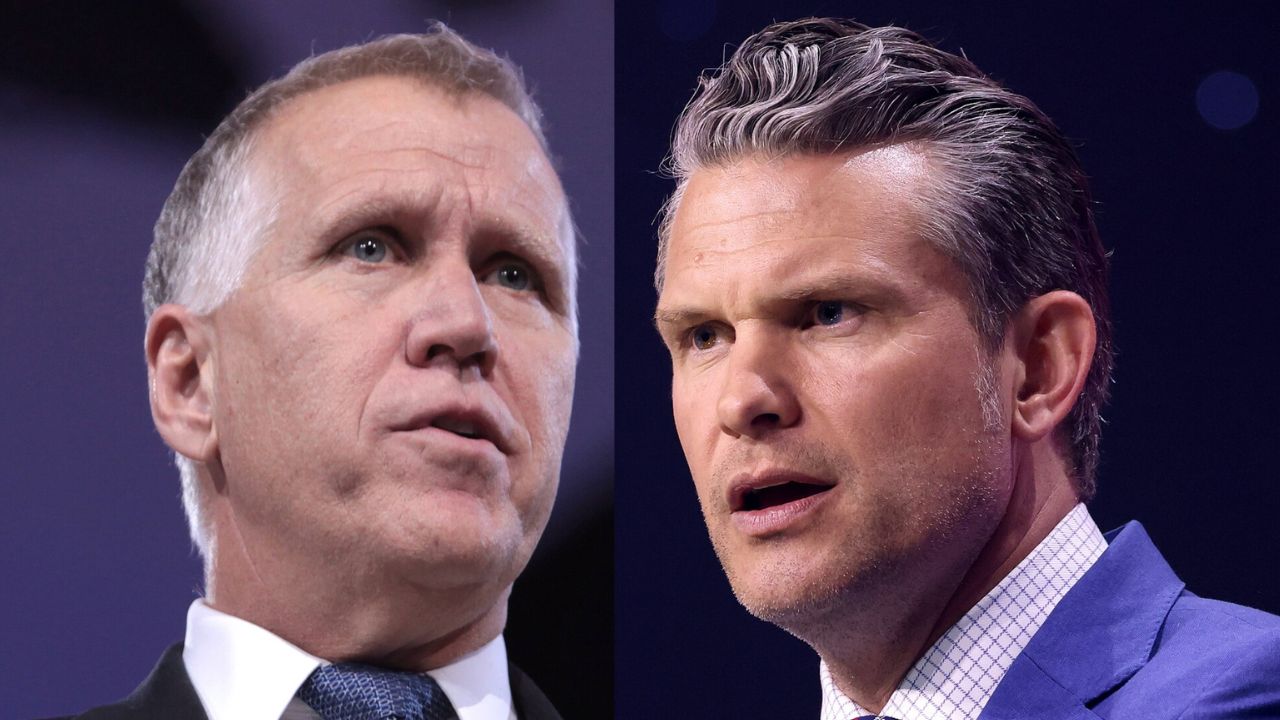
Republican Sen. Thom Tillis of North Carolina called on President Donald Trump to fire Defense Secretary Pete Hegseth in a lengthy post on X Wednesday, accusing Hegseth of “inept management” of the U.S. military and blaming him for the resignation of Army Secretary Dan Driscoll earlier in the week. Tillis, a former eight-year member of the Senate Armed Services Committee who cast the deciding vote to confirm Hegseth last year, said he had never witnessed worse leadership of American service members in his time overseeing the Pentagon’s personnel practices.
Tillis published the post at 10:41 a.m. on Wednesday, September 2, 2026, directly responding to a CBS News report cataloguing at least 20 generals, admirals and civilian defense leaders who have been fired, forced out or have resigned since Hegseth took over the Pentagon. His statement opened by thanking Driscoll for his service before pivoting into a direct rebuke of the sitting defense secretary.
The Post, In Full
Tillis’s statement read in its entirety:
“I thank @SecArmy Dan Driscoll for his leadership to our Army and service to our country. Dan was the right man at the right moment to lead our Soldiers and Army civilians. Our understanding and assumptions of warfare are being challenged in places like Ukraine and Iran, and Dan understands the old way of doing business no longer applies. He and General George began a transformative period of innovation in how we array our forces and equip our Soldiers. He challenged our legacy approach to manning and procurement. Most of all, he cared deeply about the men and women in our Army formations and quickly earned their respect. If we had a @SecWar who maintained the same priorities and forward-thinking, he would be fighting to retain talented leaders like Dan and the many flag officers he has forced into retirement. Instead, he is creating a leadership void at the top of our military ranks. I served on Senate Armed Services for 8 years and as chair or ranking member of the Personnel and Readiness subcommittee. I have never witnessed more inept management of the brave men and women who serve our country. He is intimidated by competence and retreats to ginning up culture wars instead of soberly attending to the vital work of our national defense and the health and well-being of our fighting force. I urge the President to find a new leader at the Pentagon who will retain and empower our military talent rather than diminish it.”
Driscoll’s Departure Sets Off the Response
Driscoll submitted his resignation to Trump on Monday, September 1, after roughly 18 months as Army secretary, with Wednesday marking his last full day in the role. His own social media post announcing the departure offered no explanation for why he was stepping down. Reports have described months of rising tension between Driscoll and Hegseth, with a source familiar with the matter telling news outlets that Driscoll raised concerns in his resignation about the Army’s modernization and readiness efforts being undercut by Hegseth’s ouster of generals central to that transformation work.
Driscoll had focused heavily on modernizing the Army, including expanding its drone warfare capabilities in light of lessons from Ukraine, and had spoken with Trump about the state of the Army before submitting his resignation. Tillis’s post credited Driscoll and former Army Chief of Staff Gen. Randy George with beginning “a transformative period of innovation” in how the Army arrays its forces and challenges “legacy approach to manning and procurement.”
“Intimidated By Competence”
Tillis’s sharpest language was reserved for his assessment of Hegseth’s stewardship of Pentagon personnel. Drawing on his eight years overseeing Senate Armed Services personnel matters, Tillis wrote that he had “never witnessed more inept management of the brave men and women who serve our country,” adding that Hegseth “is intimidated by competence and retreats to ginning up culture wars instead of soberly attending to the vital work of our national defense and the health and well-being of our fighting force.” He closed by urging Trump to “find a new leader at the Pentagon who will retain and empower our military talent rather than diminish it.”
A Widening List of Departures
The CBS News article Tillis was responding to detailed at least 20 senior military and civilian leaders who have left the Defense Department since Hegseth was confirmed, including some of the armed forces’ most decorated officers. Among them: Air Force Gen. Charles Q. Brown, fired as chairman of the Joint Chiefs of Staff just 16 months into a four-year term; Navy Adm. Lisa Franchetti, the first woman to serve on the Joint Chiefs, relieved without explanation the same day; and Gen. Randy George, the Army’s top uniformed officer, who was asked by Hegseth to take immediate retirement in April.
The list also includes Gen. David Allvin, who retired early as Air Force chief of staff without public explanation; Gen. Christopher Donahue, the last U.S. service member to leave Afghanistan in 2021, who was forced to retire early from his post leading Army forces in Europe and Africa; and Air Force Gen. Timothy Haugh, fired as NSA director and head of U.S. Cyber Command in April 2025. Before becoming defense secretary, Hegseth had said on a podcast that “any general that was involved — general, admiral, whatever — that was involved in any of the DEI woke s*** has got to go.”
On the civilian side, the departures include former Navy Secretary John Phelan, who left in April after what Trump described as difficulty getting along with others over shipbuilding disagreements, and Driscoll, now the most recent addition to that list. A source familiar with Driscoll’s resignation said he had expressed concerns that many of the generals leading the Army’s next-generation transformation efforts had been pushed out under Hegseth.
Tillis’s Complicated History With Hegseth
Tillis was a pivotal figure in Hegseth’s confirmation, casting his vote to advance the nomination only at the last moment during a contentious January 2025 process that included allegations of alcohol abuse and mismanagement at veterans’ organizations. In a statement released at the time, Tillis said he had “conducted my own due diligence, including asking tough questions of Pete” and cited Hegseth’s “unique perspective as a veteran of the wars in Iraq and Afghanistan.” Hegseth was ultimately confirmed in a 51-50 vote, with Vice President JD Vance breaking the tie after three other Republicans broke from the party to vote against him.
Tillis’s confidence in that vote appears to have eroded since. In a June 2026 interview on the NOTUS podcast, he said Hegseth’s tenure had featured a “sophomoric sort of execution” at the Pentagon, pointing to Hegseth’s conduct with the press corps, his posture at NATO meetings and his push to rename the department the “Department of War.” “He just doesn’t have the experience,” Tillis said at the time, adding that he would not have supported the nomination had he seen additional corroborated testimony against Hegseth before the vote.
Reaction From Capitol Hill
Tillis was not alone in linking Driscoll’s exit to concerns about Hegseth’s leadership. Sen. Jack Reed of Rhode Island, the top Democrat on the Senate Armed Services Committee, said Monday that “Secretary Hegseth is cultivating a culture where dissent is punished and competence is secondary to personal allegiance.” Reed added that “it is far past time for President Trump to recognize the lasting harm that Pete Hegseth is inflicting on the Department of Defense,” citing the ouster of dozens of senior officers, including Gen. Randy George and roughly half of all four-star generals.
Republican Sen. Mike Rounds of South Dakota, a member of the Senate Armed Services Committee, said he was “disappointed” by Driscoll’s resignation, calling him “a pretty solid guy.” Rep. Don Bacon, a Nebraska Republican, told CNN, “We should all be concerned when the Secretary fires so many senior General, Officers and Admirals.” Not all Republicans shared the criticism, however; Florida Rep. Brian Mast, chairman of the House Foreign Affairs Committee, defended Hegseth’s authority to select personnel he considers “the most well equipped” and “the most motivated.”
The White House and Pentagon Response
White House spokeswoman Anna Kelly praised Driscoll on Monday, saying he provided “outstanding leadership during historic military operations” and had assisted with negotiations between Russia and Ukraine. The Pentagon did not immediately respond to a request for comment on the criticism directed at Hegseth following Driscoll’s departure.
Driscoll, for his part, struck a notably different tone in his own farewell message, writing on X that “we could not have made the progress we did without the support of Secretary Hegseth” and calling it “the honor of a lifetime” to serve as Army secretary under Trump and Hegseth. He did not state a reason for his resignation in that post.
What Comes Next
Tillis is not seeking reelection and is retiring from the Senate at the end of his current term, a status that has coincided with an increasingly public willingness to criticize both Hegseth and, at times, Trump. His Wednesday post marks his most direct and forceful call yet for Hegseth’s removal, moving beyond his earlier characterization of the secretary’s performance as merely inexperienced to a formal demand that Trump replace him.
Whether the renewed Republican criticism will have any bearing on Hegseth’s standing with Trump remains unclear. The president has stood by Hegseth through previous controversies, including the firing of numerous senior officers and reporting on a Signal chat that inadvertently included a journalist. For now, the Pentagon faces the immediate task of naming a successor to Driscoll as Army secretary, even as questions about turnover at the department’s senior ranks continue to mount.