
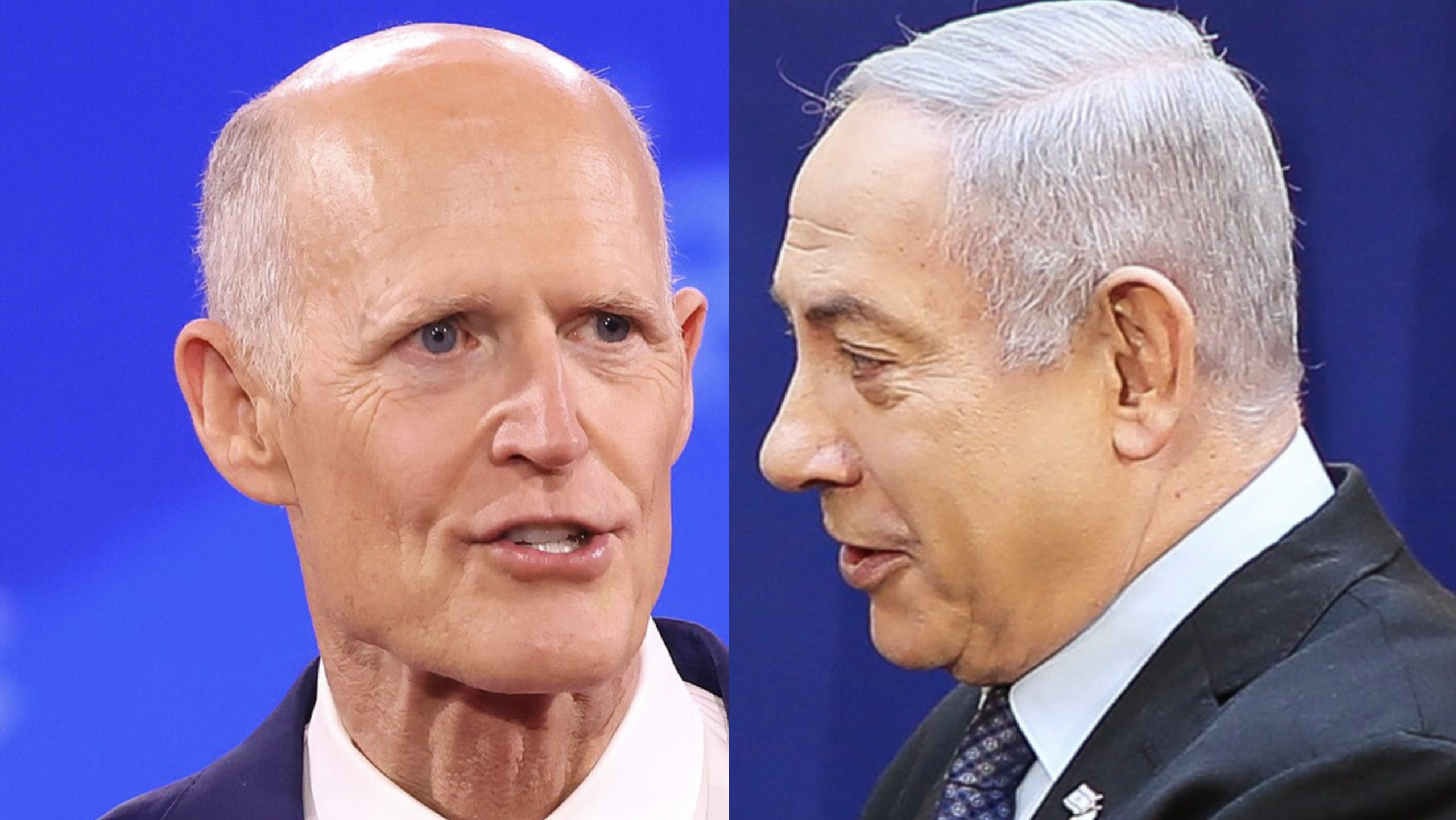
U.S. Senator Rick Scott, R-Fla., used a Thursday afternoon post on X to reaffirm Washington’s commitment to Israel, framing the alliance as unbreakable even as the Iranian regime allegedly seeks the destruction of both nations. The statement, published at 4:53 p.m. on June 18, 2026, came on the same day the White House officially transmitted the text of the 14-point U.S.-Iran memorandum of understanding (MOU) to Congress, placing Scott’s remarks squarely within a fast-moving week of diplomatic and legislative developments surrounding the war’s resolution.
“Israel is our greatest ally and strongest partner in the Middle East,” Scott wrote. “The evil Iranian regime wants to wipe BOTH of us off the face of the Earth. That will never happen because we will ALWAYS stand together. America’s unwavering support for Israel’s defense helps make the America First agenda possible, the U.S. stronger, and the world a safer place.”
The post did not directly reference the memorandum of understanding by name, but it landed hours after a senior U.S. official’s read-out text of the agreement was formally delivered to lawmakers on Capitol Hill, intensifying congressional scrutiny of the deal’s terms. Scott, a member of the Senate Armed Services Committee, has been among the Republican voices most actively engaged in reviewing the emerging agreement between Washington and Tehran in the days surrounding its signing.
A Pattern of Statements Tying Israel’s Security to the MOU
Scott’s Thursday post fits into a string of public statements he has made in the lead-up to and aftermath of the MOU’s signing. Speaking to reporters at the Capitol earlier in the week, Scott said he hoped to eventually see “the terms of the memorandum and hopefully end up with a real deal,” while cautioning that congressional support would not extend to direct financial transfers to Tehran. “I don’t think there’s anybody in Congress that’s ever gonna support giving money to them,” he said, adding that Iran “ought pay for what it cost us to do this to bring them to their senses to stop killing us.”
That position has remained consistent across multiple interviews. Speaking with NOTUS on Monday, June 15, Scott laid out his benchmark for what a final agreement must include: “My expectation is there are no nuclear weapons, no ballistic missiles, no support for [proxies], and no American money.” He has repeated variations of that standard on national television, telling CNBC’s “Squawk Box” that “the key is going to be what the final deal says,” and reiterating to NBC News that he could not “imagine how I would support giving them $300 billion” — a reference to the reconstruction fund outlined in the memorandum’s sixth provision.
The White House Sends the MOU Text to Capitol Hill
The document transmitted to Congress on Thursday is the same 14-point Islamabad Memorandum of Understanding between the United States and the Islamic Republic of Iran whose text was first read aloud to reporters by a senior U.S. official on a conference call earlier in the week, under ground rules set by the White House. The memorandum declares the immediate and permanent termination of military operations on all fronts, including in Lebanon, and commits both nations to refrain from the threat or use of force against each other going forward.
Under the agreement, the United States is to begin lifting its naval blockade of Iran immediately upon signing, with a full end to the blockade within 30 days, while Iran is required to make best efforts to ensure safe passage of commercial vessels through the Strait of Hormuz at no charge for a 60-day period. The two countries committed to finalizing a comprehensive deal within a maximum of 60 days, extendable by mutual consent, covering the remaining unresolved provisions.
The memorandum’s most contested provisions, according to congressional reaction so far, involve economic and nuclear terms. The United States committed to working with regional partners on a reconstruction and economic development plan for Iran valued at a minimum of $300 billion, with the implementation mechanism to be finalized within 60 days. The U.S. also agreed to terminate sanctions against Iran — including United Nations Security Council resolutions, IAEA Board of Governors resolutions, and unilateral U.S. sanctions — according to a schedule to be set in the final agreement. On the nuclear file, Iran reaffirmed that it will not procure or develop nuclear weapons, with the disposition of its stockpiled enriched material to be resolved through a mechanism involving on-site down-blending under IAEA supervision.
The memorandum further stipulates that, pending a final deal, both nations will maintain the current status quo — Iran preserving its existing nuclear program posture, and the United States refraining from new sanctions or additional regional troop deployments. The final agreement, per the memorandum’s last provision, is to be endorsed by a binding United Nations Security Council resolution.
Republican Reaction Splits Between Support and Conditions
Scott’s posture — full-throated support for Israel paired with conditional skepticism toward Iran’s financial and nuclear concessions — has echoed broader Republican reaction on Capitol Hill this week. Senate Majority Leader John Thune characterized the agreement as “a step in the right direction” following a White House briefing for congressional leaders, while acknowledging there will “continue to be a contentious conversation” over the terms of a final deal. Thune noted that the financial incentives extended to Iran, “perhaps with the exception of the toll on the blockade,” are contingent on future Iranian compliance rather than unconditional upfront benefits.
Scott has also signaled that he expects Congress to have a formal role in reviewing any final agreement, telling a radio interview earlier in the week that lawmakers should “absolutely” be involved in approving the eventual deal — a position that mirrors procedures established under the Iran Nuclear Agreement Review Act, the same statute invoked during congressional review of the Obama-era Joint Comprehensive Plan of Action.
Context: Scott’s Long-Standing Israel Advocacy
Thursday’s post is consistent with Scott’s record of statements on Israel dating back to October 2023, when he pledged the United States would stand with Israel following the Hamas-led attacks of October 7. Scott has made multiple trips to Israel, including meetings with Israeli Prime Minister Benjamin Netanyahu, and has introduced legislation aimed at restricting U.S. funding to the United Nations Relief and Works Agency (UNRWA) and other bodies he has accused of enabling antisemitism or providing platforms to adversaries of Israel.
As the U.S.-Iran conflict escalated earlier this year, Scott maintained his position on the Senate Armed Services Committee that any resolution must include the dismantling of Iran’s nuclear and ballistic missile capabilities. In testimony and interviews throughout the conflict, he argued that ending the war required ensuring Iran’s “nuclear capabilities are destroyed” and that the regime would not retain the ability “to kill either our troops in the Middle East or Americans here in the United States.”
What Comes Next
With the MOU’s text now formally before Congress, attention turns to the 60-day negotiating window established under the agreement’s third provision, during which U.S. and Iranian negotiators are tasked with resolving the memorandum’s unfinished business — including the precise mechanics of sanctions relief, the release of frozen Iranian assets, and the framework governing Iran’s future nuclear enrichment activities. Scott’s Thursday statement offered no new specifics on his expectations for that negotiating period, but it reinforced the dual-track position he has held throughout the process: unwavering backing for Israel’s security, paired with explicit conditions on what Washington should be willing to offer Tehran in return for ending the war.