
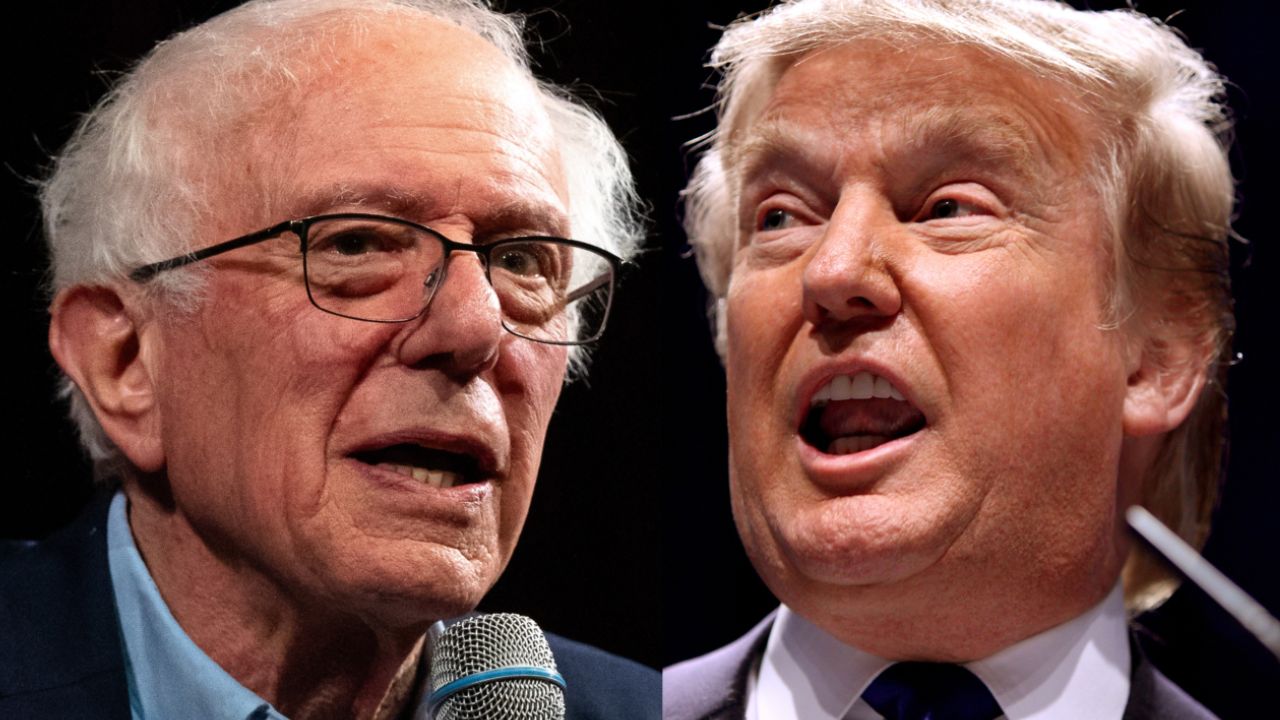
Sen. Bernie Sanders (I-Vt.) on Wednesday accused the Trump administration of using American taxpayer money to arm a government he described as carrying out genocide in Gaza, denouncing a newly disclosed $2.8 billion sale of bombs to Israel as “not acceptable” and calling on Congress to block it.
The Post
Sanders published the statement on X at 10:30 a.m. on September 16, 2026:
“The American people are sick and tired of funding Israel’s genocide in Gaza.
Now Trump is doubling down and using OUR taxpayer dollars to give the extremist Netanyahu government $2.8 billion in bombs.
Not acceptable. Congress must reject these agreements.”
The Sale at the Center of the Dispute
The statement came a day after Reuters reported that the Trump administration is preparing to sell Israel a munitions package worth $2.8 billion, including 20,000 MK-84 2,000-pound bombs and 20,000 BLU-117 bombs, according to a U.S. official who spoke on condition of anonymity. The proposed sale has been informally communicated to the congressional committees that review large arms transfers.
The New York Times, citing a U.S. official, reported that the package would also include 20,000 bunker-busting I-2000 penetrator warheads, which are designed to explode on delay after punching through soil, rock or concrete. The Times noted the deal would rank among the largest deliveries of American munitions to Israel to date, and that the State Department had sent the proposal to two congressional committees for informal approval.
A History of Civilian Harm
Both outlets noted that the 2,000-pound bombs included in the package have previously drawn scrutiny from human rights monitors for their use in densely populated areas of Gaza and Lebanon. The Times reported that the blast from a single 2,000-pound bomb can be lethal beyond 1,000 feet and leave a crater up to 50 feet deep, and that Israel faced international outcry after dropping hundreds of them on Gaza earlier in the war.
Reuters reported that more than 73,000 Palestinians have been killed in Israel’s military campaign, according to Gaza health authorities, and noted that a United Nations inquiry determined Israel had committed genocide in Gaza — a finding Israel rejects, describing its campaign as self-defense following the October 2023 Hamas-led attack that killed 1,200 people and took more than 250 hostages.
Sanders’ Ongoing Campaign Against Arms Sales
Wednesday’s post is the latest in a monthslong effort by Sanders to use his position in the Senate to slow or halt U.S. weapons transfers to Israel. In February, Sanders filed joint resolutions of disapproval seeking to block $8.56 billion in offensive arms sales, arguing that Israel had used American bombs to damage or destroy roughly 70 percent of the structures in Gaza.
In March, following the outbreak of the U.S.-Israeli war with Iran, Sanders filed additional resolutions targeting nearly $660 million in bomb sales, arguing that Secretary of State Marco Rubio had invoked emergency authority to bypass the standard congressional notification period.
By April, Sanders brought two resolutions to the Senate floor targeting a combined $8.8 billion in bombs and munitions, including more than 35,000 2,000-pound bombs. Both measures failed, with senators voting 40–59 and 36–63 to reject discharging them from committee — though Sanders noted that Democratic support for blocking the sales had grown from just 11 votes in a similar effort the previous year to roughly 80 percent of the Democratic caucus.
The Congressional Mechanics at Play
Under the Arms Export Control Act, Congress can formally object to a major arms sale, but the Trump administration has repeatedly relied on emergency determinations to bypass the standard review period, as it has done on prior Israel-related transfers. Blocking a sale advanced this way requires both the House and Senate to pass a resolution of disapproval, and overriding a presidential veto would require support from two-thirds of each chamber — a threshold no such resolution targeting Israel has cleared to date.
Shifting Public Opinion
Reuters reported that U.S. public support for Israel has declined since the Gaza war began in 2023, particularly among Democrats. A Quinnipiac University poll conducted in June found that 48 percent of voters, and 66 percent of Democrats, believe the United States is too supportive of Israel — up sharply from 16 percent and 20 percent when the same question was first asked in 2017.
Discontent Beyond the Democratic Caucus
The Times reported that frustration with Israel’s conduct has also grown among figures typically aligned with President Trump. Former Fox News host Tucker Carlson posted a lengthy statement condemning what he called the “slaughter” of Palestinians in Gaza, and argued that supplying Israel with additional heavy munitions would embolden the Netanyahu government and prolong the war with Iran that the U.S. and Israel launched jointly in February. “If you wanted to extend the Iran war into the indefinite future, this is exactly what you’d do,” Carlson wrote.
Israel’s Position
Israeli officials have consistently defended the military’s tactics by arguing that Hamas fighters in Gaza and Hezbollah militants in Lebanon deliberately embed themselves among civilians, including in bunkers and tunnels that Israel says require heavy munitions to destroy. The Times reported that many former U.S. officials and military analysts have nonetheless questioned whether Israel has been too quick to bypass less destructive alternatives.
Scale of U.S. Military Support
The United States provides Israel with a baseline of $3.8 billion annually in military assistance, including $3.3 billion in financing that Israel largely uses to purchase American-made weapons — the same channel through which the newly disclosed $2.8 billion sale would flow. An additional $500 million is earmarked each year for joint missile-defense programs.
What Comes Next
The proposed sale is expected to draw immediate opposition from Sanders and other Democrats who have called for ending U.S. military aid to Israel altogether in the wake of the war’s civilian toll. The disclosure also comes days before Israeli Prime Minister Benjamin Netanyahu is expected to travel to New York to address the United Nations General Assembly, even as President Trump has clashed with him repeatedly over the conduct of Israel’s military operations in Gaza, Lebanon and Iran.
Neither the State Department nor the Israeli embassy immediately responded to requests for comment on the proposed sale, according to Reuters. The State Department said in a statement that, as a matter of policy, it does not confirm or comment on a proposed arms sale that has not been formally notified to Congress.