
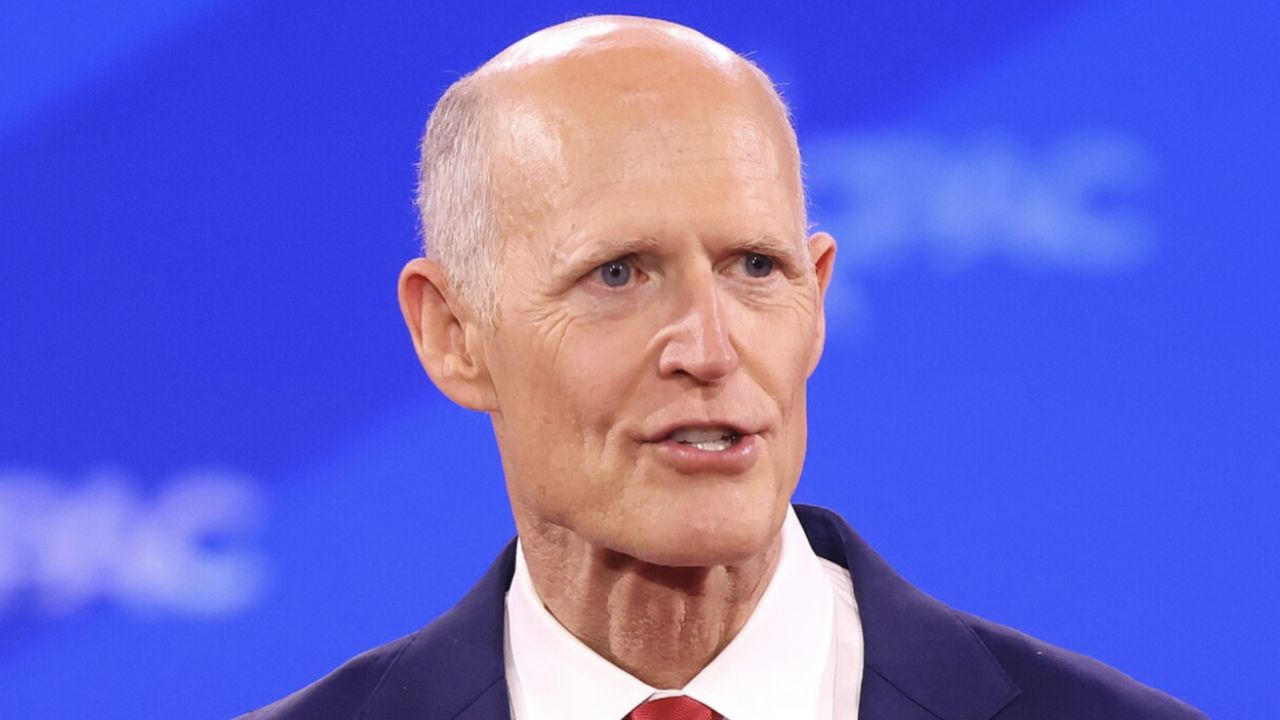
U.S. Senator Rick Scott (R-Fla.) took to social media platform X on Friday, August 21, 2026, delivering a pointed message acknowledging widespread public frustration with Congress while pledging to continue pushing for election security reforms, economic opportunity, and national strength. The post arrives amid an already turbulent August for the Florida Republican, who has spent the month publicly sparring with colleagues over stalled legislation, the ballooning national debt, and what he has repeatedly described as a chronically unproductive Senate.
In the post, published to his official X account at 6:15 p.m. on August 21, Scott wrote in full:
“Congress is broken. The American people know it, and I understand the frustration. But frustration cannot become surrender. I will never stop fighting for election security, the American Dream, and a safer, stronger future for our country. America was built by innovators and fighters who refused to give up in the face of adversity and our country is better because of it. I know my purpose in the Senate: to serve the American people, put America FIRST, and make Washington work for YOU. I will never stop fighting for what’s right.”
The statement functions as both an acknowledgment of institutional dysfunction and a reaffirmation of Scott’s core legislative priorities, chief among them election security legislation that has consumed much of his attention throughout 2026. The senator has framed his tenure around a “Make Washington Work” theme since taking office in 2019, and Friday’s post reiterates that branding almost verbatim, tying it directly to his stated purpose “to serve the American people, put America FIRST, and make Washington work for YOU.”
A Year Defined By The Push For The SAVE America Act
Scott’s Friday statement did not emerge in isolation. Throughout 2026, he has positioned himself as one of the Senate’s most vocal advocates for the Safeguarding American Voter Eligibility (SAVE) America Act, legislation that would require proof of U.S. citizenship to register to vote in federal elections and impose stricter voter identification standards nationwide. In June, Scott previewed a meeting with President Donald Trump and the Senate Republican Steering Committee specifically to discuss strategy on advancing the bill, telling reporters the Senate could realistically pass the citizenship-verification portions of the measure even without the votes to overcome a filibuster on the full package.
That same month, Scott authored a letter to Senate colleagues formally endorsing the SAVE America Act’s proposals and pressed for repeated floor votes on election-security measures, arguing that Republicans, Democrats and independents alike overwhelmingly support voter ID requirements and citizenship verification.
“Enough Excuses” — Scott’s July Op-Ed Foreshadowed Friday’s Frustration
The sentiment expressed in Friday’s post closely echoes a July 13 opinion piece Scott published in Fox News, in which he criticized the pace of Senate business directly. In that op-ed, Scott noted that the Senate had been in session only 79 days for the year at that point, roughly 40 percent of available working days, and had failed to pass legislation addressing election security, inflation, spending cuts, or averting a government shutdown. He wrote that “nothing has gotten done while we only work two and a half days a week,” calling the pace “crazy” and arguing that at the rate the chamber was moving, senators “should be working seven days” to meet their obligations to constituents.
In that same piece, Scott was careful to frame the dysfunction as a systemic, bipartisan failure rather than the fault of any single lawmaker or party, writing that the problem “is not a failure by any one party or individual” but one that has “been getting progressively worse for decades.” That framing mirrors the tone of Friday’s post, which similarly avoids singling out Democrats or Republicans by name and instead characterizes Congress as a whole as broken.
The August Standoff Over Recess And Election Security Votes
Scott’s frustration with the legislative calendar boiled over further in early August, when he joined a group of Senate conservatives, led by Utah Senator Mike Lee, who threatened to force a vote delaying the chamber’s August recess until further progress was made on the SAVE America Act. Scott publicly backed the effort, posting on X on August 8 that “Washington is broken. Americans are rightly frustrated with Congress,” language that closely parallels Friday’s post declaring Congress itself broken.
In that August 8 post, Scott also highlighted a Senate vote in which all Republicans present supported requiring identification for voting while every Democrat present opposed the measure, and said he had secured a commitment from Senate Majority Leader John Thune to prioritize the legislation when the chamber returns in September. Despite the earlier threats to block adjournment, leadership ultimately secured a voice vote allowing the Senate to proceed to recess after Lee received assurances regarding a September vote schedule.
National Debt Crossing $40 Trillion Adds Urgency To Scott’s Message
Friday’s post also lands squarely within a week in which the national debt officially surpassed $40 trillion, a milestone Scott has been anticipating and warning about publicly for months. In a March letter to the editor published in the Washington Post, Scott wrote that the debt had already reached $39 trillion and predicted the country would “likely hit the $40 trillion mark before November’s midterm elections,” a forecast that has now come to pass. In that letter, Scott argued that decades of what he called reckless congressional spending had put the country “on the path to economic ruin” and warned that “the ship is sinking today.”
On August 19, two days before Friday’s statement, Scott posted directly about the debt milestone, writing that the $40 trillion figure was “bad” and that “Congress needs to get spending under control and BALANCE THE BUDGET.” That post drew a community-added context note on X pointing out that Scott himself voted for the One Big Beautiful Bill Act, legislation that raised the statutory debt limit by $5 trillion and which the Congressional Budget Office projects will increase deficits by $3.4 trillion over the next decade, a tension between Scott’s stated fiscal priorities and his voting record that has drawn criticism from commentators.
A Consistent Theme Throughout Scott’s Senate Career
Scott’s description of Washington as “broken” is not new rhetoric for the senator, who first rose to national political prominence as a self-styled outsider during his tenure as Florida’s governor from 2011 to 2019. As far back as December 2020, in his first year in the Senate, Scott issued a formal statement titled “Washington is Broken,” criticizing a multitrillion-dollar omnibus spending package for being nearly 5,600 pages long and rushed to a vote without adequate time for members to review it. In that statement, Scott said Washington “doesn’t seem to understand that new spending today will be paid for by increased federal debt,” a critique that has remained a consistent throughline in his public statements for nearly six years.
Broader Legislative Record On Election Integrity
Beyond the SAVE America Act, Scott has pursued election-security concerns through additional channels this year. In June, he sent a letter to then-Acting Attorney General Todd Blanche and Assistant Attorney General Harmeet Dhillon urging the Justice Department to investigate reports of voters being paid to register and irregularities tied to a mayoral primary in Los Angeles. Scott has also used his position on the Senate Homeland Security and Governmental Affairs Permanent Subcommittee on Investigations to hold hearings on election fraud, including a session where he discussed the issue with conservative activist James O’Keefe.
Scott has extended his election-security focus beyond domestic policy as well. In May, he sent a letter to Secretary of State Marco Rubio requesting information on U.S. efforts to support electoral integrity in Colombia ahead of that country’s presidential election, citing concerns over political violence and the influence of armed groups in the region.
Political Context Ahead Of The Midterms
Friday’s post also comes as Scott, formerly chairman of the National Republican Senatorial Committee, has taken on an increasingly prominent role forecasting the outcome of the 2026 midterm elections. In a recent interview, Scott predicted that Senate Republicans were on track to retain their majority and had a realistic chance of expanding it, while also forecasting that the chamber would hold Dr. Anthony Fauci in contempt of Congress. He additionally reiterated his belief that there are 50 Senate votes in support of the citizenship-verification and voter ID provisions of the SAVE America Act, though passage would likely require attaching those provisions to a larger reconciliation package to bypass the filibuster.
Looking Ahead To September
With senators having secured a commitment from Majority Leader Thune to revisit election-security legislation when Congress reconvenes in September, Scott’s Friday statement can be read as both a continuation of his monthslong public pressure campaign and an early marker for the fights expected once the Senate returns from recess. His message notably combines an admission of institutional failure with a pledge of personal resolve, a formula he has used repeatedly across statements, op-eds, and social media posts throughout the year.
As the national debt debate, election-security legislation, and midterm positioning continue to intersect in the coming weeks, Scott’s Friday post signals that he intends to keep those three threads at the center of his public messaging heading into the fall legislative session.