
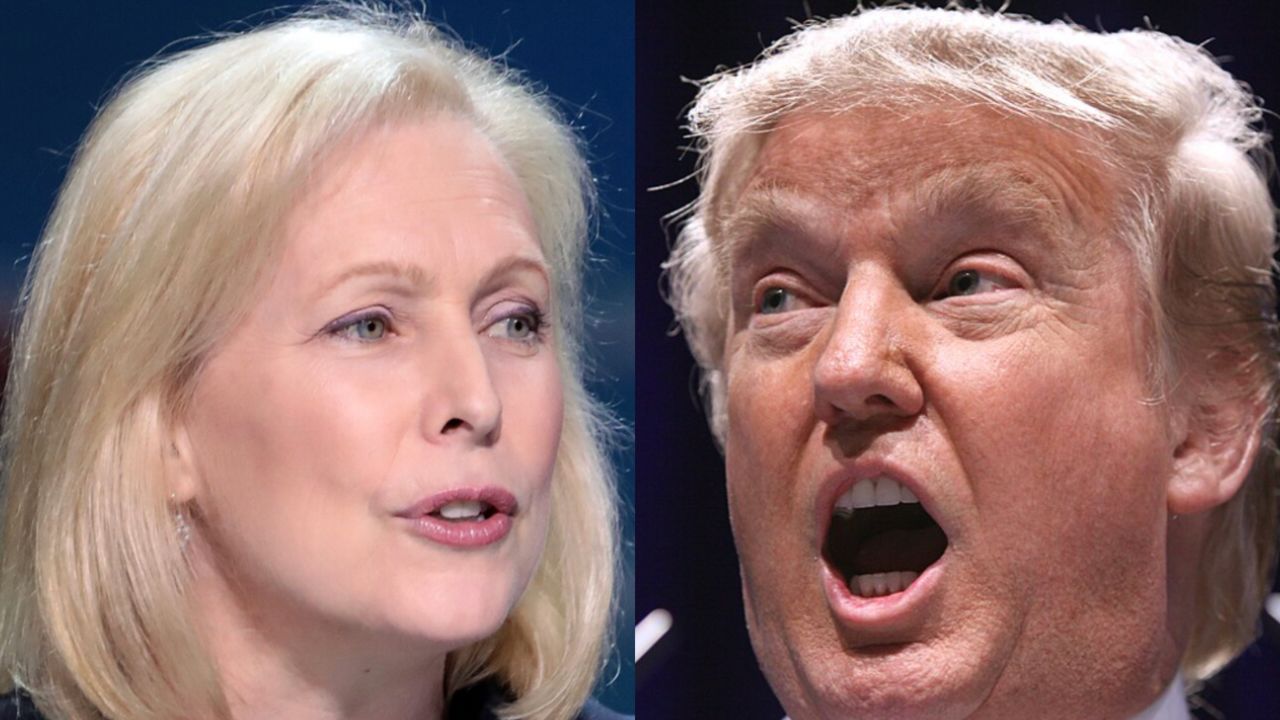
Sen. Kirsten Gillibrand (D-N.Y.) accused President Donald Trump on Wednesday of focusing on a rebrand of artificial intelligence while American families absorb rising costs at the pump, the grocery store, and the doctor’s office. She made the charge in a post on X, the day after Trump signed an executive order directing federal agencies to stop using the terms “artificial intelligence” and “AI.” With the midterm elections about five weeks away, the post sets a name change against the affordability fight that has come to define the campaign.
The Post
Gillibrand published the message at 9:11 a.m. on Wednesday, September 30, 2026. The full text of her post reads:
“While Americans battle higher gas prices, higher grocery bills, and higher healthcare premiums, Trump is focused on… renaming AI?
We need a real leader focused on real issues, not aimless nonsense.”
The post came less than 24 hours after the White House announced the order. She attached two news items to it. One was an Associated Press report on how Americans are changing their grocery habits after the largest jump in food prices in 50 years. The other was an NBC News video of Trump announcing the order at an event launching America.gov, a federal information website.
What Trump Signed
The order is titled “Inaugurating The Era Of Super Intelligence.” According to the White House fact sheet, it directs all executive branch departments and agencies to use “Super Intelligence” and “SI” in official correspondence, public communications, and policy documents, and to no longer acknowledge the terms “Artificial Intelligence” or “AI.” The order applies the change “to the maximum extent permitted by law.”
At the America.gov event, Trump explained his reasoning. He said the word “super” is the best word of all and the simplest, and that “we don’t want to hear artificial,” because in his view the technology is not artificial. He also said he would be signing “a very powerful executive order” and that, so far, “everybody likes it.”
The order also sets a follow-up task. Trump’s science and technology advisor has 60 days to propose legislation establishing a federal definition of “Super Intelligence,” including potential changes to existing AI references in law. The order does not itself create a new regulatory framework for the industry. Tech leaders including Elon Musk and Dario Amodei joined Trump at the announcement.
Gillibrand was not the only Democrat to criticize the move. Sen. Mark Warner (D-Va.) said in a statement that changing what the technology is called does nothing to address the real risks that come with increasingly powerful AI systems. Trump had crowdsourced the new name the week before, asking his social media followers to choose between “Super Intelligence” and “Superior Intelligence.”
The Prices Behind Her Message
The costs Gillibrand cited are visible in current data. AAA reported a national average of $4.48 per gallon for regular gasoline on September 24, the highest the national average has ever been for this time of year. A year earlier, the average was $3.16. AAA attributed the climb to lingering volatility in the Strait of Hormuz and the high cost of crude oil.
Grocery prices, the subject of the first article Gillibrand attached, have risen sharply as well. According to the AP report, buying food for home consumption in U.S. cities is 33% more expensive than at the start of 2019, compared with a 6.4% rise over the 7½ years before that. The AP described it as the biggest jump in grocery prices in half a century. It said a fresh conflict in the Middle East has accelerated food price inflation this year and made affordability a central issue in the fall midterm elections.
The AP also described how households are adapting. Ada Torres, 60, of Cleveland, Texas, said meat has become a luxury for her family of five, with five pounds of ground beef costing almost $20. Jack Chang, a 33-year-old San Francisco barber, said he is a little behind on bills while supporting three children and his mother. The AP reported that SNAP enrollment stood at 37 million in April, a 12% decline from a year earlier, after the administration tightened eligibility requirements. Jared Bernstein, a former chair of the Council of Economic Advisers under President Joe Biden, said consumers know food prices well because “You need groceries to live.”
Gillibrand’s Record on Costs
The post continues a line of attack Gillibrand has used all year. In January, after the December inflation report, she contrasted Trump’s 2024 campaign promises to cut prices with his conduct as president. She said he had called affordability a “hoax” and told Americans not to be dramatic about higher costs, and that “costs aren’t down, they are up.”
After the Iran war began, Gillibrand tied the price increases directly to the conflict. In May, she held a virtual press conference on gas prices. She said every commute, doctor’s visit, and school carpool cost 50 percent more than a year earlier, “a direct result of President Trump’s reckless war with Iran.” At a Buffalo gas station that month, she said Trump was spending $1 billion a day on bombs that communities would rather see spent on healthcare, affordability, or lower gas prices.
In July, Gillibrand began a statewide tour on grocery costs. Her office said it followed a Consumer Price Index report showing headline inflation had risen to 4.2%, the sharpest 12-month increase since April 2023. By late August, the tour had reached Buffalo and Troy. There she blamed the rising costs on the war in Iran and pointed to SNAP changes enacted under H.R. 1. On August 24, she said Republicans had “launched a reckless war in Iran that sent gas prices skyrocketing” and pushed tariffs that make groceries more expensive.
On Tuesday, the same day Trump signed his order, Gillibrand’s office said Senate Republicans blocked her bill to repeal and refund Trump’s Canadian tariffs. Her statement accused Trump and Washington Republicans of putting “bombs and billionaires over working people.” It said New York families have spent more than $5,500 extra because of tariff chaos and other policies.
Midterm Stakes
The exchange comes as markets and polls show Democrats well positioned for November 3. Polymarket’s House market put Democrats at 93%, with analysts citing low presidential approval and voter dissatisfaction with inflation and fuel prices. Decision Desk HQ forecasts a Democratic House majority of 234-201, and Economist/YouGov found Democrats leading the House vote 45% to 38% among registered voters.
The White House presents the order as recognition of the technology’s capabilities. Its fact sheet says the name “Super Intelligence” conveys what the technology can do, rather than implying it only imitates human intelligence. Gillibrand’s post casts it differently. It frames the rebrand as a distraction from costs that families feel at the pump, in the checkout line, and on their insurance bills, and it asks voters which priorities they want from a leader.