
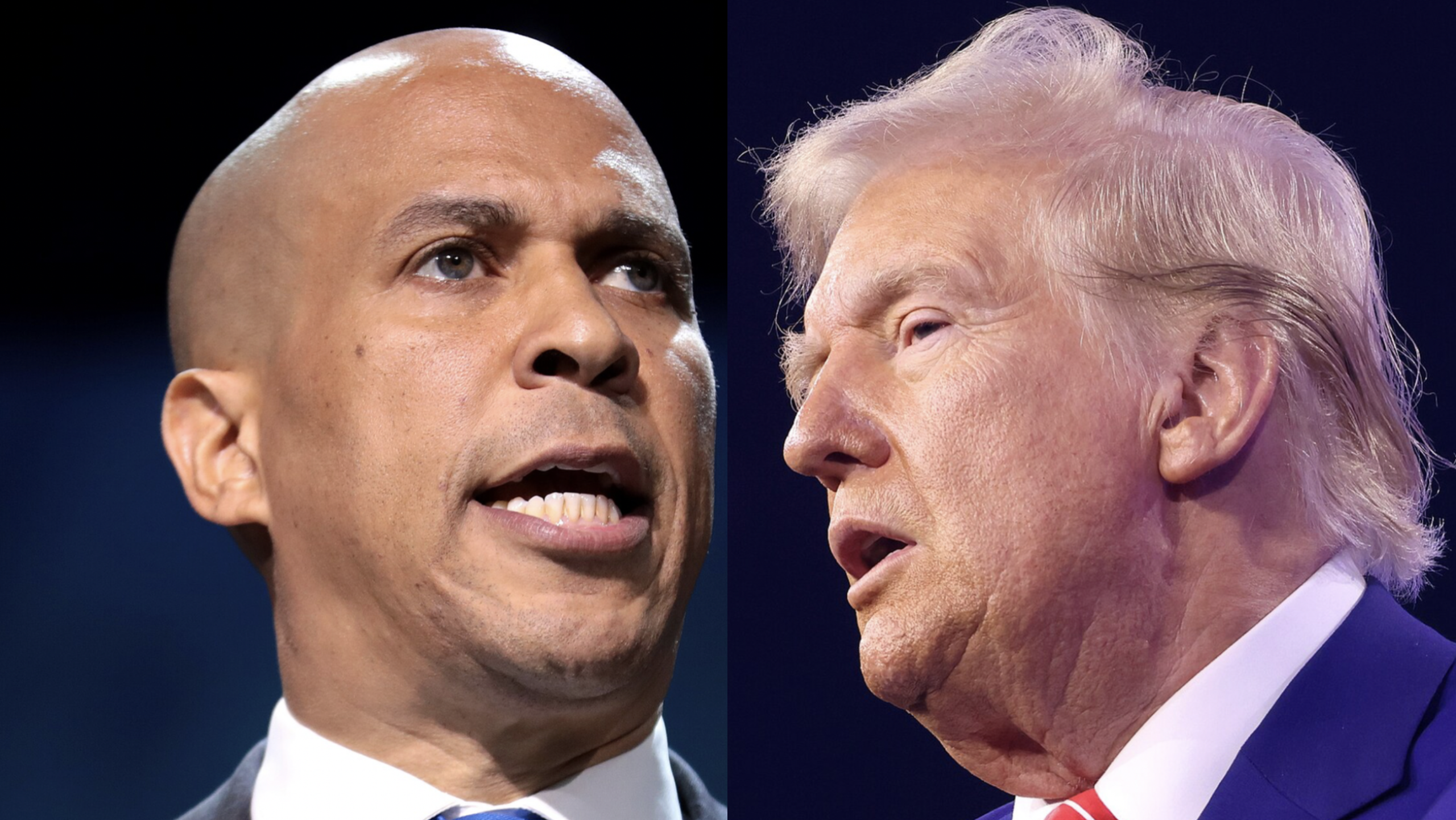
Sen. Cory Booker (D-NJ), who has spent months leading Senate Democrats’ effort to force a vote ending the war with Iran, responded to news of two more American combat deaths on Saturday by returning to the argument that has defined his opposition from the start: that the conflict lacks constitutional authorization from Congress.
“Today, the families of two more heroic service members are getting a knock on their door to receive a horrible message. My prayers are with these families in their grief, sadness, and pain. Our resolve and urgency to use every tool and power at our disposal to end this unconstitutional war must continue,” Booker wrote on X at 5:28 p.m. on July 18, 2026.
His statement followed CENTCOM’s announcement that the two service members were killed in action on July 17 defending against Iranian ballistic missile and drone attacks in Jordan, with a third still missing and four others medically evacuated and since discharged. CENTCOM said the identities of the fallen would remain withheld until 24 hours after next of kin are notified — the notification process Booker referenced directly in his post.
Booker’s description of the war as “unconstitutional” is not new rhetoric. As a member of the Senate Foreign Relations Committee, he has repeatedly grounded his opposition in Article I of the Constitution, which grants Congress, not the president, the power to declare war. In March, after the war’s opening weeks, his office noted that Booker joined Sens. Tim Kaine, Chris Murphy, Adam Schiff, Tammy Baldwin and Tammy Duckworth in forcing a Senate floor vote on a War Powers Resolution to withdraw U.S. forces from hostilities against Iran “absent an act of Congress.” That measure was blocked by Senate Republicans despite what Booker’s office called a war that was “unconstitutional and vastly unpopular.”
Building a Case Over Five Months
Booker’s argument has stayed consistent even as the war has dragged on. Appearing on MSNBC’s “The Rachel Maddow Show” in mid-March, Booker said, “This is a major military conflict with a major power in the Middle East and American lives are being lost and the Senate of the United States of America is rolling over and doing nothing,” according to a release from his office, adding that the Constitution gives the war-declaring power to Congress, not the president.
By mid-May, Booker’s efforts had gained modest bipartisan traction. He and fellow Democrats, including Senate Democratic Leader Chuck Schumer, advanced a War Powers Resolution that Booker called “the first real step towards ending” the war, according to a statement from his office, in which he urged Republican colleagues to “join us in this effort to finally put an end to this costly and unconstitutional military adventure.”
That momentum culminated in late June, when the Senate passed the House-originated War Powers Resolution directing Trump to withdraw forces, with four Republican senators breaking ranks. Booker had also pressed the case earlier that month by joining Senate colleagues and veterans in a VoteVets-hosted Capitol Hill event, after which the group forced yet another War Powers vote — this one blocked by Senate Republicans despite what Booker’s office again described as an “unconstitutional” war.
A War That Has Now Claimed More Lives
Saturday’s deaths bring the U.S. military’s toll in the conflict to at least 16, according to CNN’s coverage of the CENTCOM statement — up from the 13 fatalities Booker and colleagues cited in earlier war powers pushes this spring. The attack that killed the two troops was part of a wider escalation: Jordan’s military reported intercepting 10 Iranian missiles overnight into Saturday, while Iranian strikes also hit Kuwait’s oil sector and a water desalination plant in Iran, according to the New York Times and Al Jazeera.
Booker’s office had not issued a formal press release specific to Saturday’s deaths at the time of this report, with his public reaction so far confined to the X post. Given his consistent framing over the preceding five months, further Senate floor remarks or a renewed war powers push would fit the pattern his office has followed after previous American casualties.