
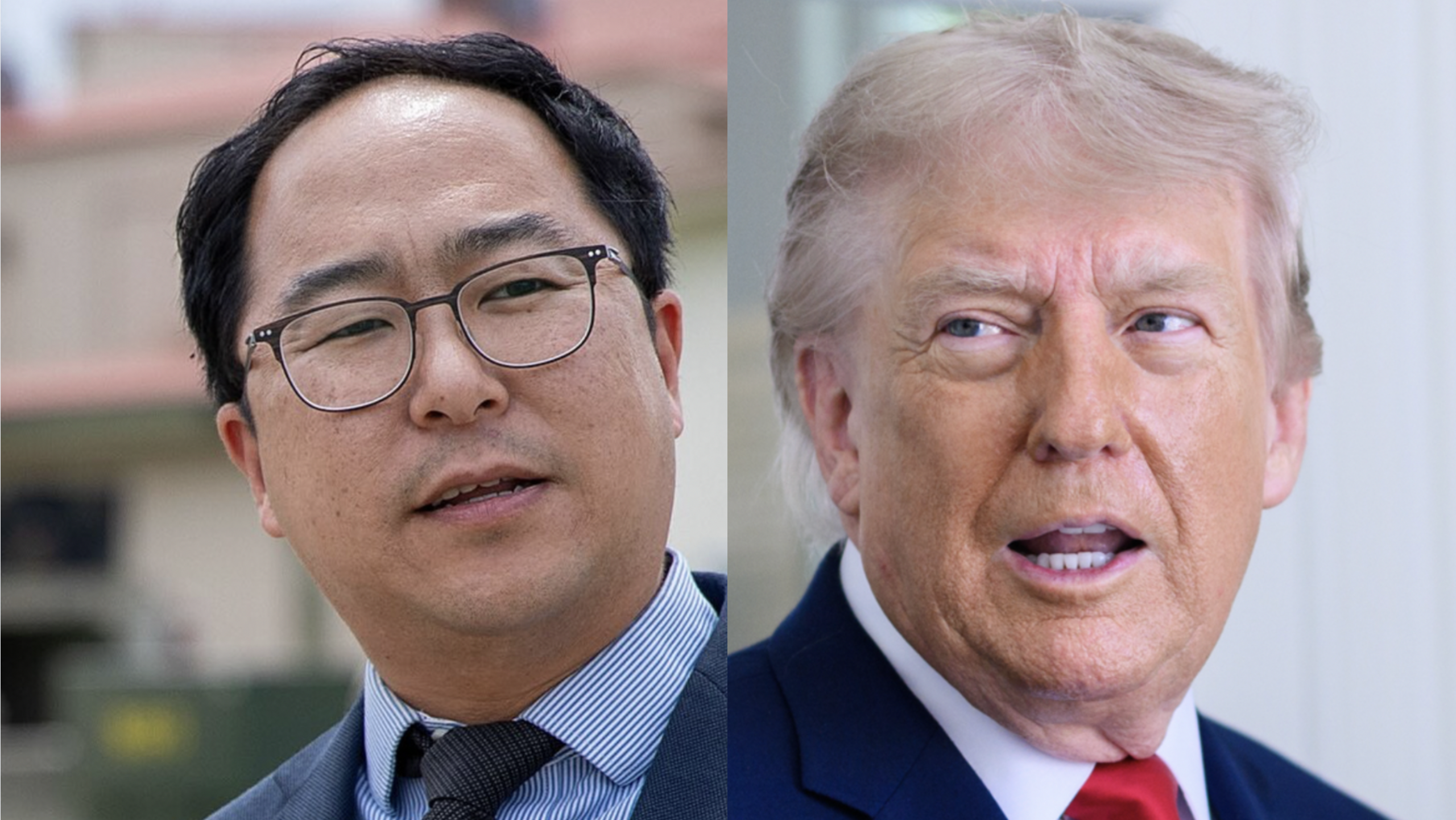
New Jersey Democratic Senator Andy Kim took direct aim at President Donald Trump on Monday, accusing the administration of weaponizing American foreign policy to enrich the president’s own children through a massive taxpayer-funded mining deal in Central Asia. In a post on X on June 29, 2026, Kim declared the arrangement the most brazen act of corruption he has ever witnessed from a sitting president.
“Trump is trying to send $1.6 BILLION of your taxpayer dollars to his sons through their investment in a mining firm,” Kim wrote. “This is American foreign policy being used to benefit Trump and his family, not the American people. We’ve never seen this much corruption.”
The post linked to a New York Times investigation published June 28 revealing the tangled web of financial interests connecting the Trump and Lutnick families to a major U.S.-brokered tungsten mining deal in Kazakhstan. According to the Times, the Trump administration secured a landmark agreement with the Kazakh government granting a little-known American company called Kaz Resources access to one of the world’s largest untapped tungsten reserves — a metal critical to the production of missile warheads, fighter jets, and computer chips. Ahead of the deal, the Trump administration approved preliminary applications for up to $1.6 billion in federal financing for the project.
The Deal and the Family Connections
The roots of the Kazakhstan arrangement trace back to a September 2025 meeting at the St. Regis Hotel in New York, where Commerce Secretary Howard Lutnick met with Kazakhstan’s President Kassym-Jomart Tokayev. President Trump himself called in by phone during the meeting, personally negotiating the final terms of the tungsten agreement. Within weeks of those negotiations, investors connected to Dominari Securities — a firm housed at Trump Tower in New York and partly owned by Donald Trump Jr. and Eric Trump — joined a group of partners to take a 20 percent stake in a corporate entity tied to the Kazakhstan project.
Around the same time, Cantor Fitzgerald, the investment company overseen by Commerce Secretary Lutnick’s sons Brandon and Kyle Lutnick, helped one of the lead investors on the Kazakh deal raise $210 million in new capital for a related entity. The final deal with the Kazakh government was signed on November 6, 2025 — six days after the investment involving the Trump sons had already been made, though it was not publicly disclosed at the time.
The Times investigation found that one or both families have financial ties to at least 14 companies actively working with the federal government on critical mining deals, with total federal funding offered or under consideration exceeding $8.9 billion. Both Cantor Fitzgerald and Dominari Securities are reported to have earned fees for their work helping executives raise new capital connected to the series of transactions.
The White House Responds
The White House pushed back on the allegations. “The only special interest guiding the Trump administration’s decision-making is the best interest of the American people,” White House spokesman Kush Desai said in a statement to the Times. “Securing and reshoring America’s critical supply chains has been a top priority for President Trump, and Secretary Lutnick along with the rest of the administration continue to take historic action to safeguard America’s national and economic security.”
Eric Trump and Donald Trump Jr. issued separate statements denying active involvement in the deal’s specifics. Eric Trump wrote that he “has always been a passive investor with absolutely no management role.” Paul Mann, the British investor whose firm helped facilitate the investment vehicle, also denied any conflict of interest, telling the Times, “When you look at it, take a step back here, there’s no conflict of interest here.”
The executive at the center of the Kazakhstan project, Pini Althaus, the executive chairman of Kaz Resources, said in interviews that discussions with the U.S. government about the tungsten project began under the Biden administration and did not benefit from political favors. He acknowledged the optics, however, saying, “I can see how the optics might be disturbing to some people. But that’s unfortunate because this company and this project goes way beyond any one president, let alone any family.”
Kim’s Broader Pattern of Corruption Accusations
Monday’s post is the latest in a sustained campaign by Kim against what he characterizes as systemic corruption running through the Trump administration — and one that he has consistently framed in terms of national security and defense. The New Jersey senator has a deep background in those areas, having served as a civilian advisor at the State Department in Afghanistan and on the House Armed Services and Foreign Affairs committees before winning his Senate seat in 2024.
In November 2025, Kim led a group of Democratic senators in sending a letter to Defense Secretary Pete Hegseth demanding transparency after the Trump administration accepted a $130 million private donation to pay military servicemembers during the government shutdown. The senators argued that the U.S. military “serves the American people — not any individual,” and raised grave legal and national security concerns about the use of private funds from undisclosed sources, warning of potential foreign influence and conflicts of interest that could compromise taxpayer funds and national security objectives.
That same month, Kim joined Senators Elizabeth Warren and Richard Blumenthal in pressing Hegseth directly on potential conflicts of interest surrounding the awarding of lucrative Department of Defense contracts and loans to companies associated with Donald Trump Jr. The senators raised alarm over what they described as an absence of effective processes at the Pentagon to prevent possible corruption involving the president’s family and defense contracting decisions.
Calling Out the Iran War and Defense Failures
Kim has also extended his corruption critique directly into the arena of military operations. In March 2026, following a U.S. airstrike that struck an elementary school in Iran and killed more than 170 people, Kim told CNN that the catastrophic strike may have been the direct result of Hegseth’s gutting of the Pentagon’s Civilian Protection Center. “The problem, though, is Secretary Hegseth decided to gut this office last year and has dramatically reduced the staff, not implementing the budget that is necessary,” Kim said. “This fault lies directly on President Trump and Secretary Hegseth.”
Kim has been vocal in his opposition to the Iran War itself, which began on February 28, 2026, when the Trump administration launched strikes without congressional authorization. At a Senate floor speech in support of a War Powers Resolution to end the conflict, Kim has consistently argued that the administration’s military adventurism and its financial self-dealing are two sides of the same coin — a government prioritizing the interests of those at the top over the American people.
“Corruption Was Never This Industrialized”
In April 2026, Kim delivered a sweeping address at Princeton University’s School of Public and International Affairs laying out what he called “The Resilience Principles” — a framework for American foreign policy after Trump. Among the principles he outlined was a warning that restoring Americans’ faith in government and rooting out corruption was “paramount,” arguing that the United States “cannot lead globally if foundations are not strong at home.”
That same month, speaking at NYU School of Law’s Katzmann Lecture, Kim addressed the scale of the problem directly. “Corruption was deeply rooted in our politics well before Trump,” he said. “And we may not have seen it as industrialized as we do today, but for years, we’ve seen corporate money flooding into our politics, the conflicts of interest, the voice of everyday people repeatedly silenced.”
The Kazakhstan mining deal has now given Kim the sharpest example yet for his argument — $1.6 billion in preliminary federal financing flowing toward a project in which the president’s own sons hold a financial stake, brokered through a foreign policy negotiation the president personally conducted. So far, none of that federal financing has officially been disbursed, as it remains subject to additional approvals and a feasibility review. But for Kim, the architecture of the deal itself is the point. As he wrote Monday, the issue is not merely the money — it is what it represents: American foreign policy in service of a presidential family’s investment portfolio.