
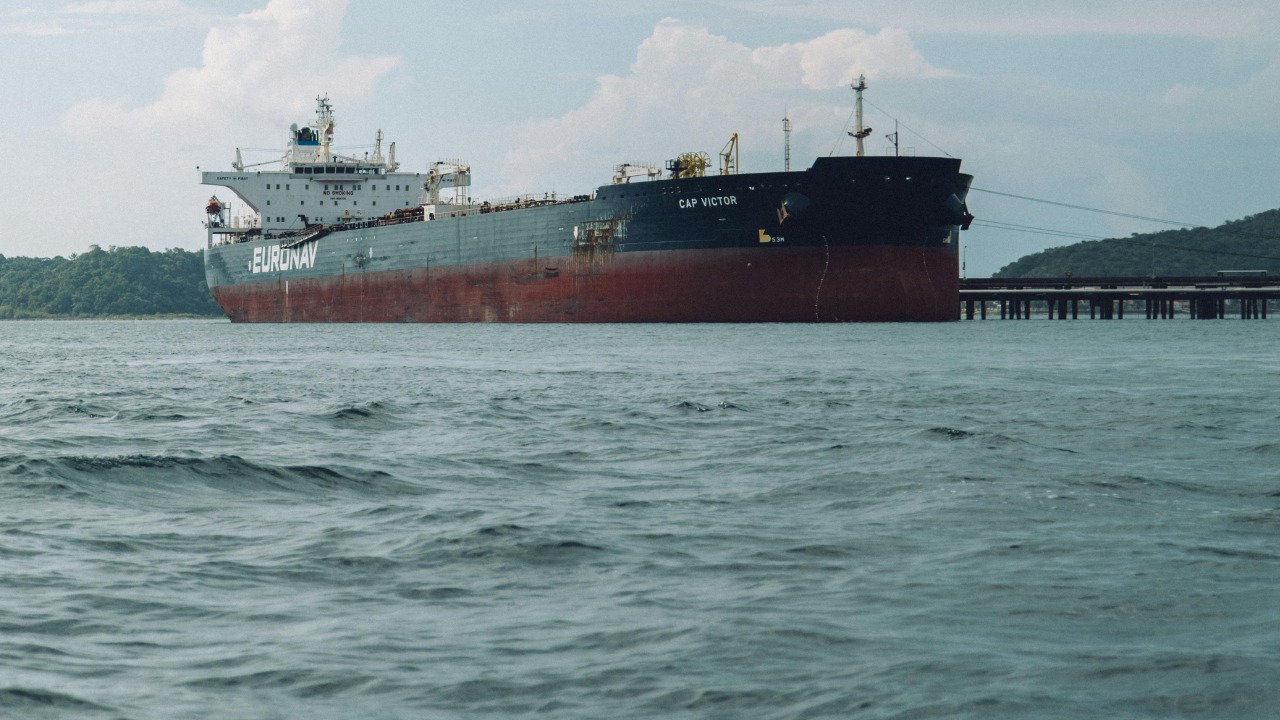
The arrival of a seized shadow fleet tanker in a British port has turned a covert sanctions battle into a very public spectacle. The vessel, taken in a joint United States and United Kingdom operation in the North Atlantic, is now moored in British waters as officials weigh how to turn its cargo into leverage against Russia and its allies. I see this docking as a rare, concrete glimpse of a hidden maritime contest that usually plays out far from shore and far from public view.
The dramatic seizure and journey to Britain
The tanker at the heart of this story was intercepted in the North Atlantic after United States forces boarded and seized a Russian flagged ship that had been operating as part of a wider shadow fleet. According to footage released by US Coast Guard, the boarding unfolded at sea as United States personnel moved to secure the Russian vessel and its crew. That operation formed part of a broader campaign against Russian oil shipments that rely on opaque ownership structures and ageing tankers to move sanctioned crude away from prying eyes.
Once under control, the ship was escorted toward the British Isles and brought into Scotland’s Moray Firth so it could take on fresh supplies before continuing its onward journey. The UK government confirmed that an oil tanker seized by the US in the North Atlantic had been brought to Scotland for that purpose, underscoring how closely London is now entwined with Washington’s maritime enforcement. I read that stop in Moray Firth as both a logistical necessity and a political signal that Britain is prepared to host and manage the fallout from such high profile seizures.
A joint US UK operation under Putin’s nose
The seizure was not a solo American show of force but a coordinated move that drew in British armed forces from the outset. The Ministry of Defence has stated that British units supported the United States during the boarding, providing what officials described as critical assistance to secure the tanker and deter interference. That cooperation fits a pattern I have watched deepen in recent years, in which London and Washington share intelligence, legal theories and naval assets to confront sanctions evasion at sea.
What makes this case stand out is the proximity to Russian power and the political theatre that followed. Reports describe how the seized ship was part of a shadow fleet operating under the gaze of Vladimir Putin, with Russian naval assets nearby as United States forces moved in. One account notes that the tanker was taken before menacing Russian submarines and surface vessels could intervene, and that the operation unfolded in a way that risked a major clash with the Kremlin. For me, that detail underlines how far President Donald Trump and his administration are prepared to push maritime enforcement in contested waters.
Shadow fleet tactics and the UK’s new legal footing
The tanker now in Britain is part of a much larger constellation of ships that Western officials describe as a shadow or ghost fleet. These vessels often sail under False flags, switch registries frequently and obscure their ownership to keep Russian or allied oil flowing despite sanctions. One of the ships highlighted in recent reporting is the Marinera, an oil tanker seized by the United States with Brit involvement that illustrates how these operators rely on constantly changing paperwork and shell companies to stay ahead of regulators. I see that pattern as a deliberate attempt to create legal fog on the high seas.
London has responded by sharpening its own legal tools so it can act more like Washington when such vessels approach its waters. Officials now say the UK has identified a domestic legal basis to board shadow fleet tankers that use invalid or frequently changing flags to evade sanctions, a shift described in detail by those tracking how the Jan legal changes are being applied. Maritime analysts note that The UK government believes it now has authority to stop and search such ships in a way that mirrors United States practice, a view echoed in specialist commentary on how The UK is aligning its boarding powers with those used by American forces. In my assessment, that convergence is what made the latest joint seizure both possible and politically sustainable.
From seized cargo to strategic leverage
Now that the tanker has reached Britain, attention is shifting from the drama of the raid to the question of what happens to its oil. One proposal gaining traction in London is to sell the seized cargo and use the proceeds to support Ukraine’s defence, a move that would have what officials describe as a double impact on Russia by both depriving it of revenue and funding its adversary. Charlie, a key voice in that debate, has argued that such Plans to use oil seized from the tankers in the fight against Putin would reinforce a wider crackdown targeting the Russian economy. I find that logic compelling, because it turns a one off enforcement action into a recurring financial tool.
The broader context is a sustained United States campaign against sanctioned oil flows, including shipments linked not only to Russi but also to Venezu. Earlier this year, the US European Co announced that it had seized two ghost fleet tankers linked to Venezuelan oil, describing how the seizures were carried out on a Wednesday as part of a tightening net around illicit shipments near Sochi on the Black Sea. Those actions sit alongside the United States oil blockade during Operation Southern Spear, which targeted sanctioned tankers traveling in and out of Venezu and even contemplated force against any ship that did not submit to boarding. When I place the British docking of the latest seized tanker against that backdrop, it looks less like an isolated incident and more like the European extension of a global maritime pressure campaign.