

China’s push to master reusable rockets has suffered a second high-profile setback in less than a month, underscoring both the speed and the strain of its catch‑up drive in orbital launch technology. After a private methane rocket failed to land earlier in December, a new state-backed vehicle has now also missed its recovery, raising fresh questions about how quickly the country can close the gap with the United States and SpaceX-style operations.
The latest failure does not erase the technical progress on display, with both rockets reaching orbit and demonstrating complex staging. It does, however, highlight how difficult it is to turn experimental hardware into a reliable, reusable system, even for a space program that has already shattered its own annual launch records.
What went wrong with China’s second reusable rocket test
The most recent setback involved the Long March 12A, a new reusable launch vehicle whose first stage was supposed to fly back and touch down near its designated landing zone. Instead, the booster came down off target and appears to have crashed, missing the planned site by at least several hundred meters according to early assessments of the trajectory and debris pattern, a failure that cut short the crucial recovery phase of the mission and echoed the earlier mishap with the private Zhuque‑3 rocket. Reporting on the flight notes that the Long March 12A successfully lifted off, separated stages and reached orbit before the recovery attempt went awry, a sequence that underscores how the core launch objectives were met even as the landing attempt fell short of its mark, with the first stage reportedly impacting near but not on its intended pad as described in detailed accounts of the Long March recovery.
Chinese authorities and industry sources have framed the mission as a partial success that still lays “an important foundation for subsequent launches and reliable recovery,” stressing that the vehicle’s ascent and orbital insertion worked as designed even if the landing sequence did not, a narrative that mirrors the way early SpaceX tests were judged as valuable learning shots on goal rather than outright failures. Technical descriptions of the program explain that the Long March 12A is a two‑stage, medium‑lift rocket designed from the outset for vertical landing, with a landing architecture similar to that pioneered by SpaceX, and that earlier in the year a prototype version performed a suborbital hop to about 75 km before returning to Earth, a test that gave engineers confidence to attempt full orbital flight and recovery.
A month of twin failures for China’s reusable ambitions
The Long March 12A mishap capped a bruising month in which China saw both a private and a state‑linked reusable rocket fall short of their landing goals, a one‑two punch that has sharpened scrutiny of the country’s rapid push into this technology. Earlier in December, the Zhuque‑3, a stainless‑steel methane rocket built by the private firm LandSpace, reached orbit on its debut flight but then exploded in a dramatic fireball during its attempted landing, with video and imagery showing the first stage descending toward its pad before breaking apart, an outcome confirmed in multiple reports that describe how the Zhuque booster failed to complete its recovery.
Together, the Zhuque‑3 loss and the Long March 12A crash have been characterized as a “Second Reusable Rocket Failure in One Month Leaves China Chasing U.S. Lead,” a blunt assessment that captures both the compressed timeline of the attempts and the geopolitical stakes attached to them. Analysts note that Chinese state‑owned and commercial developers are racing to catch up on roughly a decade of reusable launch experience accumulated by SpaceX, with the two failed recoveries in quick succession highlighting how much iterative testing and refinement still lies ahead, a point underscored in coverage that describes how Chinese ambitions have now encountered two high‑profile setbacks in the same month.
How Long March 12A fits into China’s broader launch strategy
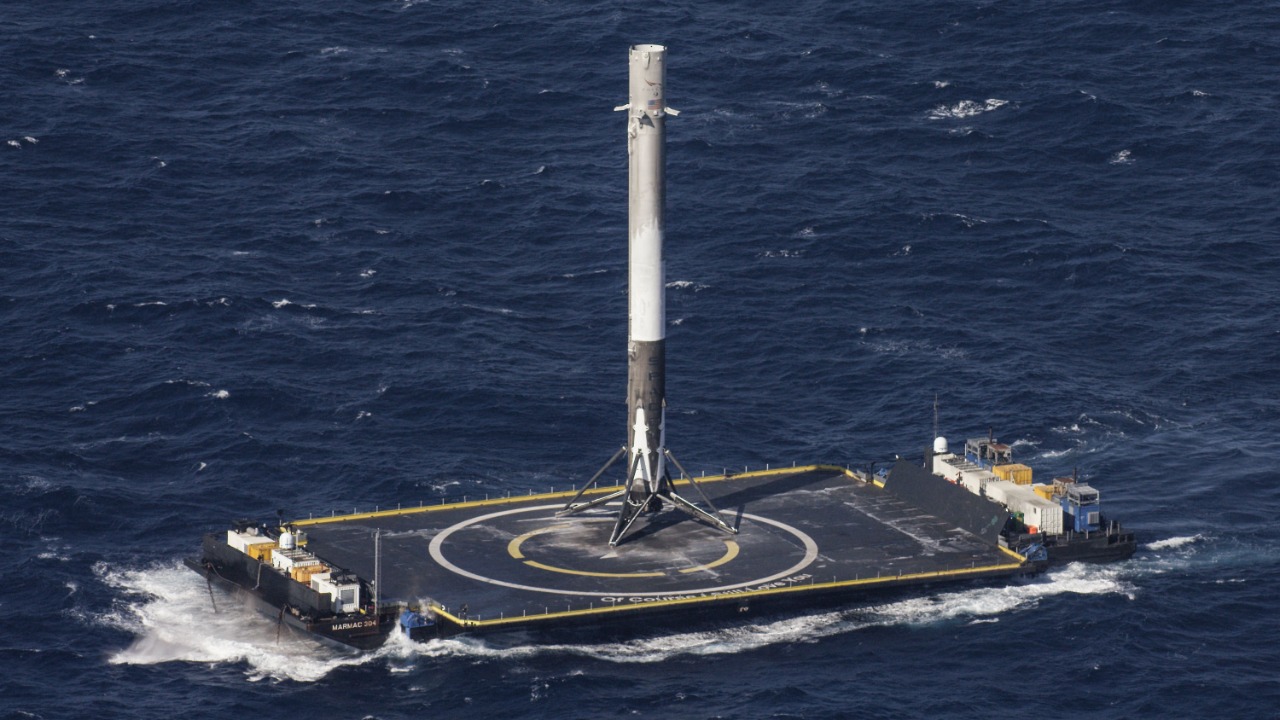
Despite the failed landing, the Long March 12A remains central to China’s plan to field a new generation of reusable launchers that can cut costs and increase cadence for both government and commercial missions. Technical briefings describe the vehicle as a reusable Long March 12A launch system, a two‑stage medium‑lift rocket whose first stage is designed to return to a landing site using grid fins and engine burns, an approach explicitly modeled on the vertical landing techniques that have become routine for SpaceX, with official materials on the Reusable Long March program emphasizing its role as a workhorse for future satellite deployments and crewed missions.
The development path for Long March 12A has been deliberately incremental, starting with the suborbital prototype flight to about 75 km conducted by SAST in January 2025, then moving to the recent orbital attempt that validated staging and ascent while exposing weaknesses in guidance or control during the return phase. Engineers now face the task of analyzing telemetry from the off‑target landing, comparing it with data from the earlier prototype hop and from the Zhuque‑3 failure, in order to refine algorithms, hardware margins and landing procedures before the next test, a process that program insiders say will determine whether the Long March 12A can transition from experimental status to a reliable operational launcher later in the decade, as outlined in technical summaries of the latest flight attempt.
Record launch tempo masks a steep learning curve
The twin recovery failures stand in contrast to China’s otherwise strong year in spaceflight, in which the country has already smashed its previous record for launches in a calendar year, 68, and amassed more total missions than any other nation. That figure, cited in year‑end assessments of China’s space activity, reflects a maturing industrial base capable of turning out large numbers of expendable rockets and spacecraft, even as the shift to reusability introduces new technical risks and operational challenges that pure launch counts do not capture, a tension highlighted in reviews of how China combined record launches with ambitious new technologies in 2025.
Industry analysts argue that the failed recoveries should be seen in the context of this broader surge, noting that a high tempo of launches and tests is precisely what allowed SpaceX to iterate its Falcon 9 and Starship designs to the point where booster landings became routine. Chinese planners appear to be embracing a similar philosophy, with both state‑owned and private firms conducting frequent experimental flights and accepting that some will end in fireballs or off‑target landings, a mindset reflected in commentary that describes the recent missions as necessary steps in a long learning curve rather than isolated disasters, even as headlines about Another Chinese Reusable Rocket Mission Fails Within Weeks underscore the reputational risks of such an approach.
Policy response and the race with the United States
Beijing’s reaction to the setbacks suggests that policymakers remain committed to reusability as a strategic priority, even as they acknowledge the immediate shortfalls. Financial regulators have moved to ease IPO rules for firms developing reusable rockets, a shift that aims to channel more private capital into the sector at a moment when high‑profile failures might otherwise spook investors, with official notices explaining that, while the latest launch failed to complete the crucial step of recovering the rocket’s booster, a flurry of Chinese state‑owned and commercial developers are still expected to deploy thousands of satellites within the next decades, a forecast embedded in policy discussions about how While the IPO changes are meant to sustain momentum.
Strategically, the failures underscore how far China still has to go to match the United States, where reusable boosters have become a backbone of commercial and government launches, but they also highlight Beijing’s willingness to absorb short‑term embarrassment in pursuit of long‑term parity. Commentaries from Beijing stress that the country is still in the early stages of operationalizing reusable launch vehicles and that the recent mishaps, while costly, provide data that will feed into improved designs for both private rockets like Zhuque‑3 and state‑backed systems like Long March 12A, a perspective captured in analyses that frame the “Second Reusable Rocket Failure in One Month Leaves China Chasing U.S. Lead” as a snapshot of a race that will be decided over years of iterative testing rather than a single bad month, with China still betting that its combination of state direction and private innovation can eventually close the gap.