
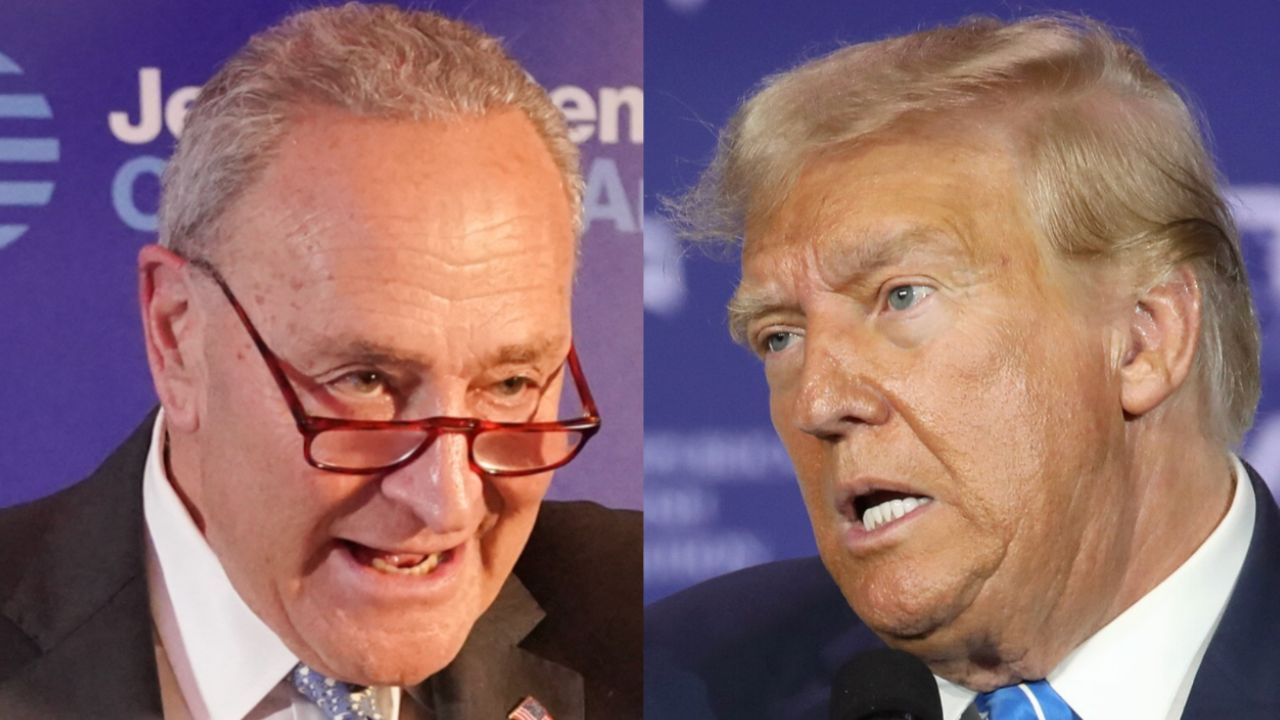
Senate Minority Leader Chuck Schumer accused Senate Republicans on Monday of complicity in what he called an illegal war, using a post on X to remind Americans that President Donald Trump once predicted the war in Iran would last only four to five weeks. The New York Democrat wrote that the conflict has now reached its eighth month and that both the American people and U.S. troops are bearing its costs.
The Post
Schumer published the message at 6:07 p.m. on Monday, September 28, 2026. It reads in full:
“Remember when Trump said his war in Iran would last only four to five weeks?
We’re now in month EIGHT, and the American people and our troops are paying the price.
Last week, the Senate GOP had the chance to vote to end this illegal war, and instead voted to keep it going.
They are complicit.”
— Sen. Chuck Schumer (D-N.Y.), X, 6:07 PM · Sep 28, 2026
The “last week” vote Schumer referred to took place Thursday, September 24. Republicans defeated a measure that would have directed the president to remove U.S. forces from hostilities with Iran, four days before the post appeared.
What Trump Said in the Opening Days
The war began on February 28, 2026, when the United States joined Israel in strikes on Iran. Trump said at a White House event on March 2 that the initial projection was “four to five weeks, but we have capability to go far longer than that.” PolitiFact reported that his answers on duration were inconsistent, noting that the day after the war began he had said combat would continue until all objectives were achieved, and that he later floated six weeks.
ABC News marked the six-month point on August 28 by noting that Trump predicted four to five weeks of war and that the conflict had lasted far longer. The network reported that the goalposts appear to have shifted, with blunting the economic fallout and reopening the Strait of Hormuz now central to the mission. It counted 18 U.S. service members dead and more than 750 wounded at that point.
Thursday’s Vote
The Senate rejected the measure on Thursday by a vote of 49 to 50, falling one vote short. The vote was on House Concurrent Resolution 89, which invokes the War Powers Resolution. Both New York senators, Schumer and Kirsten Gillibrand, voted for it. Four Republicans joined them: Susan Collins of Maine, Lisa Murkowski of Alaska, Rand Paul of Kentucky and Thom Tillis of North Carolina. Democratic Sen. John Fetterman of Pennsylvania voted no, and Democratic Sen. Angela Alsobrooks of Maryland did not vote, according to the Senate record.
NPR reported that Democrats forced the vote to highlight the war’s fallout in their bid to win back control of Congress. It described the vote as coming at a moment when some Republicans have begun to distance themselves from Trump over the conflict, and as one of the Senate’s last votes before the November elections.
In a statement the same day, Schumer’s office said the war had passed 200 days, killed at least 19 service members and cost taxpayers more than $43 billion by what it called the most conservative estimates. It described the vote as the 14th time Democrats had forced a war powers vote. Schumer said Republicans “once again own the exorbitant cost this war has placed on Americans.” The release cited a poll showing just 31 percent of Americans support U.S. military action against Iran. Its itemized list of past votes contained 12 roll calls.
Schumer’s Record on the War
Schumer’s criticism dates to the first day of fighting. On February 28, after speaking with Secretary of State Marco Rubio, he said the administration had not given Congress and the public critical details about the scope and immediacy of the threat. He said Iran must never obtain a nuclear weapon but that Americans do not want “another endless and costly war in the Middle East.” He demanded a congressional briefing.
Democrats forced their first Senate vote on March 4, when Republicans blocked Sen. Tim Kaine’s resolution 47-53. About 39 days into the war, Schumer held a news conference announcing another vote. He argued the U.S. was worse off on the Strait of Hormuz, gas prices, Iran’s nuclear ambitions and American credibility, and declared: “This war is a colossal failure.” He said Trump should end the war and that the only viable solution was a lasting diplomatic one.
By mid-May the war had passed the 60-day mark in the War Powers Act. Speaking on the Senate floor ahead of the eighth vote, Schumer questioned how Trump could say the clock was ticking on Iran when he had told the Senate that the clock had paused. A day later, after the Senate voted to advance a resolution, his office said Republicans were “starting to crack” and that momentum was building to check the president.
On June 1, after Trump said he was in “no hurry” to end the war, Schumer said on the floor that the American people were the ones in a hurry, citing record gas prices. He pledged Democrats would not stop forcing votes until the war was over. On June 23, his office said a war powers resolution had passed both chambers of Congress for the first time, saying it did not require the president’s signature. The statement said Trump had promised “maximum pressure” but delivered “maximum confusion, maximum chaos, maximum cost.” The war continued. The Council on Foreign Relations wrote in mid-July that the war was reigniting after a brief lull and showing no sign of ending.
Before the 13th vote on July 30, Schumer said on the floor that the conflict was widening and that more Americans were being killed and injured. He noted Trump had said the war would last a week, yet service members were still dying five months later. That resolution, from Gillibrand, failed 49-50.
What Comes Next
On August 28, the six-month mark, Schumer said Trump took the country to war “with no plan to win it and no plan to end it.” He cited 18 American service members dead, surging gas prices and Iran’s hold on the Strait of Hormuz, and said Republicans “cower before Donald Trump.” He added: “Six months is enough.”
Monday’s post is the latest in that series of statements. Seven full months have passed since the first strikes. Schumer’s office said in its September 24 release that Americans “will remember” who voted for the war to continue, setting up the war as a central issue heading into the November elections.