
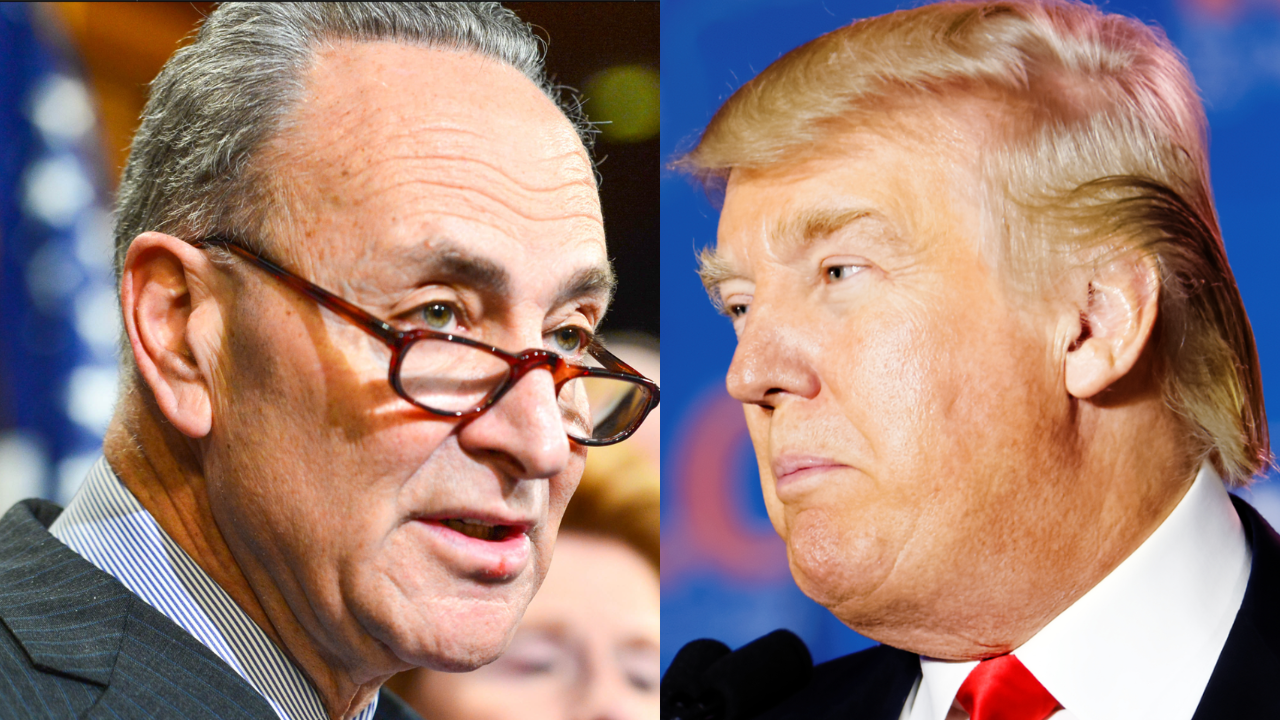
WASHINGTON — Senate Minority Leader Chuck Schumer (D-N.Y.) declared on June 18, 2026, that Democrats would not provide votes for any legislation needed to implement the Trump administration’s memorandum of understanding with Iran, citing the deal’s reported $300 billion reconstruction framework as a key objection. “The U.S. is worse off because of Trump’s incompetence, his ego, and his inability to listen to facts,” Schumer wrote on X. “If Trump wants to send hundreds of billions of dollars to Iran, he’ll need to do it with Republican votes. Democrats will not be helping Trump send $300 billion to Iran.”
Schumer had elaborated on his concerns the day before during Senate floor remarks, saying Iran “knew that the Strait of Hormuz was a choke point, and Trump had no way to get them to release that without giving in so much on so many things.” The comments came as the memorandum’s full text began to emerge, with senior U.S. officials reading its 14 points aloud to reporters at a briefing while withholding the written document itself.
What the MOU Says
The memorandum of understanding, a preliminary framework rather than a final treaty, calls for an immediate and permanent ceasefire across all fronts, the reopening of the Strait of Hormuz, and the lifting of the U.S. naval blockade of Iran. The document states the U.S. will work to “terminate all types of sanctions” against Iran and calls on the U.S. and regional partners to “develop a definitive, mutually agreed plan with at least $300 billion for the reconstruction and economic development of the Islamic Republic of Iran.” Iran, in turn, reaffirms it “shall not procure or develop nuclear weapons” and agrees to IAEA supervision. The deal provides a 60-day window for further negotiations on Iran’s nuclear program, with Trump warning the U.S. could resume military strikes if no broader agreement is reached in that time.
The MOU also states that Iran will “maintain the current status quo of its nuclear program” during the negotiating period, meaning existing enrichment capabilities would remain in place. The question of Iran’s uranium stockpile and its enrichment infrastructure — central concerns for Republican hawks — was deferred to the 60-day final-deal phase.
The $300 Billion Dispute
The reconstruction figure has been the most contentious element of the deal, generating confusion and conflicting statements from the administration itself. Vice President JD Vance confirmed in a CBS News interview that Iran “could have access to” $300 billion in reconstruction funding, describing it as being “funded by the Gulf coast coalition, so long as they honor their end of the obligation.” Hours later, Trump posted on Truth Social that the $300 billion figure was “Fake News, put out by the Dumocrats!!!” Vance subsequently clarified that none of the funds would flow to Iran unless it “fundamentally transforms how it deals with the United States and the region,” including ending support for terrorism and abandoning uranium enrichment.
The administration’s position is that the money would come from private investment and Gulf state partners made possible by sanctions relief, not from U.S. taxpayers directly. But the distinction has done little to quiet critics in either party. The MOU’s text, as read aloud by officials, explicitly references a “$300 billion” figure tied to reconstruction, and members of Congress from both parties said they had been kept in the dark about the deal’s details until its contents were briefed to reporters the same day.
Democratic Opposition
Schumer was not alone among Democrats in raising sharp objections. Sen. Mark Warner (D-Va.), the vice chairman of the Senate Intelligence Committee, told reporters he didn’t know “how anyone, even as good a salesman as Donald Trump can be, can sell this as a win for the United States,” adding that he was concerned the $300 billion fund could ultimately flow to Iranian proxies such as Hezbollah or the Houthis. Sen. Richard Blumenthal (D-Conn.) said Trump “wanted unconditional surrender, and this deal looks like unconditional surrender by the United States, not by Iran,” calling the agreement “disgraceful.”
Schumer also called on the administration earlier in the week to brief Congress immediately on the terms of the agreement before any signing ceremony went forward. He demanded that the White House “come to Congress right away” with a full briefing, arguing that lawmakers were being asked to evaluate a deal whose contents had not been formally shared with them even as administration officials acknowledged the framework had been agreed to the previous weekend.
Republican Unease
Schumer’s statement also reflects political dynamics on the Republican side that complicated any path to implementation. Sen. Lisa Murkowski (R-Alaska) said she was waiting to hear about a “corresponding win” for the U.S. and called for the administration to brief lawmakers with “an opportunity for us to actually ask those questions.” Senate Majority Leader John Thune (R-S.D.) told reporters he still had not seen the final text and that “there’s a bunch of things in here that I think we’re going to have questions about.” Sen. Thom Tillis (R-N.C.) argued the memorandum fell short given the costs of the conflict.
Sen. Rick Scott (R-Fla.) said he “can’t imagine” supporting $300 billion for Iran and laid out his conditions for any final deal: “No nuclear weapons, no ballistic missiles, don’t support proxies, and no American money.” Sen. Lindsey Graham (R-S.C.), a national security hawk who had previously urged Trump to resume strikes during the ceasefire, took a more conditional stance, saying he sees “little downside to trying” for a broader deal but that his top priority remained ensuring Iran has no ability to enrich uranium.
Trump’s Response
Trump dismissed Democratic criticism at his G7 press conference in France, telling reporters that Iran would receive no benefits from the deal unless it met all conditions, including forfeiting aspirations for a nuclear weapon. He said Iran’s commitment not to pursue a nuclear weapon was “99.9 percent” of what he wanted from the conflict and framed the agreement as a historic achievement. “Just in case you have any question, we’ll be giving this out, so you can read it,” Trump said of the MOU. “If it doesn’t get done in 60 days, that’s all right. We go back to bombing.”
A formal signing ceremony for the memorandum was expected in Switzerland, with Trump indicating it could take place as early as Thursday, June 19. As of Wednesday evening, the full written text of the agreement had not been publicly released by either the U.S. or Iranian government, though major outlets including CNN, Bloomberg, and NPR had obtained what they described as drafts of the document. Ships were already reported to be moving through the Strait of Hormuz following the announcement of the ceasefire framework.