
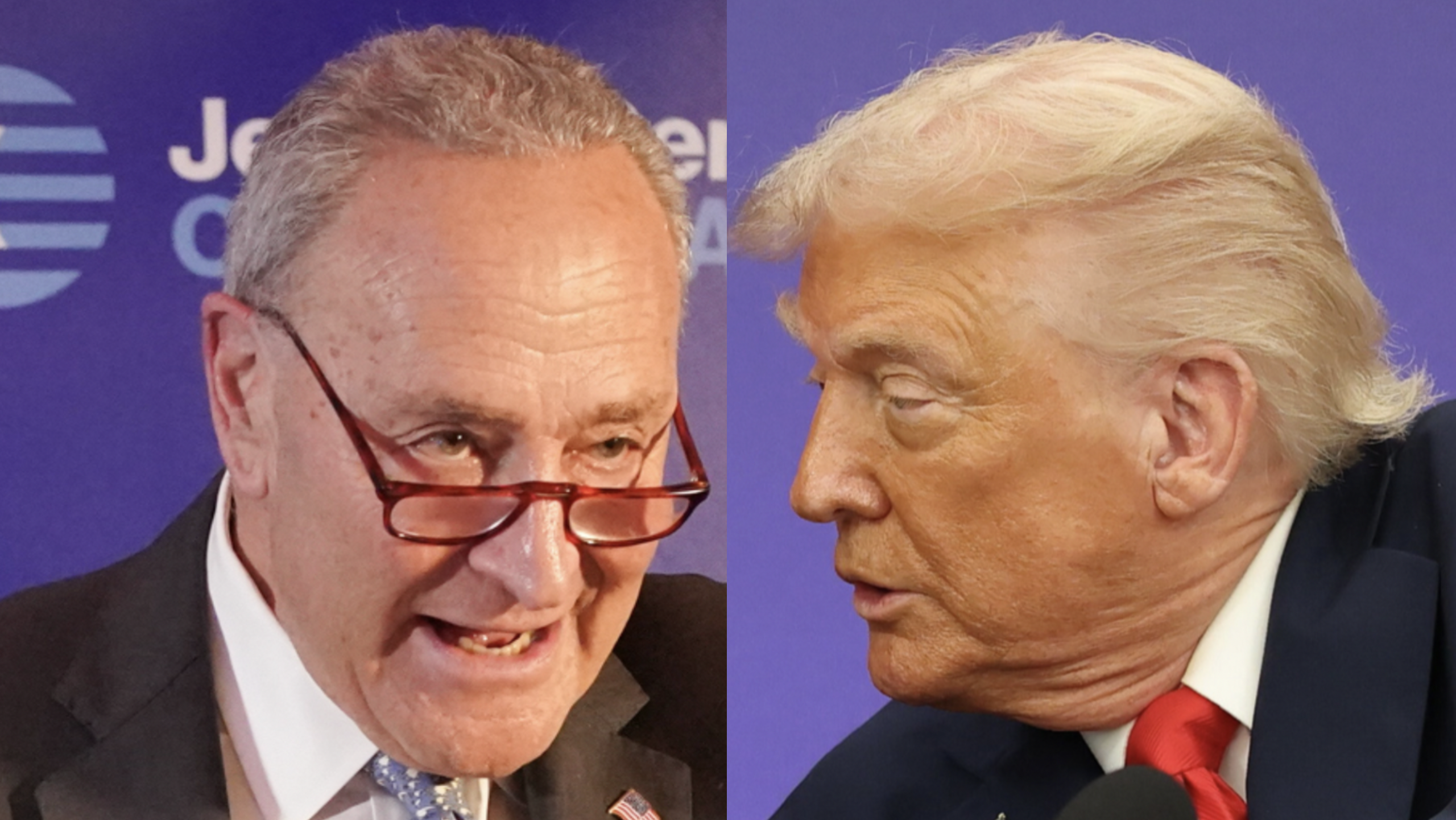
Senate Minority Leader Chuck Schumer accused President Donald Trump on Saturday of making Americans less safe through his ongoing war with Iran, tying the conflict’s mounting military casualties and economic toll directly to a wave of cyberattacks that U.S. officials believe Iranian-linked hackers have launched against water utilities across the country. The New York Democrat’s post on X came as federal investigators raced to determine the scope of intrusions into water-system controls in at least seven states, and as the five-month-old war shows no sign of a durable resolution.
Schumer’s statement, posted to his official X account at 4:24 p.m. on August 1, 2026, read in full:
“Trump is making Americans less safe with his war in Iran Hundreds of servicemembers injured, 18 dead, skyrocketing prices—now cyberattacks on the Homeland The GOP needs to stand up to this lunacy and work with us to end this dangerous and unnecessary war”
A War That Began Five Months Ago
The conflict Schumer referenced began on February 28, 2026, when the United States and Israel launched coordinated airstrikes against Iran in operations targeting Iranian military leadership, nuclear infrastructure, and command networks, an offensive that also resulted in the death of Iran’s Supreme Leader. What Trump initially projected as a matter of weeks has instead stretched into a fifth month, punctuated by a ceasefire in April that later collapsed amid renewed strikes and mutual accusations of violations. As of late July, Iran’s government had publicly suspended its commitments under the original truce, with its current supreme leader dismissing Trump’s word as unreliable.
Casualty Figures Under Scrutiny
The “18 dead” figure cited in Schumer’s post reflects an official U.S. military death toll that has itself become a point of political controversy in recent days. Pentagon casualty tracking briefly listed 18 American service members killed in connection with the war before the total was revised down to 14 earlier in the week, with officials removing four deaths that occurred after Trump’s April ceasefire declaration. Trump has continued to publicly cite the higher figure of 18 even as his own department’s official tally reflected the lower number, a discrepancy that drew scrutiny over how the administration is classifying and reporting war fatalities.
The Price Tag: Billions of Dollars and Rising Gas Prices
Schumer’s reference to “skyrocketing prices” builds on cost estimates he has cited previously in his campaign against the war. In earlier remarks, Schumer put the price tag of the conflict at roughly $44 billion alongside gasoline prices exceeding $4 a gallon, figures he has used to argue that the war has left the country economically worse off than before it began.
Cyberattacks Reach American Water Systems
The cyberattacks Schumer referenced are the subject of an expanding federal investigation into intrusions targeting water-utility control systems in at least seven states, including Minnesota and Michigan. Federal officials have not conclusively attributed the attacks, but investigators and cybersecurity experts say the intrusions are consistent with a broader pattern of Iranian-linked hacking activity that has intensified since the war began, and note that the lack of any apparent financial motive makes a criminal, profit-driven attack less likely. There have been no reports that any water supply was altered or made unsafe, though officials say vulnerable industrial control systems used to manage chemical treatment and water pressure were targeted, in some cases forcing utilities into manual operation and prompting boil-water notices.
Trump Downplays Iranian Involvement, Points to Minnesota
President Trump has publicly cast doubt on Iran’s role in the water-system intrusions, telling reporters Friday that he believed Minnesota itself was “behind it” and that he did not think an Iranian cyberattack had occurred. His remarks came even as his own intelligence agencies were said to regard Iranian involvement as highly likely, according to officials familiar with the assessment. Minnesota was among the first states to detect and publicly disclose the intrusions, a step that helped prompt other states to examine their own water systems for similar vulnerabilities. Minnesota Governor Tim Walz rejected the president’s characterization, writing on social media that the episode illustrates what modern warfare looks like.
Federal Advisory Confirms Multi-State Scope
The FBI and the Environmental Protection Agency issued a joint advisory this week confirming that at least seven states have reported cyber incidents affecting water operations since Monday, with some of that activity degrading operations at affected utilities. The Cybersecurity and Infrastructure Security Agency separately warned that hackers were targeting water entities “of all sizes” and urged facilities to disconnect vulnerable control systems from the internet, noting the campaign has already led to boil-water notices and sustained manual operation at some sites. CISA has for months cautioned that Iran could target U.S. water utilities and other critical infrastructure as the war continued.
Local Officials Describe Federal Guidance
Local officials affected by the intrusions say federal and state authorities have told them privately that Iranian state-linked actors are the leading suspects, even as public statements remain more cautious. Nate George, mayor of Braham, Minnesota, one of the municipalities affected, said in an interview that state and FBI officials believe Iranian actors are responsible but have been reluctant to say so publicly. George, a Republican running for state auditor, said the president is entitled to his opinion but stressed that officials still need to help cities strengthen their cyber defenses regardless of attribution.
Schumer’s Monthslong Campaign Against the War
Saturday’s post is the latest in a sustained effort by Schumer to frame Trump’s handling of the Iran war as a foreign-policy and national-security failure. In earlier remarks marking 39 days of the conflict, Schumer argued the war had left the United States worse off across multiple fronts, including a weakened position in the Strait of Hormuz, and called Trump “a military moron” over the war’s cost and casualties. He has repeatedly urged passage of a War Powers Resolution to force an end to U.S. involvement absent explicit congressional authorization.
Congress Has Voted on War Powers Repeatedly
The Senate has taken up war powers resolutions aimed at Trump’s Iran campaign roughly ten times since the war began, according to floor remarks Schumer delivered ahead of one such vote. One resolution succeeded in passing both chambers of Congress in late June, when the Senate voted 50-48 with four Republicans crossing party lines to join nearly all Democrats, marking the first time such a measure cleared both the House and Senate during the conflict. But a subsequent attempt to advance a similar measure failed in the Senate on July 30, underscoring how thin and fragile that bipartisan coalition has proven over time.
GOP Response Remains Largely Unified Behind Trump
Despite periodic Republican defections on individual war powers votes, GOP leadership and the White House have largely stood behind the administration’s Iran policy. The White House has previously countered Schumer’s criticism by arguing that Democrats spent decades warning about Iran’s threat without taking action, framing Trump’s strikes as necessary to prevent Iran from obtaining a nuclear weapon. Saturday’s post renews Schumer’s call for Republicans to break from that posture, urging the GOP to “work with” Democrats to end what he described as a war with no clear justification.
What Comes Next
With the ceasefire brokered in April now effectively defunct and fighting having resumed in early July, Democrats have signaled they intend to keep forcing war powers votes despite the string of setbacks in getting such measures through the Republican-controlled Senate. The cyberattack investigation into the water-system intrusions remains active and preliminary, with officials cautioning that definitive forensic attribution to Iran could still take weeks or months. For a war entering its sixth month with no announced endpoint, Saturday’s exchange between Schumer and Trump over the water-system hacks adds a new front to a political battle over the conflict’s cost that has played out in Congress since the opening days of the war.