
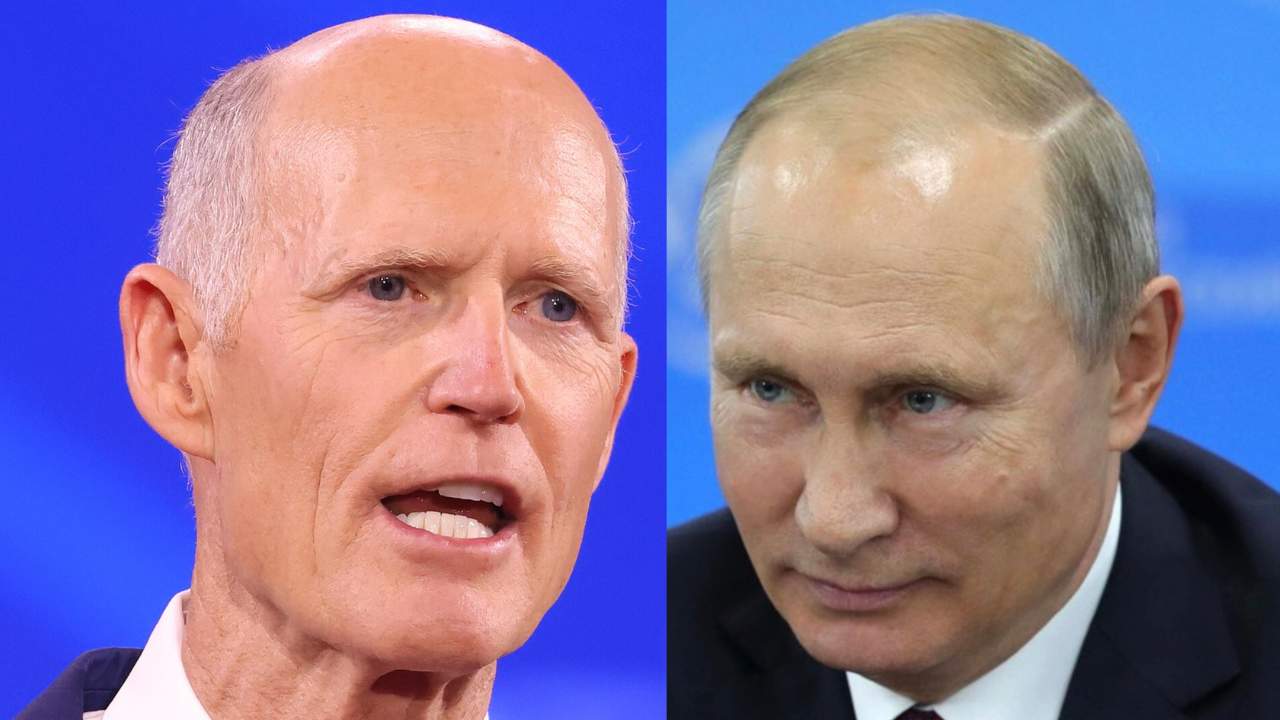
U.S. Senator Rick Scott (R-Fla.) took to X on Saturday, August 1, 2026, to renew his condemnation of Russian President Vladimir Putin, calling him a “thug” and declaring that sanctions recently advanced by the Senate will hold his government accountable for the ongoing war in Ukraine and its broader threats to the United States and its allies. The post is the latest in a long line of public statements from Scott targeting Putin’s regime, arriving as the Senate works toward final passage of a sweeping bipartisan sanctions package aimed at cutting off the revenue streams that fund Moscow’s war machine.
The Full Post
Scott’s statement, posted to X at 2:24 p.m. on August 1, 2026, read in full:
“Putin is a thug. The sanctions we voted for will hold him and his regime accountable.
Nobody should be buying oil from a country that kills innocent civilians and attacks America and our allies.”
The Legislation Behind The Statement
Scott’s reference to sanctions “we voted for” points to the Lindsey O. Graham Sanctioning Russia and Iran Act of 2026, a sweeping bipartisan bill that the Senate advanced in an 86-12 procedural vote on July 28, teeing the legislation up for final passage. The bill authorizes President Trump to impose tariffs of up to 200 percent on the world’s largest purchasers of Russian oil and natural gas, while expanding sanctions targeting Russia’s financial institutions, political elites, oligarchs, and the “shadow fleet” of tankers used to evade existing restrictions. It also extends sanctions on Iran through 2031. Sen. Rand Paul (R-Ky.) was the only Republican to vote against advancing the bill.
Scott’s Position On The Bill
Scott has been an outspoken backer of the legislation since it was formally unveiled in mid-July. Speaking to reporters at the time, Scott made clear he would support the measure, saying, “Whatever we can do to sanction Russia, I’m all in,” while again describing Putin as a “thug.” His August 1 post continues that same message, framing the sanctions as a direct accountability mechanism against the Kremlin and casting continued purchases of Russian oil by other nations as complicity in attacks on civilians and U.S. allies.
Honoring The Bill’s Namesake
The legislation is formally named in honor of the late Sen. Lindsey Graham (R-S.C.), who spent years negotiating the package before his unexpected death earlier in July. The Senate passed the procedural vote just hours after Graham’s funeral at Washington National Cathedral, with Ukrainian President Volodymyr Zelenskiy in attendance both for the service and to personally lobby lawmakers ahead of the vote. Graham’s sister, Sen. Darline Graham (R-S.C.), who has taken up the sanctions push in his absence, said passing the legislation “would honor my brother’s steadfast commitment to our national security” and would give Trump “additional leverage to bring this war to an end.”
What The Bill Targets
The legislation imposes primary and secondary sanctions against Russia and actors supporting its war in Ukraine, targeting Russian officials, oligarchs, their family members, foreign persons, and Russian banks and financial institutions, as well as the Russian shadow fleet. It would impose 100% secondary tariffs on countries that continue buying Russian oil and gas and specifically targets the network of aging tankers Russia uses to evade Western sanctions while exporting crude. The bill also requires the president to impose mandatory sanctions on certain Russian government-affiliated financial institutions within 30 days of enactment, though he retains authority to waive them by certifying a national security justification to Congress.
Bipartisan Backing
A bipartisan group of senators, including Jeanne Shaheen (D-N.H.), Richard Blumenthal (D-Conn.), Darline Graham (R-S.C.), Katie Britt (R-Ala.), Roger Wicker (R-Miss.), and Jim Risch (R-Idaho), announced the agreement to move the bill forward, stating they wanted “to stop purchasers of Russian oil and gas from fueling Putin’s war machine and to continue restricting the Iranian regime’s ability to support terrorism and build its nuclear program.”
Blumenthal, the bill’s lead Democratic co-author, called the vote “a profoundly solid vote for Ukraine,” saying the legislation would stop “the flow of blood money” financing Russia’s invasion. He added, “This bill says to Vladimir Putin: your days of war are numbered. You are on the losing side. Better to come to the table now than sacrifice more lives, waste more money, crater your economy, destroy your standing in the world. America stands with Ukraine.”
Senate Leadership Pushes For Final Passage
Senate Majority Leader John Thune has been pushing for final passage of the bill following its advancement, describing its purpose as cutting off the revenue Russia derives from oil and gas sales facilitated by its “shadow fleet” of ships. Thune noted the legislation gives the president authority to levy tariffs of up to 100% against the largest purchasers of Russian energy, with China identified as the largest.
The bill still faces final Senate passage and subsequent consideration in the House after the August recess, with the House not scheduled to return until August 31, meaning any final movement to the president’s desk will not occur until the fall at the earliest.
Scott’s Long Record On Russia Sanctions
Saturday’s post is consistent with statements Scott has issued dating back to the earliest days of Russia’s invasion of Ukraine. In February 2022, days after the invasion began, Scott stated that “these sanctions are not enough – the United States needs to implement maximum sanctions, just as we have on Iran,” adding that “now is the time to implement all measures to destroy the Russian economy.”
Days later, Scott called for “devastating sanctions and severe consequences that cripple the Russian oligarchy and Putin’s thugs and cronies both in and outside of the Kremlin,” warning that the world, including “Communist China, Cuba, Iran, North Korea and Venezuela,” was watching how the U.S. responded.
In 2023, Scott joined Senators Marco Rubio and Chuck Grassley to reintroduce the HEROIAM SLAVA Act, legislation designed to block Russian state-owned enterprises from accessing American capital markets. At the time, Scott said “Vladimir Putin is a thug and the United States cannot continue to allow him and his evil regime to access American money,” adding that the bill “will stop these state-owned and Putin-backed war-funding enterprises from accessing capital through strict sanctions.”
Framing The Message To Oil Buyers
Scott’s Saturday post placed particular emphasis on nations still purchasing Russian oil, a theme central to the sanctions package now moving through the Senate. China and India remain the largest purchasers of Russian oil and gas, with the sanctions bill designed to pressure those countries by imposing steep tariffs on their exports to the United States unless they curtail their energy purchases from Moscow. Graham had previously argued that the war’s endgame runs through Beijing, saying he had “always believed the way this war ends is when China goes to Putin and says, ‘Enough already, you’re hurting us now.'”
Broader Political Context
Scott’s statement comes amid a period of heightened bipartisan attention to Russia policy following Graham’s death and the accelerated push to finalize sanctions legislation before the August recess. The vote marked what observers described as a significant floor victory for Thune, who has managed to advance two major bipartisan bills through the Senate this summer despite deep partisan divisions on most other issues. The legislation’s momentum has also been shaped by continued Russian strikes on Ukrainian cities, which lawmakers in both parties have cited as justification for tightening economic pressure on Moscow.
Outlook
With the procedural vote cleared and final Senate passage anticipated in the coming days, attention now shifts to the House of Representatives, which remains in recess until late August. Senators from both parties, including Scott, have signaled they expect the bill to reach President Trump’s desk once the House reconvenes, though the timeline for enactment remains uncertain. Scott’s Saturday post reinforces a message he has repeated consistently since Russia’s 2022 invasion: that economic pressure, rather than rhetoric alone, is the mechanism through which Washington intends to hold the Kremlin accountable.