
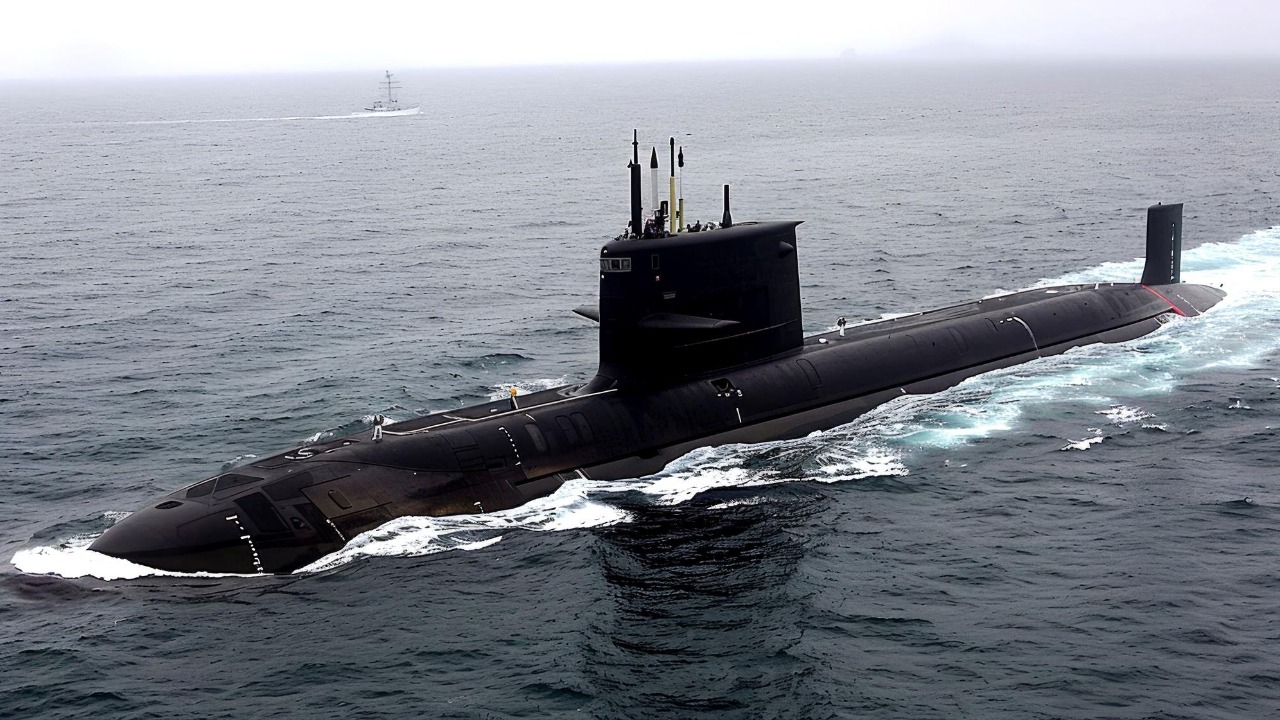
Satellite photographs have revealed a new nuclear powered attack submarine taking shape in a Chinese shipyard, offering the clearest visual evidence yet that Beijing is moving ahead with the next generation of its undersea fleet. The vessel, identified by analysts as the Type 09V class, appears to be a larger and more refined design than earlier Chinese attack submarines, hinting at a methodical effort to close the gap with long established naval powers.
The imagery provides rare insight into a program that Chinese authorities have not publicly detailed, which could alter the balance of undersea forces in the western Pacific if the submarines enter service in significant numbers. For regional navies that already track every new hull leaving Chinese yards, the appearance of a distinct Type 09V silhouette is likely to sharpen questions about how quiet, how heavily armed, and how numerous these submarines might become.
Satellite evidence of a new class taking shape
Commercial satellites have become an essential window into Chinese naval construction, and the first clear images of the Type 09V emerged from passes over the Bohai shipyard complex where China constructs its nuclear submarines. Analysts reviewing the frames identified a hull under construction with proportions and features that differ from earlier boats, describing it as consistent with a new attack submarine class and linking it to a broader pattern revealed by satellite imagery. The same analysis connects the project to a wider modernization push within China’s undersea fleet, which has relied heavily on incremental upgrades to existing designs while work on more advanced platforms continued under tight secrecy.
Imagery specialists point to the regular cadence of new hulls appearing at the same yards as evidence that this is not an isolated prototype but part of a sustained program. In recent years, repeated satellite passes have shown a steady pace of launches for upgraded Type 09IIIB submarines, suggesting the industrial base can manage multiple complex projects in parallel and track new submarines as they enter operational service. The visibility of the Type 09V hull within this rhythm indicates that it is emerging from concept into hardware at a moment when Chinese shipyards are already working at high tempo.
Design features and how Type 09V differs from Shang class boats
Although Chinese officials have not released technical specifications, outside experts have compared the new hull to the current Type 093 Shang class to gauge how the design is evolving. Imagery analysis suggests that the Type 09V is larger than the existing Shang boats, with a reshaped sail and hull contours that appear aimed at reducing hydrodynamic noise and improving stealth, and that the new Type 09V submarine is larger than the existing Type 093 Shang class. Observers highlight changes in the bow and stern that could accommodate new sonar arrays or propulsion refinements, areas where earlier Chinese designs lagged behind American and Russian counterparts.
The relationship between the Type 09V and the improved Type 09IIIB (093B) SSGN is central to understanding how China is sequencing its submarine development. The 09IIIB variant already represented an effort to quiet the original Shang hull and to expand its strike profile, and analysts now see the Type 09V as a further step that incorporates lessons from that program while moving to a cleaner, more modern form. By tying the new hull to the lineage of the 093 and 093B, experts argue that the Type 09V reflects a gradual but deliberate shift away from legacy Soviet influenced architecture.
Bohai yard imagery and what it reveals about production
The Bohai shipyard has long been central to China’s nuclear submarine work, and the appearance of the Type 09V there fits that pattern. Analysts examining high resolution images from this complex describe a hull positioned in a construction hall and later at a fitting out pier, with support infrastructure that mirrors what was used for earlier nuclear boats. The same frames show other submarines in various stages of assembly, reinforcing the impression of a yard that is now accustomed to handling multiple nuclear projects at once.
Commentary on the new hull often stresses that the Type 09V is not appearing in isolation but rather as part of a cluster of modern platforms tied to the same industrial base. Visual evidence of Type 09IIIB boats alongside the emerging 09V suggests that designers and yard managers are balancing incremental upgrades to proven classes with the risk inherent in fielding a new design, a pattern that aligns with the broader observation that satellite imagery offers as part of a consistent production run. For outside observers, the density of activity at Bohai is as telling as the contours of any single hull, since it hints at how many boats the yard might ultimately deliver if current patterns hold.
Strategic implications for regional navies
For navies operating in the western Pacific, the emergence of the Type 09V raises questions about tracking and countering a more capable Chinese attack submarine force. If the new design reduces acoustic signature over the Shang class, it could complicate anti-submarine warfare planning for forces relying on fixed sensor networks and predictable patrol patterns, especially as the Next Generation SSN integrates into the broader fleet mix. Regional planners will be watching for signs of how quickly the class moves from yard trials to operational patrols, and whether it is paired with new weapons or sensors that extend its reach.