
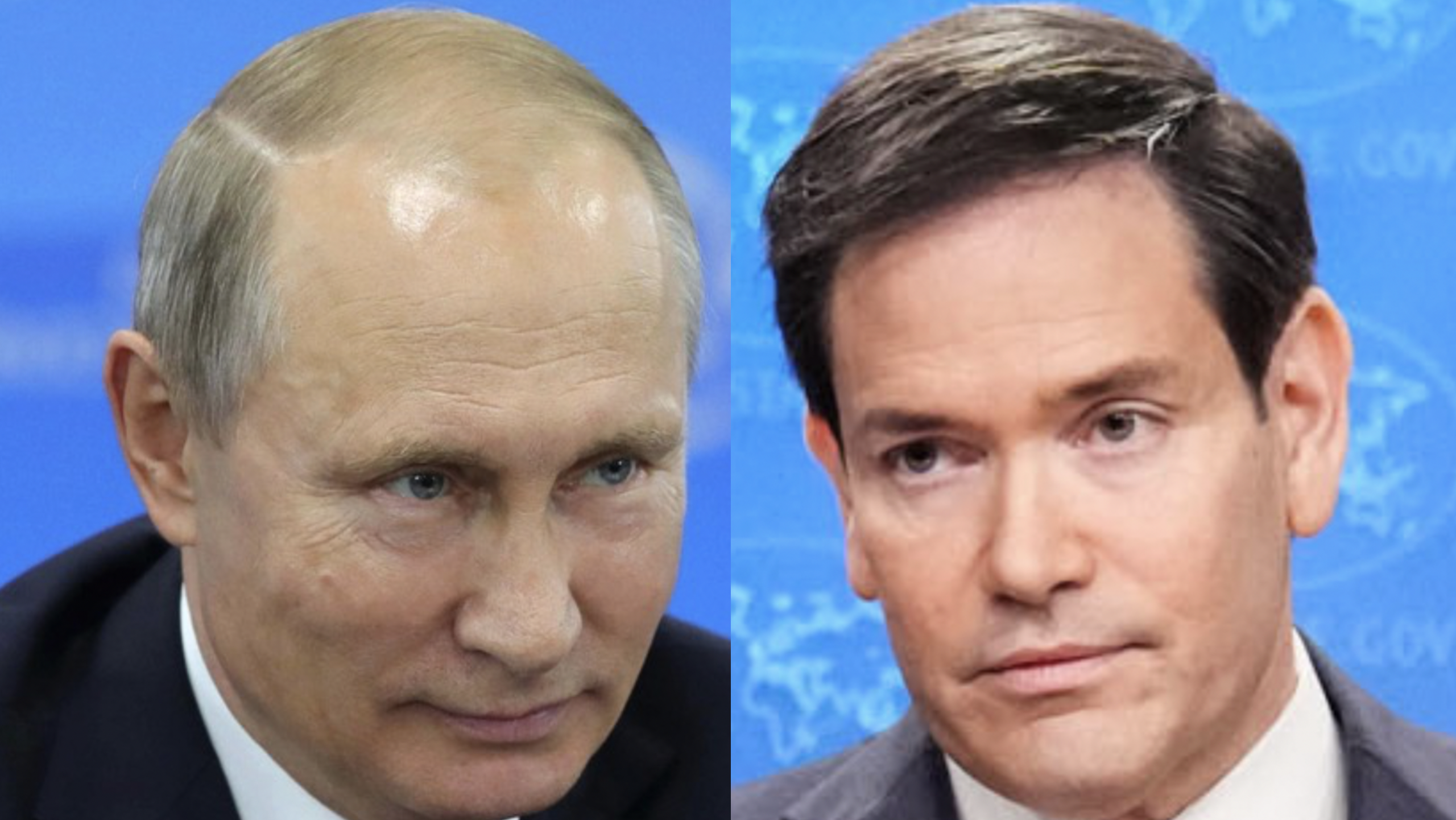
Russian Foreign Minister Sergey Lavrov called U.S. Secretary of State Marco Rubio on May 25 to formally notify Washington that Russia’s armed forces are beginning a sustained campaign of strikes against Kyiv — and to advise the United States to remove its diplomatic personnel and citizens from the Ukrainian capital before the offensive intensifies. The call, confirmed by the Russian Foreign Ministry in a readout posted to both its official website and Telegram channel, marked one of the most direct military warnings delivered by Moscow to Washington in the more than four years since Russia launched its full-scale invasion of Ukraine in February 2022.
The Phone Call
According to a readout provided by the Kremlin, Lavrov told Rubio that the Russian armed forces are now launching “systematic and consistent strikes against facilities in Kyiv used by the Ukrainian Armed Forces and against the relevant decision-making centers.” The Russian Foreign Ministry stated that the strikes are being carried out in response to what it described as the Kyiv regime’s ongoing terrorist attacks against civilians and civilian infrastructure on Russian territory. Acting on direct instructions from President Vladimir Putin, Lavrov made clear that the campaign was not a one-time escalation but the start of a deliberate, sustained military operation targeting the Ukrainian capital.
Evacuation Warning
Lavrov drew attention to a Russian Foreign Ministry statement issued the same day, which recommended that the United States, along with other states maintaining diplomatic missions in Kyiv, “ensure the evacuation of their diplomatic personnel and other citizens from the Ukrainian capital.” Russia’s foreign ministry stated that the strikes will target both decision-making centers and command posts, and warned foreign citizens, including diplomatic mission personnel and international organization staff, to leave the city as soon as possible. The demand that Washington begin evacuating its embassy was delivered not as a suggestion but as an official formal notice, delivered at the instruction of the Russian head of state.
The Strikes That Preceded the Call
The phone call between Lavrov and Rubio came just hours after one of the most destructive Russian bombardments of Kyiv since the war began. Russia pounded Kyiv and surrounding areas with hundreds of drones and missiles in one of the heaviest bombardments of the city since the start of the four-year war, firing an Oreshnik hypersonic missile near the capital. The hours-long overnight barrage killed four people and wounded more than 80, according to Ukrainian officials, with dozens of residential buildings and several schools damaged. The advanced ballistic Oreshnik missile, which is capable of carrying nuclear warheads, struck Bila Tserkva, a city of 200,000 people approximately 50 miles south of Kyiv.
The Night of May 25
The strikes did not pause after the diplomatic warning was issued. Russia attacked Kyiv and other Ukrainian regions with drones and missiles overnight on May 25, killing 12 people, including three children, and injuring at least 79, according to Interior Minister Ihor Klymenko. Russia launched 69 missiles and 298 drones, with the Air Force reporting that 45 cruise missiles were intercepted and 266 drones were neutralized, while 22 locations recorded a direct strike. The coordinated assault came on Kyiv Day, a city holiday traditionally celebrated on the last Sunday in May.
Moscow’s Justification
Russia framed its escalation as retaliation for a Ukrainian drone strike on a student dormitory in Starobilsk in the occupied Luhansk region. Russia’s Ministry of Defence said the strikes are in response to a Ukrainian drone attack last week that struck a student dormitory in Starobilsk, killing 21 people, though Ukraine disputed the claim, saying its forces only targeted military facilities. The Russian Foreign Ministry stated that its patience had been “exhausted” following the Starobilsk incident, signaling that the capital’s infrastructure could face sustained, targeted attacks in the coming days. The Oreshnik Factor
The deployment of the Oreshnik hypersonic missile added a significant dimension to Moscow’s military signaling. The Oreshnik, which is capable of carrying either nuclear or conventional warheads, was used for the third time in the four-year war during the May 24 assault. The weapon has a range of several thousand kilometers, and the previous two strikes had targeted major Ukrainian cities. The repeated use of the Oreshnik in high-profile attacks on or near the capital underscores the degree to which Russia has been willing to deploy its most advanced strategic weapons in the conflict.
Anchorage and the Collapse of Diplomacy
During the call, Lavrov also revisited the diplomatic track, referencing agreements reached at the highest level between Russia and the United States at their August 2025 summit in Anchorage, Alaska. Lavrov had previously stated that Russia’s position remains consistent with understandings reached between Putin and Trump during the Anchorage talks, describing the goal as a “long-term, sustainable peace, not an immediate ceasefire that would lead nowhere.” In the May 25 call, Moscow’s foreign ministry said Lavrov “expressed regret that the aggressive efforts of European elites and the Kyiv regime are undermining these agreements, which had opened the way to a sustainable long-term settlement based on a balance of interests.”
Disputed Framework
The Russian invocation of the Anchorage summit as the foundation for its peace demands has itself become a point of contention. Following the August 2025 summit, Secretary of State Rubio said that “we’re not at the precipice” of a peace agreement, and that both sides would have to make concessions, though he refused to name any that Putin had agreed to. Analysts at the Institute for the Study of War wrote that Russia is seeking to “exploit the lack of clarity about the outcome of the August 2025 U.S.-Russian Alaska Summit to claim that the summit achieved a joint U.S.-Russian understanding and agreement to end the war in Ukraine, and present the agreement in ways that benefit Russia.” Moscow has nonetheless continued to cite the Anchorage framework as the baseline for any acceptable settlement.
Zelensky Calls for Consequences
Ukrainian President Volodymyr Zelensky responded to the May 24 bombardment by calling on Western partners to act. “It’s important that this does not remain without consequences for Russia,” Zelensky said on Telegram. “Decisions are needed — from the United States, from Europe and others.” In terms of the number of locations damaged in the onslaught, the strike was described as the largest attack against Kyiv of the entire full-scale war by Kyiv City Military Administration Head Tymur Tkachenko.
Diplomatic Channels Remain Open
Despite the severity of the military and rhetorical escalation, both foreign ministers signaled a continued interest in preserving the working diplomatic relationship between the two countries. According to the Russian Foreign Ministry readout, “Sergey Lavrov and Marco Rubio reaffirmed their mutual commitment, notwithstanding known differences, to step up efforts to normalize the working conditions of the diplomatic missions of Russia and the United States on each other’s territory.” The two ministers also exchanged views on diplomatic initiatives related to the crisis in the Strait of Hormuz and the situation surrounding Cuba, indicating that the call covered a broader range of geopolitical concerns beyond Ukraine.
A War in Its Fifth Year
The Lavrov-Rubio phone call and its accompanying military backdrop represents a stark illustration of where the conflict stands more than four years after Russia’s full-scale invasion began. What started as a conventional ground assault across multiple axes in February 2022 has evolved into an entrenched, high-intensity war that has seen the deployment of hypersonic missiles, mass drone campaigns, and now an explicit Russian warning to the United States to remove its diplomatic personnel from the Ukrainian capital. The formal nature of Lavrov’s notice to Rubio — delivered under direct instructions from Putin — marks a significant moment in the war’s diplomatic history, as Moscow moved from battlefield operations to direct superpower-level communication about the immediate danger to American personnel on Ukrainian soil.