
Russia’s unveiling of a nuclear-powered “super torpedo” has revived some of the Cold War’s darkest fears, with officials in Moscow boasting that a single weapon could drown coastal cities in radioactive waves. The system, known as Poseidon, is pitched as a strategic game changer that can slip past missile defenses and deliver tsunami-scale devastation to an enemy shoreline. Whether it is a fully realized capability or a high-tech bluff, it is already reshaping how militaries and analysts think about nuclear deterrence at sea.
The stakes are stark: if operational, a nuclear-armed underwater drone that can loiter for long periods and strike without warning would complicate every coastal nation’s defense planning. Yet technical doubts, opaque testing claims, and the extreme consequences of using such a device have led many experts to question whether Poseidon is more useful to the Kremlin as a tool of psychological pressure than as a practical battlefield weapon.
What Russia says Poseidon can do
Russian officials describe Poseidon as an unmanned underwater vehicle that combines nuclear propulsion with a massive nuclear warhead, designed to travel across oceans and detonate near enemy coasts. Public descriptions of the 2M39 Poseidon portray it as a long-range, nuclear-powered torpedo intended to bypass traditional missile defenses by approaching targets from below the surface, with Western assessments noting that, according to the Pentagon, Russia has claimed the weapon had been successfully tested, a detail reflected in open-source profiles of Poseidon. Russian narratives emphasize that such a system could remain hidden in the deep ocean for extended periods, then strike coastal infrastructure or naval bases with little warning.

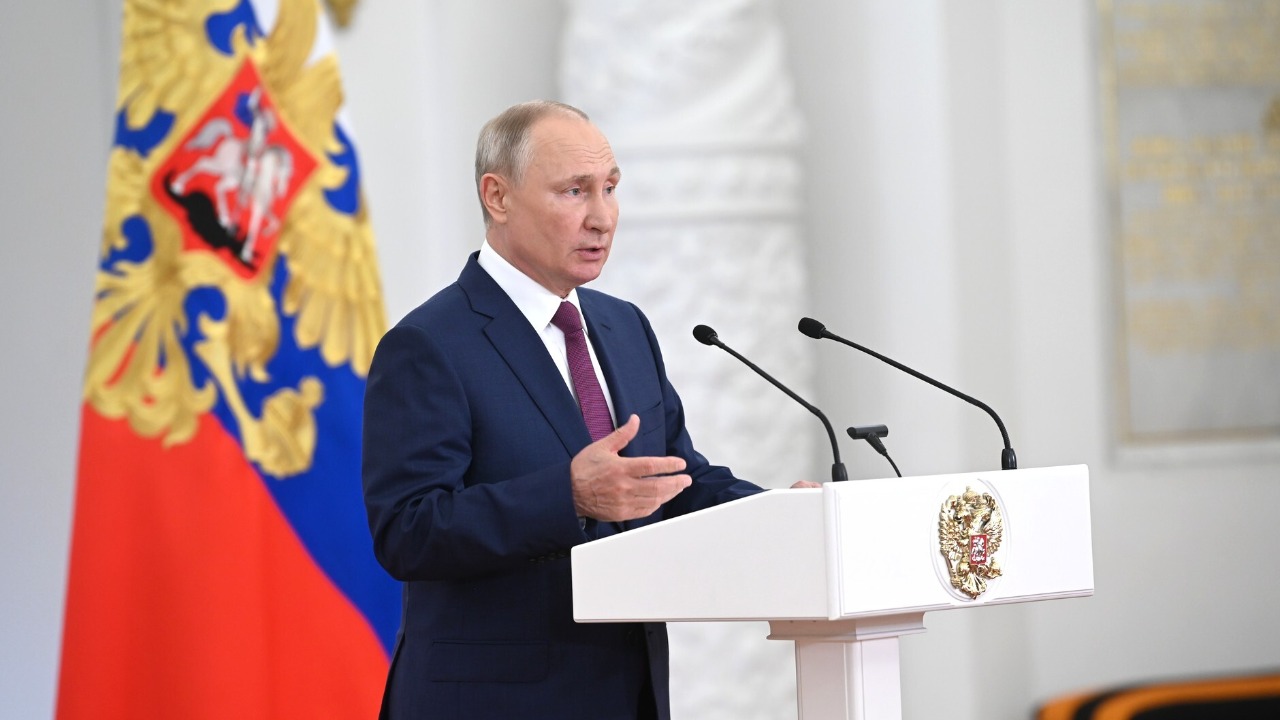
President Vladimir Putin has personally elevated Poseidon’s profile, presenting it as part of a new generation of strategic systems meant to ensure that Russia can penetrate any defense shield. In a conversation with soldiers that the Kremlin later released, Putin was cited discussing The Poseidon as a “post-doomsday” weapon, and Russian state messaging has repeatedly stressed that The Poseidon is nuclear-powered and nuclear-armed, with the Kremlin claiming a successful test launch of the nuclear-powered underwater drone, as reported in coverage of Putin’s remarks. By framing Poseidon as a response to Western missile defenses, Moscow is signaling that it sees the system as part of a broader strategic balance rather than a niche experimental project.
From “super weapon” lineup to claimed tests at sea
Poseidon did not emerge in isolation, but as part of a suite of so-called “super weapons” that Putin unveiled in a high-profile presentation several years ago. Both Burevestnik and Poseidon were introduced together as novel nuclear systems, with Both Burevestnik and Poseidon described as belonging to Russia’s “super weapons” lineup that Putin showcased in 2018, and later reporting noted that Putin again highlighted these systems when he announced what he called a successful test, a linkage detailed in analysis of Both Burevestnik and Poseidon. By grouping Poseidon with other exotic nuclear projects, the Kremlin has used it to underscore Russia’s technological ambition and to suggest that it can outflank Western military planning.
Russian leaders have since moved from animated renderings to claims of real-world trials. Russian President Vladimir Putin stated in Moscow that nuclear-propelled Poseidon drones had been successfully tested, describing how the system uses a compact nuclear reactor similar in concept to a nuclear reactor on a submarine, a point that appeared in accounts of his comments from MOSCOW. Russian sources have also asserted that Poseidon has been undergoing sea trials since 2018, with technical overviews noting that, while Russian statements about Poseidon are sweeping, much about the system remains classified and that it has been undergoing sea trials since 2018, a detail highlighted in assessments of Technical doubts and development status. These claims, however, are difficult for outsiders to verify, leaving analysts to piece together the program’s progress from satellite imagery, official speeches, and selective leaks.
How a tsunami torpedo would actually work
The most dramatic element of the Poseidon narrative is the idea that it could trigger a radioactive tsunami large enough to wipe out entire coastal cities. Russian descriptions of the 2M39 Poseidon suggest that it is designed to carry a very large nuclear warhead, potentially in the multi-megaton range, and to detonate it underwater near an enemy shoreline, with some experts warning that one nuclear-armed Poseidon torpedo could decimate a coastal city and that Russia wants 30 of them, as discussed in detailed examinations of one nuclear-armed Poseidon. The concept is that the blast would displace vast volumes of water, sending a wall of contaminated seawater over ports, naval bases, and urban areas.
Russian commentary has leaned into this apocalyptic imagery, with some state-linked narratives describing Poseidon as a “doomsday” device meant to unleash massive radioactive tsunamis capable of wiping out entire coastal cities. Reporting on the Poseidon 2M39 torpedo has noted that this “doomsday” weapon is described as being designed to trigger massive radioactive tsunamis capable of wiping out entire coastal cities and that some experts believe the system could be difficult to intercept because it travels underwater and is less vulnerable to aerial or ballistic attacks, a characterization captured in coverage of While Russian. The physics of such a scenario are still debated, but even a less-than-apocalyptic underwater detonation near a major harbor would be catastrophic in human, economic, and environmental terms.
Technical doubts and contested capabilities
Behind the fearsome rhetoric, there is still significant uncertainty about how mature Poseidon really is. Some analysts argue that Russia has yet to demonstrate a reliable small nuclear propulsion system suitable for an unmanned underwater vehicle, with one expert, Auric von Hammerstein, bluntly asserting that the torpedo does not exist and that Russia has no working nuclear propulsion system for such a device, a skeptical view cited in discussions of Auric von Hammerstein. These doubts focus on the engineering challenge of building a compact, safe, and controllable reactor that can power a high-speed, long-range drone in the harsh conditions of the deep ocean.
Russian statements, by contrast, insist that the technical hurdles have been cleared. Russia has publicly claimed that it has tested nuclear-powered “super weapons,” revealing that it has tested a nuclear-powered cruise missile and a nuclear-powered torpedo in recent days and presenting these experimental systems as evidence that Russia has “got nuclear-powered super weapons to work,” a message summarized in reports that Russia revealed these tests. Additional accounts of a test of the nuclear-powered Poseidon drone describe Russia testing an “uninterceptable” nuclear drone that is claimed to reach 124 m underwater, with Putin saying that Poseidon’s nuclear reactor is smaller than those on submarines and linking the test to other strategic systems like the advanced Sarmat intercontinental ballistic missile, details that appear in technical write-ups of how Russia tests the system. The gap between these confident official claims and the skepticism of outside experts is at the heart of the debate over whether Poseidon is a real operational threat or a work in progress amplified for strategic effect.
Submarines, force structure, and “Armageddon” logic
Whatever Poseidon’s exact technical status, Russia is already reorganizing parts of its navy around the concept. Russian reports have indicated that Russia plans to form a division of special-purpose submarines that will carry Poseidon torpedoes, with state-linked outlets citing TASS and Reuters in describing how Russia intends to create a special division of Poseidon torpedo carriers that would be launched from a nuclear submarine, a structural shift outlined in coverage of how Russia to form this force. The launch of a new nuclear torpedo-carrying submarine has also been highlighted, with reports noting that last week, Russia’s President Vladimir Putin said that the country had, for the first time, conducted the first long-range test of the Poseidon system and that the new submarine is expected to fulfill other roles in addition to carrying nuclear torpedoes, a development described in analysis of how Last week, Russia advanced the program. These steps suggest that, at minimum, the Kremlin is investing real resources in platforms tailored to deploy Poseidon or similar systems.
Strategically, that investment raises hard questions about how such weapons fit into nuclear doctrine. Some Western experts have described systems like Poseidon in stark terms, with Mark Galeo quoted as saying that “They are basically Armageddon weapons, too powerful to be used unless you’re happy to destroy the world,” a judgment that appears in commentary on why They are basically Armageddon devices. That logic cuts both ways: the sheer destructiveness of a nuclear-powered tsunami torpedo may make it a potent symbol of deterrence, but it also makes any actual use almost unthinkable, since unleashing such a weapon would likely trigger massive retaliation and global condemnation. In that sense, Poseidon may be less about fighting a war than about shaping perceptions of what a future nuclear confrontation could look like, amplifying fear to gain leverage without ever needing to fire a shot.
Bluster, bargaining chip, or emerging reality?
The debate over Poseidon’s significance ultimately turns on how much weight to give Russia’s own narrative. On one side, Russian officials, including Russian President Vladimir Putin, have repeatedly asserted that Poseidon is nuclear-propelled, nuclear-armed, and already tested, with Kremlin transcripts and official statements from Wednesday in Moscow presenting Poseidon drones as a successfully demonstrated capability, as reflected in accounts of Russian President Vladimir Putin and his claims. On the other side, independent experts point to the lack of transparent test data, the engineering challenges of nuclear propulsion in a compact underwater drone, and the political risks of deploying such an overtly escalatory system, with some, like Auric von Hammerstein, arguing that the torpedo does not exist in the form Moscow describes and that Russia lacks a working nuclear propulsion system for it, a critique detailed in analysis of Russia and its ambitions.
What is clear is that the idea of Poseidon is already having real-world effects, from prompting new submarine construction to fueling calls for updated arms control frameworks that address nuclear-powered autonomous systems. Even if some of Russia’s claims are exaggerated or premature, the pursuit of a weapon that blends nuclear propulsion, autonomy, and city-destroying payloads signals a willingness to push beyond the boundaries of traditional strategic stability. Whether Poseidon proves to be a fully operational tsunami torpedo or remains partly a tool of psychological warfare, it has already succeeded in forcing other powers to imagine, and plan for, a darker and more complex nuclear future.