
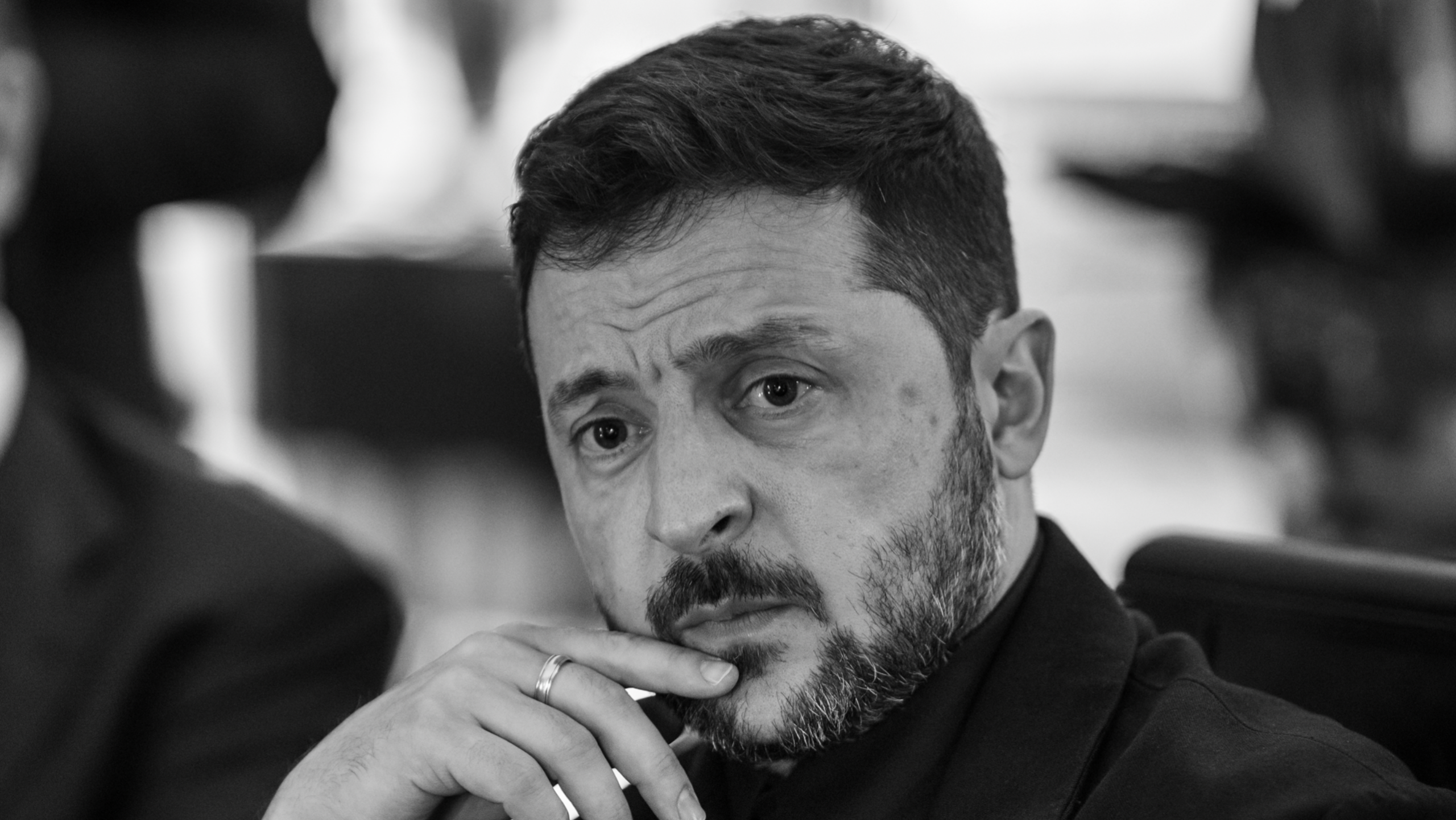
Ukrainian President Volodymyr Zelenskyy delivered one of his most pointed calls yet for European strategic self-sufficiency in air defense on Sunday, May 17, 2026, framing the continent’s ability to protect itself from ballistic missiles as an existential necessity — not a long-term aspiration — in a post that laid out a week of Russian bombardment in terms that left little room for equivocation.
“This week, the Russians launched more than 3,170 attack drones, over 1,300 guided aerial bombs, and 74 missiles of various types, most of them ballistic, against Ukraine,” Zelenskyy wrote on X. “There were many hits on residential buildings and other civilian infrastructure. Unfortunately, 52 people were killed as a result of attacks this week. My condolences to their families and loved ones. Another 346 people were affected and injured, including 22 children.”
The figures, released nearly five years into a war that began with Russia’s full-scale invasion on February 24, 2022, captured a single week — not the arc of the conflict as a whole. They came on a day Ukraine was simultaneously conducting one of the largest drone barrages of the war against Russian territory, sending waves of unmanned aircraft toward Moscow and several other regions, with Russia claiming it intercepted 556 drones overnight across 14 regions. The parallel operations on Sunday — Ukraine absorbing Russian bombardment while striking deep into Russian territory — illustrated the grinding, attritional character of a war that has defied every prediction of imminent resolution.
Zelenskyy’s call for action centered on two immediate priorities. The first was continued international support for the PURL initiative — the Prioritized Ukraine Requirements List — the mechanism through which European nations finance the purchase of American-made air defense weapons for Ukraine. The program enables Ukraine to purchase Patriot missiles and other weapons that protect Ukrainian civilians from Russian attacks, with most air defense missiles capable of intercepting Russian ballistic missiles supplied through this initiative. “That is why the PURL initiative and additional contributions for anti-ballistic missiles are critical,” Zelenskyy wrote Sunday, directly linking the week’s death toll to the state of that funding pipeline.
The second priority Zelenskyy articulated was more structural, and more consequential for European defense architecture as a whole. “It is equally important to work in Europe on joint protection against ballistic missiles,” he wrote. “We must be self-sufficient in defense so that Russian aerial terror cannot threaten Ukraine or any other country on the continent.” That framing — explicitly extending the ballistic missile threat beyond Ukraine’s borders to the broader European continent — represented a deliberate escalation in the strategic language Zelenskyy has used to secure long-term European commitment.
That argument has gained significant urgency throughout 2026. The Iran war’s demands on global Patriot interceptor supplies have generated acute concerns that stocks earmarked for Ukraine under PURL would be redirected elsewhere, driving Kyiv’s missile stockpiles to critically low levels and limiting Ukraine’s ability to fully defend against ballistic threats including the Iskander-M and Kinzhal. Against that backdrop, the 74 ballistic missiles Russia fired during the week Zelenskyy described were not an abstraction — they were the precise category of weapon that Ukraine’s increasingly strained air defenses are least equipped to intercept at scale.
Zelenskyy has placed the total PURL requirement for 2026 at $15 billion — a figure that underscores how wide the gap remains between what partner nations have committed and what Ukraine’s air defense actually requires. He noted that contributions from three European countries had arrived under the initiative in the prior week, with further contributions expected in May. Whether those contributions materialize at the scale Kyiv says is necessary remains the central variable shaping Ukraine’s ability to protect its civilian population from the kind of week Zelenskyy documented on Sunday.
The week he described did not occur in a vacuum. On May 14, Russia had launched a major barrage at Kyiv, killing at least 10 people and wounding 45 others, with strikes hitting six districts of the capital and the surrounding region. That attack came just days after a brief ceasefire around the May 8-9 World War II anniversary — a truce marred by allegations of violations by both sides and followed almost immediately by renewed bombardment. The pattern — ceasefire announced, ceasefire violated, bombardment resumed — has repeated itself throughout the conflict with enough regularity that Ukrainian officials no longer publicly treat temporary pauses as meaningful inflection points.
Zelenskyy’s emphasis on European self-sufficiency in ballistic missile defense represents a significant evolution in how Kyiv has framed the war’s long-term stakes. Early in the conflict, Ukrainian messaging focused primarily on immediate battlefield support — weapons, ammunition, funding. The argument Zelenskyy articulated Sunday was different in kind: that Europe must build the institutional and industrial capacity to protect itself from ballistic threats independently of American supply chains, because the reliability of those supply chains — strained by competing global demands — can no longer be assumed.
On Sunday, confirming Ukraine’s own drone strikes on Russian territory, Zelenskyy said the strikes were “entirely justified” and delivered a message aimed at the Russian public as much as its government: “Their state must end its war.” That statement, paired with the week’s casualty figures and the appeal for expanded air defense support, defined the contours of where Ukraine’s president stood as the war approached the end of its fifth year — unwilling to accept the current pace of losses, unwilling to cede the strategic initiative, and pressing allies to treat European air defense capacity not as a future project but as an immediate operational requirement.
“I am grateful to all of our partners who have taken concrete steps to support our defense,” Zelenskyy wrote to close Sunday’s post. The gratitude was genuine. So was the implication that concrete steps, so far, had not been enough to prevent 52 deaths and 346 casualties in seven days — and that the gap between what had been done and what was needed remained the defining challenge of the war’s current phase.