
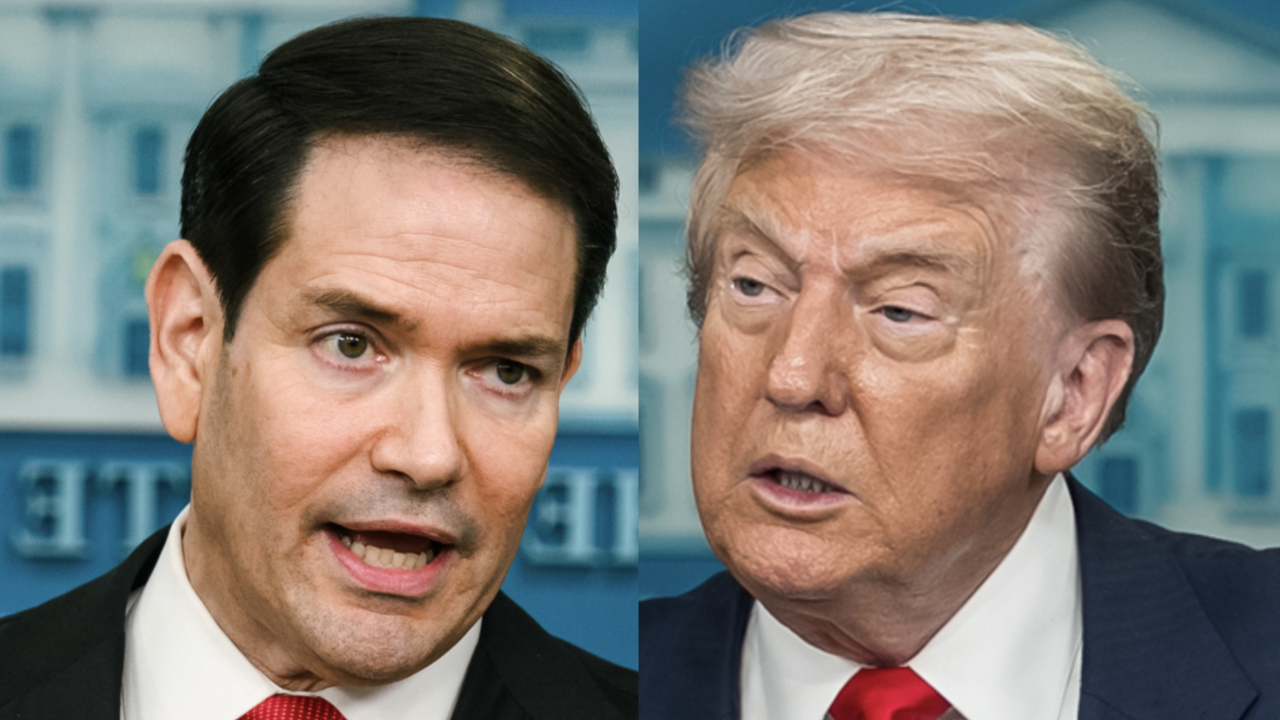
Secretary of State Marco Rubio said Iran is confronting a fundamentally different kind of American president in Trump, one willing to follow through on threats after decades in which the regime grew accustomed to facing little real consequence for breaking agreements.
“I don’t think the Iranian regime has ever faced a president like President Trump, which is someone that actually takes action,” Rubio said in an interview recorded for “My View with Lara Trump.” “They got used to, for 20 or 30 years, not just the U.S., but the broader world, allowing them to get away with things like lying, breaking deals, tricking people into agreements and so forth.”
Rubio’s comments came as the White House said Iran “will continue to pay” until it returns to negotiations in what Trump considers “a meaningful way,” following what the administration has described as Iranian attacks on commercial shipping and U.S. forces after the two countries signed a memorandum of understanding earlier this year. Trump told reporters the same day that the U.S. would keep striking Iran until it returned to serious talks, predicting the regime would eventually “peter out” under sustained military pressure.
The interview aired amid an active spike in regional hostilities. Kuwait said it intercepted multiple Iranian drones targeting vital facilities on Aug. 1, while Bahrain condemned what it called Iran’s repeated attacks and reaffirmed its support for Kuwait. U.S. embassies in Jordan and Israel urged American citizens to consider leaving the Middle East, warning that the Iranian regime remained “unpredictable” and that security conditions could deteriorate quickly.
Rubio has used similarly forceful language about Iran’s negotiating history throughout the nearly five-month war. In June, after U.S. strikes hit Iranian nuclear facilities, Rubio told Fox News’ “Sunday Morning Futures” that “the game is up” for Tehran. “They have played the world for 40-something years with these nuclear talks and delaying things,” Rubio said at the time. “They’re not going to play President Trump, and they found out last night that when he says he’s going to do something, he’ll do it.” He added of Iranian officials, “They think they’re cute. They’re not cute, and they’re not going to get away with this stuff, not under President Trump.”
In March, shortly after the war began, Rubio offered blunter language still, telling reporters, “Iran is run by lunatics, religious fanatic lunatics,” and that the country’s pursuit of nuclear weapons made military action necessary, according to a separate Fox News report. “This is the weakest they’ve ever been,” Rubio said. “Now is the time to go after them.”
Rubio has separately said Trump would not tolerate the kind of prolonged, inconclusive diplomacy he has attributed to the previous administration. “What President Trump is not going to allow is he’s not going to allow fake negotiations to be used as a delay tactic, to buy more time, to buy themselves space,” Rubio said in earlier remarks, adding that Trump would not be “strung along like the Biden administration.”
At other points in the conflict, Rubio has struck a somewhat more measured tone regarding internal Iranian politics, telling ABC’s “Good Morning America” in March that fractures appeared to be emerging within the regime’s leadership. “There are clearly people there talking to us in ways that previous people in charge in Iran have not spoken to us in the past,” Rubio said, while declining to identify who specifically the U.S. was in contact with, saying it “would get them in trouble with some other groups of people inside of Iran.”
The August interview followed Trump’s July 31 Cabinet meeting at Camp David, where Rubio and Trump discussed the state of the war alongside other administration priorities. Trump has separately said he is “losing faith” in Iran’s negotiators, citing a July 28 missile attack on a U.S. base in Jordan that came in the midst of what he believed were ongoing negotiations.
The war began Feb. 28 with U.S. and Israeli strikes on Iranian nuclear and military targets, and has continued despite a June memorandum of understanding that briefly established a ceasefire and reopened the Strait of Hormuz to shipping before collapsing amid mutual accusations of violations.
State Department transcripts of Rubio’s public remarks throughout the war consistently frame U.S. policy as combining continued military pressure with openness to genuine negotiations, provided Iran demonstrates it is serious about reaching a lasting agreement on its nuclear program and regional conduct.
Neither Iranian officials nor state media had issued a direct response to Rubio’s latest remarks as of the interview’s broadcast.