
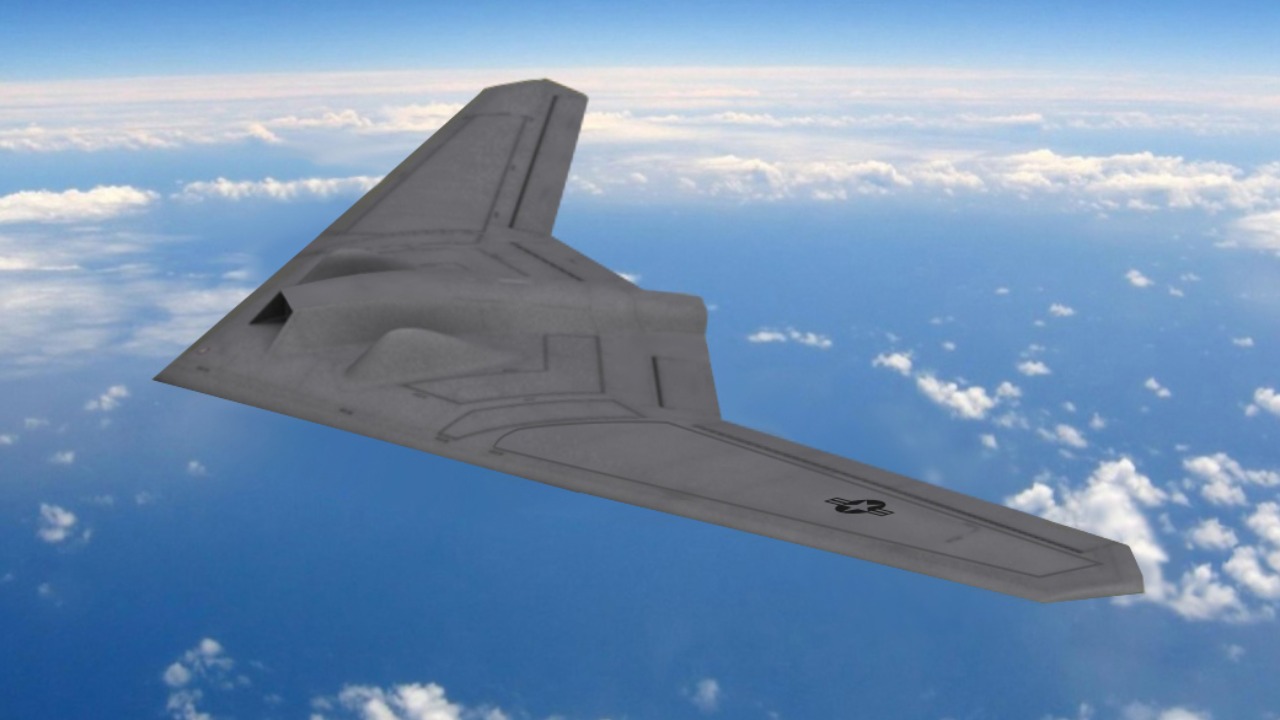
The RQ-170 Sentinel sits at the center of a rare paradox in modern airpower: one of the most photographed “secret” aircraft in the world, yet still largely unknown in its true capabilities. Built as a stealthy, high-altitude spy drone for the toughest airspace on the planet, it has shaped how the United States gathers intelligence in places where traditional aircraft are too vulnerable. What is publicly visible is a flying-wing silhouette and a handful of incidents, while the most important details remain locked behind classification.
What has emerged over the past decade is a sketch of a platform designed to slip into contested skies, watch quietly for hours and feed data back to commanders who may be continents away. The gaps in that sketch are just as revealing, from unanswered questions about weapons to uncertainty over how many Sentinels are actually flying, underscoring how central secrecy is to the aircraft’s mission and to the strategic competition it was built to navigate.
Origins of a stealth spy drone built for denied airspace
The Sentinel was born out of a simple operational problem: the United States needed a way to see deep inside heavily defended territory without risking a pilot. The result was the Lockheed Martin RQ, an American UAV that the Air Force quietly fielded as a low observable platform for missions that traditional reconnaissance jets could no longer perform safely. Developed by Lockheed Martin’s Skunk Works, the aircraft, nicknamed Sentinel and Wraith, was tailored for high-end intelligence, surveillance and reconnaissance in airspace ringed with modern surface-to-air missiles and advanced radars.
From the outset, the Sentinel was meant to be more than a generic drone with a stealthy skin. Air Force descriptions present The RQ as a low observable UAS that feeds data into the Air Force Distributed Common Ground System, tying its sensors directly into the broader intelligence architecture. That role places it alongside satellites and crewed aircraft as a strategic asset, not just another battlefield camera, and helps explain why so much about its design and operations remains classified.
Design: flying wing, stealth shaping and mysterious sensors
Visually, the Sentinel is defined by its tailless flying wing layout, a shape chosen to minimize radar reflections and infrared signatures. Open-source assessments describe it as a flying wing aircraft with pods built into the upper surface of each wing, features that likely house sensor or SATCOM equipment that let the drone collect and transmit data while remaining difficult to track. The overall planform echoes earlier stealth projects, but the smooth surfaces and blended edges suggest a design tuned for persistent surveillance rather than high-speed penetration.
Even the basic dimensions are treated with some caution, yet official training material offers a sense of scale. According to a United States Army Training Circular, the Sentinel has a wingspan of 65 feet 7 inches (20 m) and is 14 feet 9 inches (4.5 m) long, proportions that support long-endurance flight at high altitude. Separate specification tables list a Length of 4.5 m and pair it with a matching Wingspan entry, underscoring how tightly the airframe is optimized around its mission profile rather than payload volume or speed.
Performance and mission profile at high altitude
What the Sentinel lacks in public performance charts it makes up for in mission clues. Official descriptions characterize The RQ Sentinel as a high altitude and long endurance unmanned aerial vehicle, a combination that allows it to loiter over targets for extended periods while staying above most air defenses. Estimates place its operating ceiling around 50,000 ft, aligning it with other strategic reconnaissance platforms that trade speed for persistence and wide-area coverage.
That endurance is paired with a communications architecture designed for reach. The aircraft is described as using both line-of-sight and beyond-line-of-sight data links, allowing crews at ground stations to control the drone and receive sensor feeds from thousands of miles away. The Air Force fact sheet frames the UAS as part of a distributed system rather than a standalone asset, which helps explain why its exact speed, range and endurance numbers remain unpublicized: the value lies in what it can see and share, not how fast it can get there.
From “Beast of Kandahar” to Wraith: how it has been used

The Sentinel’s public identity was cemented not by a press release but by a nickname. Early photographs from Afghanistan led observers to dub it the Beast of Kandahar, a reference to its presence at Kandahar Airfield and its unusual, bat-like outline. The Air Force later acknowledged that the aircraft was operated by The Air Force for intelligence missions, confirming that the mysterious flying wing was not a one-off prototype but an operational system quietly supporting combat operations.
Over time, declassified documents have sketched a broader footprint. Reporting on internal records describes a growing Sentinel force, with units tied to Air Combat Command and operations linked to bases in the continental United States. The aircraft has been associated with surveillance over Afghanistan, monitoring of nuclear and missile programs in Iran and North Korea, and support to joint forces in other contested regions, though specific mission details remain classified. Each confirmed deployment reinforces the same pattern: the Sentinel appears where the United States expects sophisticated defenses and high strategic stakes.
Industrial roots and the Skunk Works imprint
Behind the Sentinel’s secrecy is a familiar industrial lineage. The aircraft was developed by a division of Lockheed Martin often associated with cutting-edge black projects, and program descriptions identify the Sentinel Unmanned Aerial Vehicle as a product of that same advanced development organization. That heritage links the RQ-170 to earlier stealth icons and suggests a design process that prioritized low observability, modular sensors and rapid iteration over mass production.
Contemporary reporting on the aircraft’s emergence highlighted how unusual it was to see such a platform acknowledged at all. One early profile described the Sentinel Aircraft as a stealthy unmanned system that had already been used to support operations, including providing imagery of high-value targets courtesy of an RQ-170. That combination of operational maturity and official reticence has persisted, with the Air Force confirming the type’s existence and broad mission while declining to discuss production numbers, unit costs or upgrade paths.
What remains classified: weapons, numbers and true capabilities
For all that is known about the Sentinel’s shape and general role, some of the most consequential questions remain unanswered. Public descriptions consistently frame the aircraft as an ISR platform, yet analysts continue to debate whether it has ever been equipped with weapons or electronic attack payloads. The Air Force has not confirmed any armament, and discussions of the Also assumed propulsion system, described as a single General Electric turbofan of unknown thrust, underscore how even basic performance parameters are treated as sensitive. Unverified based on available sources are any claims that the RQ-170 routinely carries missiles or conducts offensive electronic warfare.
Numbers are equally opaque. Declassified references to a growing Wraith force hint at an expanding fleet, but no official inventory has been released, and there is no public breakdown of how many aircraft are assigned to specific wings or squadrons. The Air Force fact sheet confirms that the Sentinel supports joint forces by providing intelligence, surveillance and reconnaissance, yet it does not specify how many platforms are available to meet that demand. The result is a system that is clearly important enough to protect but not visible enough for outsiders to gauge its true scale or readiness.
Why the RQ-170 still matters in today’s drone landscape
In an era crowded with drones of every size, the Sentinel occupies a narrow but strategically vital niche. It is not a mass-produced battlefield quadcopter or a medium-altitude workhorse like the MQ-9, but a specialized tool for the most politically sensitive and militarily risky surveillance tasks. Official descriptions of its Missions emphasize Intelligence, surveillance, target acquisition and reconnaissance, roles that become more critical as potential adversaries harden their air defenses and disperse key assets.
The aircraft’s influence also extends beyond U.S. inventories. The 2011 capture of a Sentinel by Iran, and subsequent claims of reverse-engineered derivatives such as the Shahed-171, highlighted how exposure of advanced technology can accelerate competitors’ programs even when the original platform remains in service. As other nations field their own stealthy UAVs, the RQ-170’s blend of low observability, high-altitude endurance and integrated Intelligence links offers a template for how future spy drones may be designed, even if the full story of its own capabilities remains deliberately incomplete.