
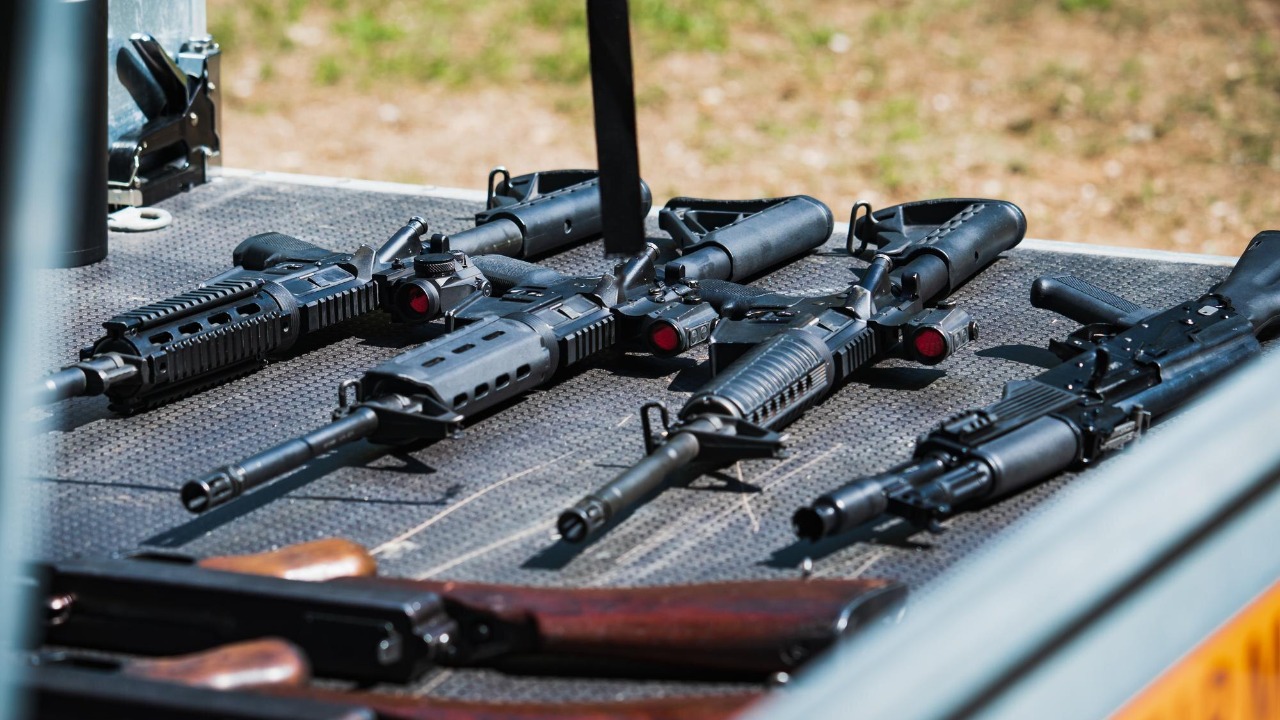
Rifle marketing has discovered a powerful truth: if you bolt on enough rails, vents, and plastic angles, almost anything can look like it belongs in a special operations catalog. The problem is that a lot of these “tactical” rifles are more cosplay than combat, long on attitude and short on performance where it counts. I want to walk through how to spot the difference, why some guns are all costume and no capability, and which workhorse designs quietly outshoot the loud, angular pretenders.
When “tactical” is just a plastic costume
Nothing captures the gap between appearance and reality quite like the Mossberg 715T. On the rack it looks like a compact AR-15, complete with molded carry handle and rails. Underneath the plastic, however, reviewers have pointed out that it is essentially a Mossberg International 702 Plinkster action dropped into an AR-style shell. Another detailed look describes it as a Mossberg 702 plinkster in an AR15 plastic shell, not a high end AR15 .22LR tactical rifle, just a dressed up rimfire. In other words, the “tactical” part is the furniture, not the function.
That kind of shell game is not unique. Entry-level .22 LR rigs marketed for “tactical/long-range” use, such as combinations built around the Ruger American Rimfire Rifle and Osprey Global optics, are candidly described as having fair precision at a lower-end price, not as precision instruments. There is nothing wrong with a budget plinker, and I enjoy them as much as anyone, but when a rifle’s main selling point is that it looks like a centerfire carbine while performing like a backyard toy, the buyer should understand that the performance ceiling is set by the underlying action, barrel, and trigger, not by the number of rails molded into the stock.
Aesthetics Over Functionality: the catalog trap
Manufacturers have leaned hard into what one guide bluntly calls “Aesthetics Over Functionality.” It notes that most standard guns, particularly handguns and hunting rifles, are often designed around tradition rather than functional flexibility in tactical situations. The flip side is that some “tactical” models flip that equation only on the surface, adding aggressive styling while leaving the core mechanics unchanged. The result is a rifle that photographs like a SWAT tool but behaves like the same old sporter once you get past the polymer cladding.
At the same time, there are plenty of budget rifles that skip the costume and focus on performance. A long range shooting primer lists examples of budget rifles that claim sub-MOA accuracy out of the box, including the Remington Model 700 SPS, and notes that shooters are spoiled for choices at reasonable prices. Another review of hunting rifles describes testing around 15 different rifles in the sub-$700 price range over several years, then narrowing down the best performers. When a plain-looking bolt gun in that $700 bracket quietly prints tight groups while a “tactical” lookalike struggles to keep shots on a paper plate, the value of substance over styling becomes obvious.
Military “super guns” that were anything but
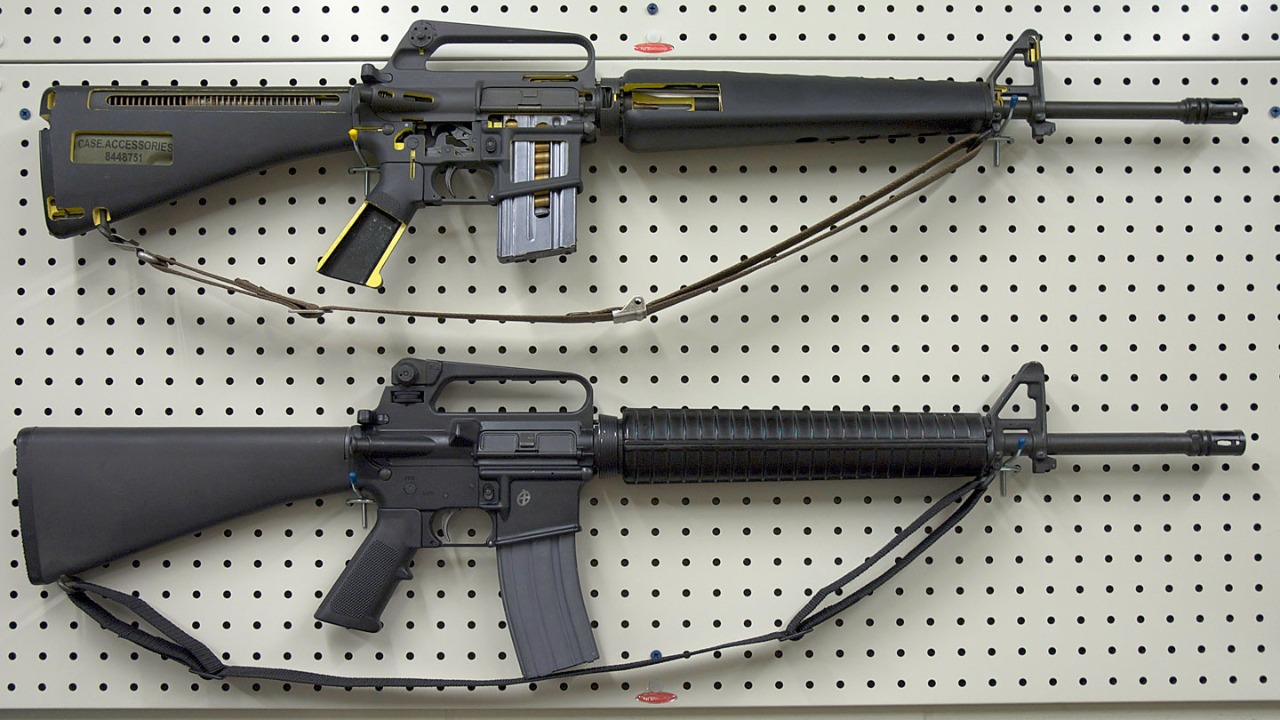
The civilian market did not invent the overhyped rifle. Armed forces have fielded their own share of weapons that looked advanced on paper and in promotional photos, then disappointed the people who had to rely on them. A survey of overhyped guns that soldiers disliked highlights how early M16A1 rifles in Vietnam jammed constantly, in part because of poor ammunition choices and inadequate cleaning kits. Another example is the British L85A1, which one overview describes as having the most complicated history among firearms, with sensitivity to weather conditions, moisture, and sand undermining its promise.
A separate analysis of the same L85A1 notes that its design was innovative but did not always work, and recalls how the United Kingdom adopted it as a modern bullpup with the action and magazine well behind the trigger. On paper, it was a cutting edge service rifle. In the field, reliability issues and ergonomics problems turned that futuristic silhouette into a liability. The pattern is familiar: sleek lines, bold claims, and then, once the shooting starts, a long list of excuses about tolerances, materials, and maintenance that were not fully sorted before the rifle was pushed into service.
Hunting rifles that quietly outshoot the “tacti-cool” crowd
While some rifles chase the tactical look, others quietly deliver the kind of performance that actually matters when a shot counts. A detailed test of the Bergara B14 Ridge points out that more and more riflemakers are building guns that look and act more like tactical guns than hunting rifles, yet the B14 Ridge deliberately keeps more traditional lines and features. The emphasis is on a solid barrel, consistent bedding, and a sensible stock rather than on folding mechanisms and aggressive angles. It is a reminder that a rifle can be modern and capable without pretending to be a door-kicking carbine.
Broader testing of hunting rifles reinforces that point. One reviewer notes that, over the past three years, they have tested around 15 different rifles in the sub-$700 price range while evaluating a larger pool of about 60 rifles to identify the best hunting options. The focus in that work is on repeatable accuracy, reliable feeding, and practical handling rather than on how “tactical” the rifle appears in photos. When a plain synthetic-stocked bolt gun in that price band groups better than a flashier competitor, it underlines how much performance is hiding behind modest styling.
How to tell if a rifle is all show and no go
Sorting the serious tools from the costume pieces starts with ignoring the marketing adjectives and looking at the fundamentals. A practical guide to choosing straight bolt action rifles, for example, opens with “Budget” and “Consider” as key prompts, then points to models like the Savage Impulse for shooters looking for precision and efficiency. That kind of advice is grounded in action design, barrel quality, and trigger performance. Similarly, a long range primer that lists “Examples of” budget rifles claiming sub-MOA accuracy is not impressed by vented handguards; it is interested in whether the rifle can actually keep shots inside a minute of angle at distance.
Simple checks can also reveal whether a rifle’s build quality matches its appearance. A quick instructional segment on rifle accuracy issues recommends what it calls the “Do the Dollar Bill Test,” sliding a bill between the barrel and the stock to see if the barrel is truly free floated. If the bill binds where it should not, that sleek “tactical” stock may be putting pressure on the barrel and hurting consistency. When a rifle fails basic tests like that, or when its manufacturer is vague about real accuracy expectations while spending paragraphs on styling, it is a sign that the performance may not live up to the look.
There is also a broader lesson from outside the rifle world. A report on hypersonic weapons notes that Two test vehicles failed due to issues with stage separation mechanisms or control fins, both technologies that were already understood, and that some test articles achieved hypersonic speeds before something went wrong. The parallel is that complex, futuristic systems can stumble on very basic engineering details. In rifles, that might be a poorly executed polymer frame that warps under heat or a tolerance stack that leads to bad accuracy, problems that have been documented in several overhyped designs. When the basics are not right, no amount of tactical styling can compensate.
In the end, the rifles that look tactical but lack real performance are not hard to spot once you stop letting the furniture do the talking. If the action is a modest plinker dressed up as a carbine, if the manufacturer leans on “Aesthetics Over Functionality” instead of measurable accuracy, and if simple checks like the Do the Dollar Bill Test reveal shortcuts, then the rifle is probably more costume than capability. The good news is that there are plenty of unassuming bolt guns and rimfires, from workhorse hunting rifles under $700 to thoughtfully built models like the Bergara B14 Ridge, that deliver the accuracy and reliability the tactical look only pretends to offer.