

Claims that China’s Chengdu J-20 stealth fighter has slipped across Taiwan’s airspace undetected are sharpening an already tense military balance in the western Pacific. The allegation, which echoes earlier stories about the “Mighty Dragon” operating unseen near Japan and over the Tsushima Strait, raises urgent questions about how invisible the jet really is and how vulnerable Taiwan’s defenses might be. With both sides trading carefully curated footage and anonymous briefings, the truth of any single overflight is less clear than the broader trend it signals: stealth aircraft are moving closer to Taiwan, and the margin for miscalculation is shrinking.
What is actually being claimed about a J-20 over Taiwan?
The core claim circulating in regional defense circles is stark: a J-20 supposedly penetrated Taiwan’s airspace, flew over the island, and then exited without being tracked in real time by local radar. Earlier analysis of a similar allegation described a J-20 that reportedly crossed Taiwan’s airspace and went undetected, with the story framed as proof that the fighter could defeat existing sensors and early warning systems. That narrative has resurfaced as new footage and anonymous accounts suggest a Chinese stealth jet approached, or possibly crossed, the island’s defensive perimeter, though the exact flight path and altitude remain unverified based on available sources.
More recent reporting focuses on a J-20 that approached a key Taiwanese airbase without detection, with newly released imagery showing a Chinese stealth fighter closing on what analysts describe as a strategically important facility on the island’s western side. The footage, attributed to The PLA, is presented as evidence that the aircraft can operate close to Taiwan’s most sensitive infrastructure while remaining effectively invisible to conventional radar. A separate write up of the same episode notes that the J-20 appears to approach a Taiwanese airbase that is considered more important than some coastal sites, reinforcing the impression that the jet is being used to probe not just airspace boundaries but the defenses of specific high value targets.
Stealth, radar, and how a J-20 might slip through
At the heart of the controversy is a technical question: could a J-20 realistically cross or skirt Taiwan’s airspace without being seen, or at least without being tracked with enough confidence to trigger a public response. Analysts who have examined the aircraft’s design argue that its shaping, coatings, and engine inlets are optimized to reduce its radar cross section from the front, which would make it harder to detect when flying toward ground based radars. One assessment notes that many stealth fleets use add ons that make them easier to see during routine flying and training, precisely because operating at full stealth settings complicates air traffic control and increases the risk of accidents. If a J-20 flew without such visibility aids, and if it approached from a direction that exploited gaps in radar coverage, it could plausibly reduce the warning time available to Taiwanese operators.
However, the same technical analysis also stresses that “undetected” is a slippery term. Modern integrated air defense networks rely on overlapping radars, passive sensors, and allied data sharing, so a stealth jet might be seen intermittently or at short range even if it does not appear as a clear track from long distance. In the case of the alleged overflight of Taiwan, experts have pointed out that if Taipei had firm evidence that a J-20 had crossed deep into its airspace, it would have strong incentives to publicize the incursion to rally domestic and international support. The fact that such a detailed official account has not emerged is one reason some analysts treat the most dramatic versions of the story with caution, even as they acknowledge that a J-20 could operate closer to the island than older Chinese fighters before triggering a visible response.
China’s pattern of stealth “near misses” around Japan and Korea
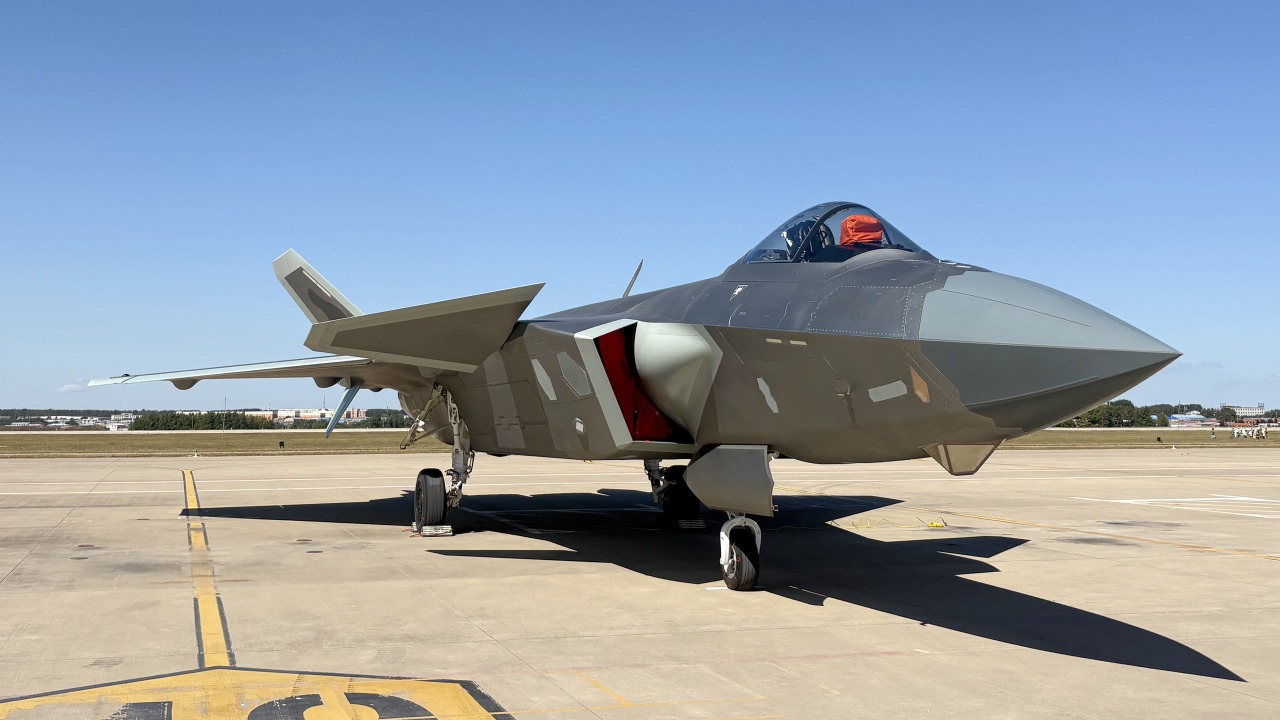
The Taiwan claims do not exist in isolation, they fit into a broader pattern of Chinese messaging about the J-20’s ability to slip past regional defenses. Chinese state media has previously highlighted an episode in which a J-20 reportedly crossed the Tsushima Strait undetected, presenting the event as a milestone in regional airpower projection and a step toward countering what Beijing describes as the United States strategic first island chain. That report, based on unnamed military sources, suggested that the aircraft flew between the Korean Peninsula and Japan and then into the East China Sea without being tracked in a way that allowed timely interception, a narrative clearly designed to showcase the jet’s reach and survivability.
Separate coverage of a similar mission described China’s J-20 stealth fighter allegedly flying undetected over the Tsushima Strait and exposing gaps in Japan and Korea’s radar coverage. In that account, the flight was framed as a patrol that highlighted vulnerabilities in the air defense networks of Japan and Korea, with the implication that existing radars might struggle to maintain continuous tracks on low observable aircraft in complex coastal terrain. Another analysis of Chinese claims that a J-20 flew near Japan undetected noted that The People’s Liberation Army Air Force, or PLAAF, has gone to great lengths to tout the capabilities of its Chengdu J-20, even as there has been no independent confirmation from Japanese or Korean authorities that such a mission truly went unseen. The pattern is consistent: Chinese sources emphasize stealth successes, while neighboring states remain more guarded in their public assessments.
Grey zone pressure and Taiwan’s shrinking warning time
Whether or not a J-20 has actually crossed over Taiwan’s territory, the steady drumbeat of flights near the island is part of a wider grey zone campaign. Reporting on how China is fighting in the grey zone against Taiwan describes a strategy of frequent air and naval activity that stays below the threshold of open conflict but steadily wears down Taiwanese readiness and public nerves. Regular incursions into Taiwan’s air defense identification zone, combined with high profile stories about stealth jets approaching key airbases, serve to numb Taiwan’s public to the threat posed by such a force and may undermine political support for costly defense measures. The psychological effect is as important as the tactical one, since each new claim of an undetected flight reinforces the idea that Taiwan’s defenses are porous.
The latest footage of a J-20 near a Taiwanese airbase fits this pattern of calibrated pressure. Analysts note that the base highlighted in the new imagery is strategically more important than some of the coastal facilities that usually feature in public reporting, which suggests that The PLA is willing to use its most advanced aircraft to probe the defenses of critical nodes rather than just flying symbolic circuits. By releasing carefully edited video that appears to show a Chinese stealth fighter approaching a Taiwanese airbase without detection, Beijing can signal both capability and intent, even if the underlying radar data and engagement rules remain opaque to outside observers. For Taiwan, the effect is a gradual erosion of warning time, as stealth platforms compress the window between detection and potential strike.
What the J-20 debate reveals about regional airpower
The recurring disputes over where the J-20 has flown and who saw it underscore a larger shift in regional airpower dynamics. As China fields more Chengdu J-20s and integrates them into The PLA’s regular patrol patterns, neighboring states must adapt their radar networks, fighter tactics, and command systems to cope with low observable threats. The earlier claim that a J-20 crossed Tsushima undetected, the later story that a Stealth Fighter Allegedly Flies Undetected Over Tsushima Strait, Exposing Gaps in Japan and Korea’s Radar, and the current focus on alleged operations near Taiwan all point to the same conclusion: stealth aircraft are now central to how Beijing signals power and tests the resilience of the first island chain. Even when specific mission details remain unverified based on available sources, the messaging value of these stories is clear.
For Taiwan, the stakes are especially high because its airspace is both politically contested and geographically constrained. Reports that China’s Chengdu J-20 stealth jet approached key Taiwanese facilities without detection, combined with earlier analysis asking whether a Stealth Fighter Fly Over Taiwan, highlight the risk that critical infrastructure could be threatened with little advance warning. At the same time, technical assessments that question whether a truly undetected overflight would go unannounced by Taipei suggest that some of the most dramatic claims should be treated with skepticism. The reality likely lies between the extremes: the J-20 probably cannot operate with total invisibility, but it can reduce detection ranges and complicate defensive planning in ways that favor China in any future crisis.