
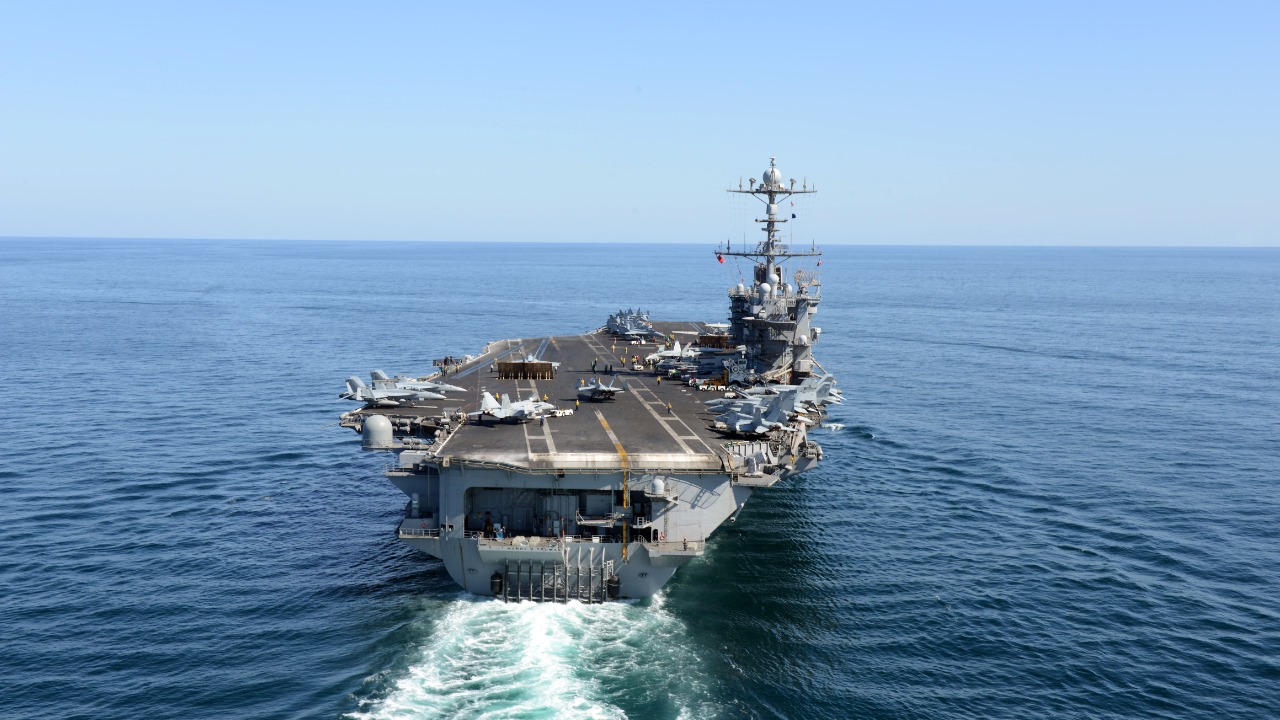
The Navy’s own investigators now say the aircraft carrier USS Harry S. Truman came within a hair’s breadth of disaster during its most recent deployment, with one collision scenario that could have killed multiple sailors and crippled the ship. A cluster of four mishaps, including the loss of three jets in five months, paints a picture of a strike group stretched thin in combat operations and undermined by basic breakdowns in communication and judgment.
Taken together, the findings show how a single degree of error or a missed radio call can turn a routine evolution into a near-fatal emergency, even for one of the world’s most capable warships. They also reveal a fleet trying to learn from those failures in real time, as leadership changes, training fixes and technical overhauls follow in the wake of the Truman’s troubled cruise.
The collision that almost tore open the Truman
Investigators describe the collision between USS Harry S. Truman and a merchant vessel as a close call that could have turned lethal with only a slightly different angle of impact. The official summary notes that a 1-degree change in trajectory would likely have destroyed a key space and caused eight fatalities, a stark measure of how narrowly the carrier avoided catastrophe during the encounter with the merchant ship Besiktas. That assessment of a “likely pierced” hull and potential mass casualty event underpins the characterization of the crash as nearly catastrophic, a conclusion echoed in reporting that details how the USS Harry Truman was far closer to disaster than early public statements suggested.
The Navy’s own release on the Harry S. Truman Carrier Strike Group investigations lays out how the carrier’s bridge team misjudged the developing situation and then had to improvise to avoid something worse. The investigation summary explains that the ship’s leaders failed to maintain adequate separation and did not fully appreciate how quickly the geometry of the encounter was deteriorating, forcing last-minute maneuvers to navigate past the merchant vessel. Only the crew’s quick reactions after those errors, according to the investigation summary, prevented injuries and more extensive damage.
Four mishaps, one deployment, and a pattern of strain
The collision was only one of four serious incidents involving USS Harry S. Truman during a single deployment, a cluster that has rattled confidence in how the strike group was being run. Navy summaries and subsequent reporting describe a deployment window from December 2024 to May 2025 in which the carrier lost three F/A-18 Super Hornets, including one jet that toppled overboard while parked on deck and another shot down by a U.S. cruiser. Those events, combined with the collision, led investigators to conclude that insufficient communication, low levels of experience in key watch stations and a relentless operational tempo all contributed to the mishaps that unfolded between December 2024 and May 2025, a pattern laid out in detail in the Truman mishaps report.
Inside the strike group, the pace of operations appears to have been relentless, especially once the carrier returned to the Red Sea and resumed combat sorties. One account notes that once the ship was back in the Red Sea, the crew was conducting combat operations and “flying everyday with little exception,” a tempo that left little margin for recovery or reflection after each incident. Taken together, the reports paint a picture of a crew that was both highly committed and heavily taxed, with repeated warnings about risk sometimes drowned out by the pressure to keep jets launching and weapons flowing, a dynamic captured in coverage that describes how the mishaps aboard the vessel unfolded as reports detail mishaps across the deployment.
Jets lost, one shot down by a U.S. cruiser
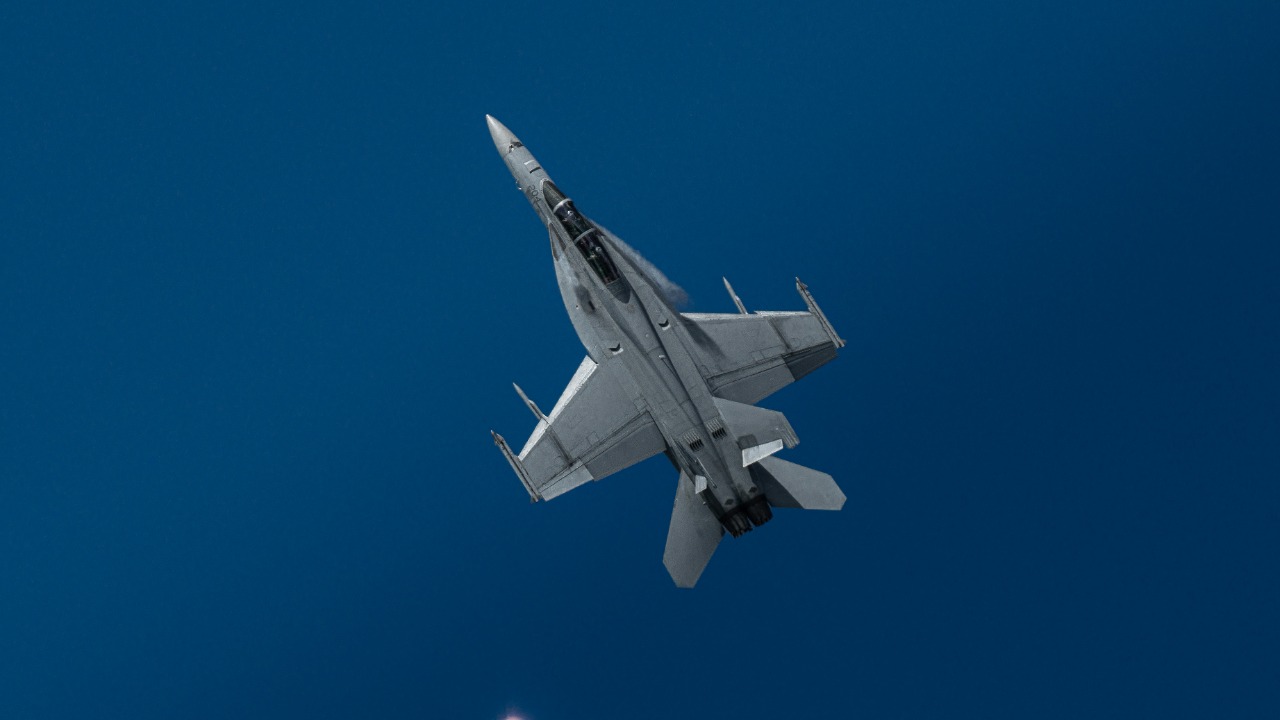
The loss of three F/A-18s in roughly five months is striking even by the unforgiving standards of carrier aviation, and the details behind those losses underscore how small missteps can cascade into major accidents. In one case, an F/A-18E Super Hornet rolled off the deck into the sea after its chocks and chains were removed and the aircraft was left unsecured, a mishap that investigators say should have been prevented by basic deck discipline and supervision. The Navy’s own summary notes that the crew’s quick thinking and resourcefulness prevented any personnel injuries or further damage and that flight operations resumed within hours, a testament to the air wing’s resilience even as the F/A-18E Super Hornet was lost.
Another jet was lost in a far more unusual way, when a U.S. cruiser providing air defense for the strike group mistakenly shot down a friendly aircraft during a complex engagement. Reporting on the Truman Carrier Strike Group notes that the U.S. Super Carrier Lost 3 Jets In 5 Months, One Shot Down By Own Cruiser, and that the Navy Releases Truman CSG Report to explain how misidentification and rushed decision-making led to the shootdown. The investigation into that incident highlights how the cruiser’s crew, already under pressure from one-way attack drones and other threats, failed to fully integrate with the carrier’s air picture before firing, a breakdown described in accounts of how the Super Carrier Lost 3 Jets In Months, One Shot Down By Own Cruiser during the deployment.
Leadership fallout and accountability
The Navy’s response to the Truman mishaps has been swift at the command level, signaling that senior leaders see the incidents as more than bad luck. Capt. Dave Snowden, the commanding officer of the Norfolk-based carrier, was fired for loss of confidence in his ability to command, a decision that came just over a week after the collision with the merchant ship. The service made clear that Capt. Snowden would be reassigned and would not return to the Red Sea with the ship, a move that underscores how seriously the Navy views command accountability when a flagship like USS Harry S. Truman is involved in a preventable crash, as detailed in coverage of how Dave Snowden was relieved.
Beyond the captain’s firing, the investigations have prompted a broader reckoning with how the strike group was organized and supervised. Official summaries emphasize that while some contributing factors were material or environmental, the Navy concluded that leadership decisions, planning shortfalls and communication gaps were central to the mishaps. One analysis notes that the cruiser Gettysburg did not take part in the planning for the strikes that were launched in the night before the friendly-fire shootdown, a lapse that left the ship’s combat team less prepared to interpret the air picture. The Navy concluded that while some issues could be traced to equipment and conditions, the primary causes were rooted in human performance and coordination, a finding spelled out in the Truman investigation that highlights how Making things worse, the Gettysburg was not fully integrated into the mission planning.
What the mishaps reveal about a stretched fleet
Viewed together, the Truman incidents are less an isolated embarrassment than a case study in how a high-demand fleet can drift into dangerous territory when operational urgency outpaces institutional safeguards. The Navy’s own press release on the Harry S. Truman Carrier Strike Group investigations stresses that the crew’s quick thinking and resourcefulness prevented any personnel injuries or further damage, but it also acknowledges a series of preventable failures that allowed the mishaps to occur in the first place. The investigation into the collision notes that the carrier was operating in a congested area and that the ship’s navigation team did not fully account for the merchant vessel’s movements, a lapse that required later repairs at HII-Newport News Shipbuilding after the collision investigation was complete.
Outside observers have seized on the Truman reports as evidence of deeper cultural and structural problems inside the fleet. One widely shared video describes a series of shocking missteps that has rattled the U.S. Navy and highlights how the official investigation reveals just how dangerously close the service came to a major disaster, framing the Truman deployment as a warning sign for the broader force. Another short clip from the Navy itself underscores that the service has released its findings of investigations into four incidents involving the aircraft carrier USS Harry S Truman, presenting the mishaps as hard lessons that will feed into new training and oversight. Together, those public messages show a service trying to balance transparency with reassurance, as a series of shocking missteps is contrasted with official efforts to show that the Navy, USS Harry and its leadership are learning from the ordeal, a message echoed in the Navy: Incidents during Truman’s last deployment short.
Lessons for carriers, shipyards and future deployments
The Truman investigations are already being used as a reference point for how the Navy manages its most complex platforms, from nuclear-powered carriers to ballistic missile submarines. The service’s detailed account of the Harry S. Truman Carrier Strike Group mishaps sits alongside other official narratives that celebrate technical excellence and teamwork, such as the description of USS Nebraska’s engineered refueling overhaul. In that case, the Navy highlights how the technological marvel of this overhaul is surpassed only by the commitment and teamwork of the people that are making it happen at Puget Sound Naval Shipyard & Intermediate Maintenance Facility, a reminder that the same institution capable of near-flawless execution in one arena can still stumble badly in another, as seen in the USS Nebraska overhaul narrative.
For USS Harry S. Truman (CVN-75) and its strike group, the path forward will likely involve a mix of technical fixes, revised procedures and cultural reinforcement. Investigators have already pointed to the need for better integration between escorts and the carrier’s air wing, more rigorous watchstanding standards on the bridge and flight deck, and a more deliberate approach to risk when the ship is flying everyday with little exception in contested waters. Analysts note that the Truman case shows how even a flagship like USS Harry Truman, designated CVN 75, can be vulnerable when communication breaks down and experience thins out, a conclusion supported by detailed reconstructions of how the carrier and its escorts handled threats like one-way attack drones in the Red Sea, as chronicled in the investigations that show failures.
Ultimately, the Truman mishaps have become a touchstone for how the Navy talks about risk, accountability and resilience in an era of constant deployments. Official messaging stresses that The Navy has released its findings of investigations into four incidents involving the aircraft carrier USS Harry S Tru and that the crew’s quick thinking prevented a tragedy, while independent coverage underscores how close the service came to a catastrophic loss of life and capability. The tension between those narratives is captured in the original Navy releases Harry S. Truman Carrier Strike Group investigations statement and in social media posts that emphasize how The Navy and USS Harry S Truman were tested. For sailors, commanders and policymakers, the lesson is blunt: even the most advanced carrier can be undone by a single degree of error, and the margin between a bad day at sea and a historic catastrophe is far thinner than many would like to believe, a reality that has now been seared into the record through the Navy investigation into USS Harry Tru and the broader narrative that a Navy releases ‘catastrophic’ findings involving USS Harry Truman while a Dec summary and a Super Carrier Lost report have turned the Truman deployment into a cautionary tale.