
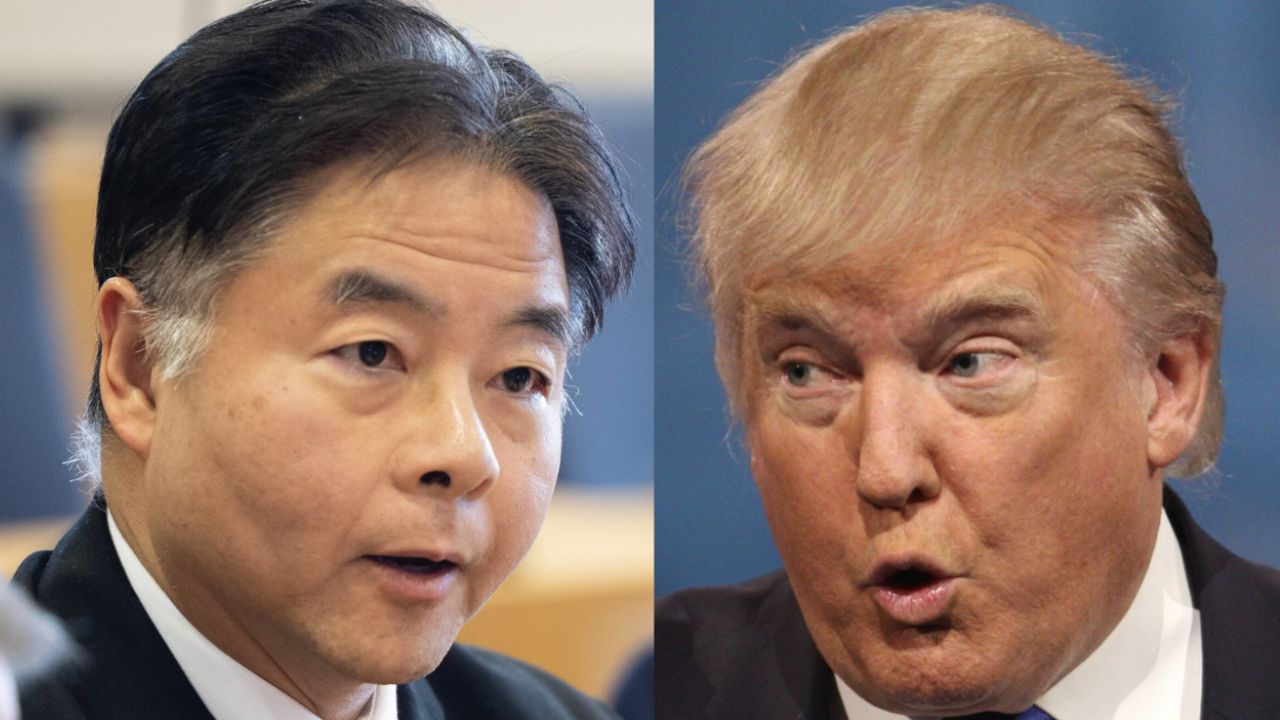
Rep. Ted Lieu (D-Calif.) told Americans on Tuesday that the answer to high fuel and grocery prices, and to a taxpayer-funded ad blitz starring the commander-in-chief, is to vote. In a post on X, Lieu accused President Donald Trump and his “enablers” of spending public money on Trump ads while household costs climb, and he called on voters to “PUNISH” them at the ballot box. The post landed one day after Reuters reported that the ads, which end with the disclaimer “Paid for by the US Government,” are drawing bipartisan criticism and legal questions five weeks before the midterm elections.
What Lieu Posted
Lieu published the message at 4:15 p.m. on Tuesday, September 29, 2026, responding directly to the Reuters report on the ads. The post reads in full:
“-Gas prices are too high.
-Diesel prices are too high.
-Groceries are too high.
What are trump and his enablers doing? Using your hard earned tax dollars to pay for trump ads.
PUNISH him and his enablers at the ballot box. VOTE and get ten of your friends and family to vote.”
The post is built as a three-part argument. Lieu opens with a short list of costs he says are too high: gasoline, diesel and groceries. He then asks what Trump and his allies are doing about it and answers his own question, saying they are spending taxpayer dollars on Trump ads. He closes with a direct instruction to punish the president and his allies at the polls, and asks each reader to bring ten friends and family members to vote.
The Ads Behind the Post
The ads Lieu referred to are three nationally broadcast television spots featuring Trump, according to Reuters. Each ends with the disclaimer “Paid for by the US Government.” Ethics experts and lawmakers from both parties have questioned whether public funds are being used to promote the president politically. The midterm elections are set for November 3 and could reshape the balance of power in Washington.
The spots emphasize American exceptionalism. One has Trump declaring that America will never be a communist country while a chorus sings “love me” in the background. Another combines images of Mount Rushmore with footage of Trump on stage praising a “golden age of America.” A third describes “the final battle,” with Trump pledging to demolish the deep state “with you by my side,” according to Reuters.
The ads aired during “Saturday Night Live” and during NFL games on Sunday, Reuters reported. The “final battle” spot is nearly identical to a 2024 Trump campaign ad, apart from the government disclaimer at the end. CNN reported that the version posted on Truth Social runs six seconds longer and includes Trump’s campaign logo and a number to text. The Washington Post reported that the White House has expanded the series with a new spot that repurposes imagery and rhetoric from Trump’s campaign appearances.
The White House has rejected the criticism. In a September 25 press release, it described the spots as “public service announcements” meant to encourage Americans to love their country and understand why it is worth defending. A White House statement said the announcements are “very clearly not campaign ads,” adding that Trump is not on the ballot and the ads carry no call to action. Reuters said the White House did not answer questions about which agency is paying for the ads or what they cost.
Legal Questions and Bipartisan Pushback
Richard Painter, chief White House ethics lawyer under former President George W. Bush, told Reuters the ads are the latest example of Trump ignoring rules meant to keep presidents from using the office for political gain. Painter, now a law professor at the University of Minnesota, said the federal government banned domestic propaganda in the 1940s to keep the United States from behaving like authoritarian regimes. He said glorification of the president, attacks on political enemies and the absence of a clear policy issue are telltale signs of propaganda. Painter and other legal experts told Reuters the campaign likely violates the 1939 Hatch Act, which bars government employees from campaign activity at work.
Other experts reached similar conclusions. David Hopkins, an associate professor of political science at Boston College, told Reuters the situation appears to be a fairly clear-cut violation of prohibitions on using public money for campaign purposes. The Campaign Legal Center said federal law bars taxpayer resources from benefiting a candidate, party or public official, and that the ads revolve almost entirely around Trump. Annual funding bills, including the appropriations measure Trump recently signed, have routinely banned taxpayer spending on “publicity or propaganda” since the 1950s.
The criticism has extended into Trump’s own party. Senate Majority Leader John Thune (R-S.D.) told reporters Monday that he likes the message but that taxpayers should not be paying for it. Sen. John Kennedy (R-La.) said on “CBS Sunday” that “You can’t spend public money to promote yourself.” Rep. Thomas Massie (R-Ky.) wrote on X that running such ads on the public’s dime is legal only in “banana republics.”
Democrats have escalated their response. Democratic appropriators said Tuesday the White House is paying for the ads with Customs and Border Protection funding from last year’s Republican budget reconciliation law. In a letter, the appropriators called using government money for such ads “illegal and a shockingly corrupt misuse of taxpayer dollars.” Rep. Jamie Raskin (D-Md.), the ranking member of the House Judiciary Committee, said on X the ads “may be felony criminal theft and conversion of government property.” Sen. Chris Murphy (D-Conn.) wrote on X that no one should take Republicans seriously when they claim to care about waste, fraud and abuse, according to Reuters.
CNN reported that Trump personally drove the effort, citing a source familiar with the matter who said he helped select the imagery and videos. Two Trump advisers told CNN the ads were produced in-house by the White House video team, part of the communications operation. Multiple members of Trump’s political operation told CNN they did not know the ads were coming until they aired. A White House spokesperson called the ads educational and unapologetically patriotic.
The Prices Behind Lieu’s Message
The costs Lieu listed track with current data. AAA reported the national average for regular gasoline at $4.48 a gallon, the highest ever for this time of year, and attributed the level to lingering volatility in the Strait of Hormuz and expensive crude oil. Diesel averaged $6.45 a gallon, up 84 cents in 30 days, after setting a record of $6.53 on September 22, according to Kelley Blue Book, which cited AAA. Regular gas averaged $3.13 a gallon a year ago. Diesel powers the trucks and trains that carry most consumer goods.
Midterm Stakes
Reuters said it was unclear why the administration would spend public money on ads in a cycle where Republicans hold a clear fundraising advantage. Republican-aligned groups have reserved at least $888 million in advertising in the coming weeks, compared with at least $666 million for Democrats, according to AdImpact. Charlie Black, a Republican strategist who has worked on multiple presidential campaigns, told Reuters that Trump’s insistence on being front and center could backfire, and that an unpopular president’s higher visibility historically hurts his party.
Prediction markets show the political environment Lieu is addressing. On Polymarket, the “Which party will win the House in 2026?” market currently gives Democrats a 93% chance of winning the chamber. Republicans hold a narrow House majority, and Democrats need a net gain of just three districts to take control, according to Polymarket’s midterms page. Prediction market odds reflect trader sentiment and are not forecasts from election officials or pollsters.
Lieu’s post fits a long record of criticizing Trump’s use of taxpayer money. In 2017, he introduced eight amendments to a spending package to bar federal reimbursement of costs at commercial properties in which the president has a financial stake. In 2019, the House passed his NDAA amendment limiting Defense funds at Trump-owned properties. His latest post carries that theme into the final weeks before November 3, with an instruction for supporters: vote, and bring ten more people.