
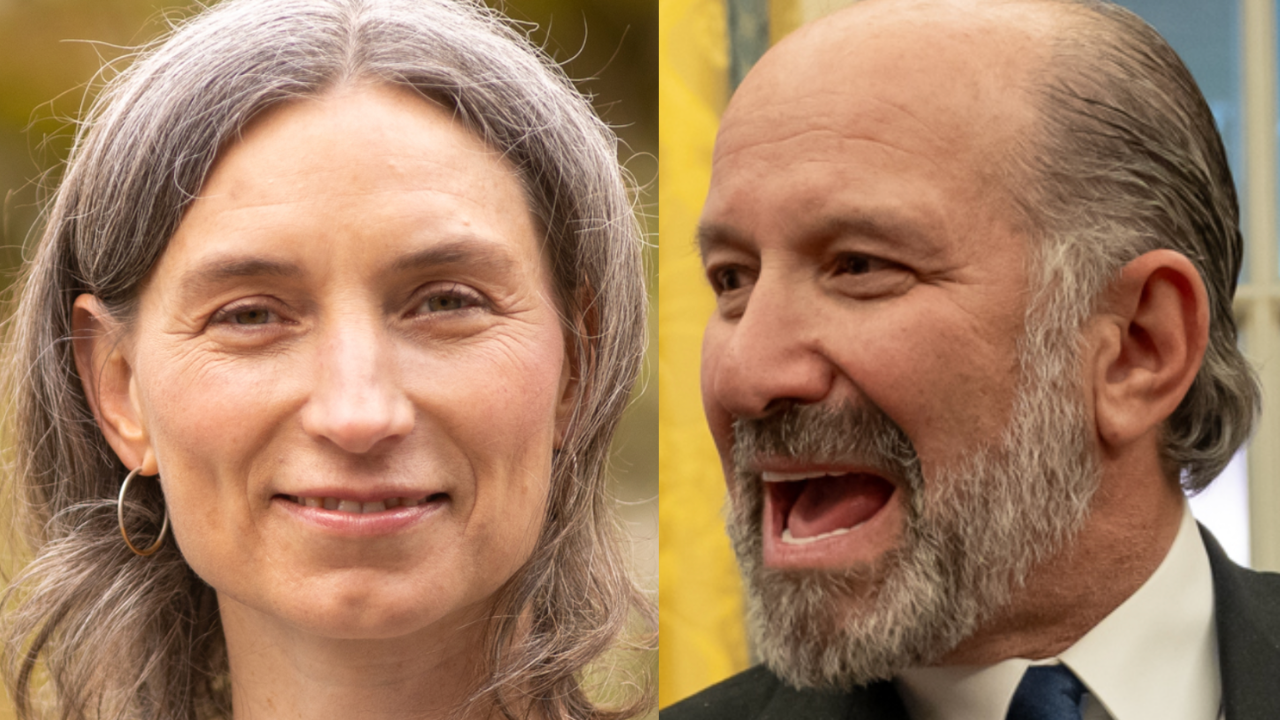
Congressional Democrats have mounted a sustained push for investigations into Commerce Secretary Howard Lutnick’s role in directing billions of dollars in federal mining financing to companies connected to his family’s former investment firm, Cantor Fitzgerald, and to companies in which President Trump’s sons hold financial stakes. The effort spans both chambers of Congress and has intensified as new reporting has revealed additional financial ties, including a Kazakhstan tungsten deal detailed in a New York Times investigation published June 28, 2026.
Dexter’s Warning
Rep. Maxine Dexter (D-Ore.), the top Democrat on the House panel that investigates wrongdoing in the mining industry, has been among the most vocal critics of the pattern. “Congress needs to make sure that taxpayer dollars are being used in the public’s interest and not to benefit family members or those closely tied with the Trump administration,” Dexter told the Times. She has separately criticized the speed and structure of the administration’s roughly $670 million deal with Vulcan Elements, a mining start-up in which Donald Trump Jr.’s investment firm, 1789 Capital, holds an equity stake, saying the deal advanced “without competitive bids” and “without the technical disclosures that are used to verify whether a project is even viable before public money goes in.”
The Senate Letter on USA Rare Earth
The scrutiny began well before the Kazakhstan deal became public. In a letter dated February 25, Sens. Elizabeth Warren, Ron Wyden, and Chris Van Hollen wrote to Lutnick questioning a $1.6 billion Commerce Department agreement with USA Rare Earth, warning the arrangement “could enrich your immediate family.” The senators noted that USA Rare Earth had selected Cantor Fitzgerald, the investment bank Lutnick once ran and which is now led by his sons, as the lead placement agent for a $1.5 billion private fundraising round conducted the same day the federal funding was announced. “This follows in a long string of actions that you have taken in your capacity as the Secretary of Commerce that could stand to enrich your immediate family and former company,” the senators wrote, asking when Lutnick became aware of Cantor’s role in the deal and whether he or the Commerce Department had any involvement in arranging it.
The Ethics Concern at the Center of the Letter
The senators’ letter laid out the specific financial mechanics that troubled them. The Commerce Department’s January letter of intent committed up to $277 million in direct funding and up to $1.3 billion in loans to USA Rare Earth, while also requiring the company to raise at least $500 million in private capital — a requirement USA Rare Earth satisfied by hiring Cantor to lead a private investment in public equity, or PIPE, transaction. “If the PIPE funds were raised under these circumstances, then it appears that, in order to secure public funds from the government agency you lead, USAR paid your family’s company to raise matching private funding,” the senators wrote. Ethics experts cited in the letter said the arrangement was “reason to worry that the public interest is being subordinated, yet again, to the profit seeking of Trump cronies.”
Lutnick’s Divestment Arrangement
Lutnick’s ethics agreement upon taking office required him to divest his ownership stake in Cantor Fitzgerald. According to reporting on the matter, he transferred that stake to his adult sons and other family members through trusts controlled by his son Brandon, who now leads the firm. The senators argued that structure does not fully eliminate the underlying conflict, writing, “Given your close ties to Cantor, and Cantor’s apparent financial interest in USAR, the Commerce Department’s investment should be closely scrutinized.”
The House Subpoena Fight
House Natural Resources Committee Democrats escalated their effort in March, forcing a vote on subpoenaing Donald Trump Jr. directly over his role in the Vulcan Elements deal. “The Department of Commerce committed over $1 billion to USA Rare Earth before the company even completed its foundational feasibility study to raise the private funding the deal required,” Dexter said at the hearing. “USA Rare Earth hired Cantor Fitzgerald, a firm now run by Commerce Secretary Lutnick’s own son. Secretary Lutnick approved federal investment in a company that was simultaneously paying his son’s firm to raise money for that same deal. Donald Trump Jr. is a named partner at 1789 Capital. He told reporters he is personally involved in deciding where that firm invests.” Republicans on the committee moved to adjourn the hearing before a vote on the subpoena could be completed, prompting Rep. Jared Huffman (D-Calif.), the committee’s ranking member, to ask, “What are you so afraid of? It’s a parliamentary inquiry.”
How the Administration Has Responded
The White House and Commerce Department have firmly denied any improper mixing of government decision-making with family business interests. White House spokesman Kush Desai said in a statement that “the only special interest guiding the Trump administration’s decision-making is the best interest of the American people,” crediting the administration with taking “historic action to safeguard America’s national and economic security.” The Commerce Department said in a separate statement that neither Lutnick nor anyone at the department had “interacted with or had any discussions whatsoever with Cantor Fitzgerald regarding the rare earth minerals industry,” and emphasized that Lutnick had sold his ownership stake in Cantor. A Cantor spokesman, Stan Neve, told the Times the firm’s executives were not involved in any discussions related to government funding on behalf of its mining industry clients, saying, “Cantor is a natural partner for companies raising capital to meet the growing demand for critical minerals.”
Discomfort Within the Administration Itself
The Times reported that even some Trump administration officials directly involved in the critical minerals push, speaking on condition of anonymity because they were not authorized to discuss the matter, said they were personally disappointed to see the financial links between the Lutnick and Trump families and the projects the government was proposing to finance. Their discomfort, even while remaining anonymous, suggests the concerns Democrats have raised publicly are not confined strictly to one political party within the federal government’s own ranks.
The pattern of anonymous internal discomfort echoes similar dynamics reported elsewhere in the administration, where officials who support the underlying policy goal of reducing dependence on Chinese critical minerals have nonetheless expressed unease at how closely the resulting financial benefits have flowed to the families of the officials directing the policy.
The Stock Market Angle
Beyond the direct ethics question, Democrats have also raised concerns about the investment dynamics created by the deals themselves. Because federal backing of critical minerals projects has reliably driven up share prices for the companies involved, critics have noted that early investors, including entities linked to the Trump and Lutnick families, stand to profit through stock trading regardless of whether the underlying mining projects ultimately succeed or reach commercial production at all.
What Comes Next
As of publication, no formal subpoena had been issued to Donald Trump Jr. or any other family member connected to the deals, and neither chamber of Congress had announced a comprehensive, bipartisan investigation into the full scope of the financial ties the Times identified across 14 separate mining companies. With Republicans controlling both chambers, Democrats’ ability to compel testimony or documents through formal subpoena power remains limited absent a change in committee leadership or a shift in Republican support for such oversight efforts.
Dexter and her House Natural Resources Committee colleagues have not indicated whether they intend to make another attempt at issuing a subpoena, nor have Sens. Warren, Wyden, and Van Hollen disclosed whether Lutnick’s office has responded substantively to the specific questions raised in their February letter.